
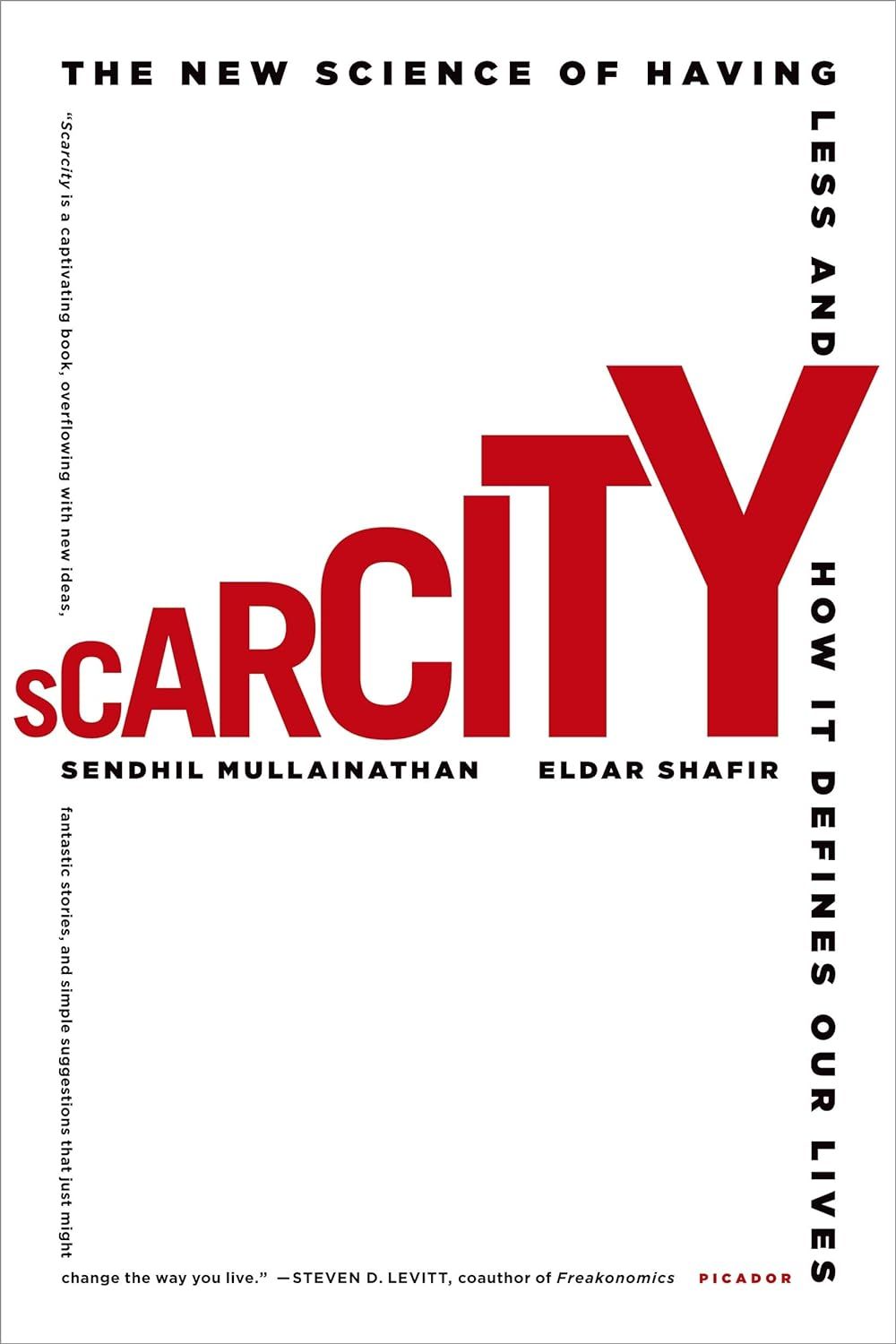
In a recent LinkedIn post, Daniel Pink explores the profound impact of scarcity on human decision-making, drawing heavily on the insights from the book “Scarcity” by Sendhil Mullainathan and Eldar Shafir. Pink challenges the common perception that individuals with fewer resources make poor decisions due to character flaws, arguing instead that scarcity fundamentally alters cognitive function.
Pink highlights the core premise that lacking essential resources like time, money, or energy does more than just induce stress; it actively changes how we think. As Daniel Pink notes:
“When we don’t have enough of something Time. Money. Energy. Food. It doesn’t just stress us out. It changes how we think.”
This cognitive shift, according to Pink, manifests as tunnel vision. When individuals are preoccupied with immediate needs, such as paying bills, their focus narrows, pushing long-term considerations about health, education, or career into the background. The urgent, Pink explains, inevitably crowds out the important.
The Mental Tax of Scarcity
Daniel Pink further elaborates on the detrimental effects of scarcity, pointing out that it imposes a significant “mental tax.” This tax reduces our cognitive bandwidth, making clear thinking more challenging. He references studies indicating that even temporary hunger can lead to more impulsive choices, underscoring that scarcity, in any form, impairs rational decision-making.
Pink emphasizes that this is not a failure of willpower but a predictable outcome of an environment characterized by lack. He states:
“When people in poverty make short-term or seemingly irrational decisions, it’s not a failure of willpower. It’s the predictable effect of a scarce environment. And most of us would act the same way.”
This perspective, as presented by Daniel Pink, is crucial for reframing how we understand and respond to the decisions made by those facing resource constraints. It encourages a move away from blame towards empathy and a focus on designing supportive systems rather than penalizing individuals already under pressure.
Context Over Character
The central argument Pink takes away from the book is that context, rather than character, often dictates decision-making. He suggests that understanding the environmental pressures of scarcity is key to understanding behavior. As Daniel Pink concludes:
“It’s not always about character. It’s about context. And when you change the context, you change the behavior.”
This reframing has significant implications for policy, management, and interpersonal interactions. By recognizing the cognitive load imposed by scarcity, we can begin to design environments and support structures that enable better decision-making, fostering greater well-being and opportunity for all.
📝 About This Content
This article is based on insights shared by Daniel Pink on LinkedIn.
📅 Originally posted on March 4, 2026 | View original post on LinkedIn →