
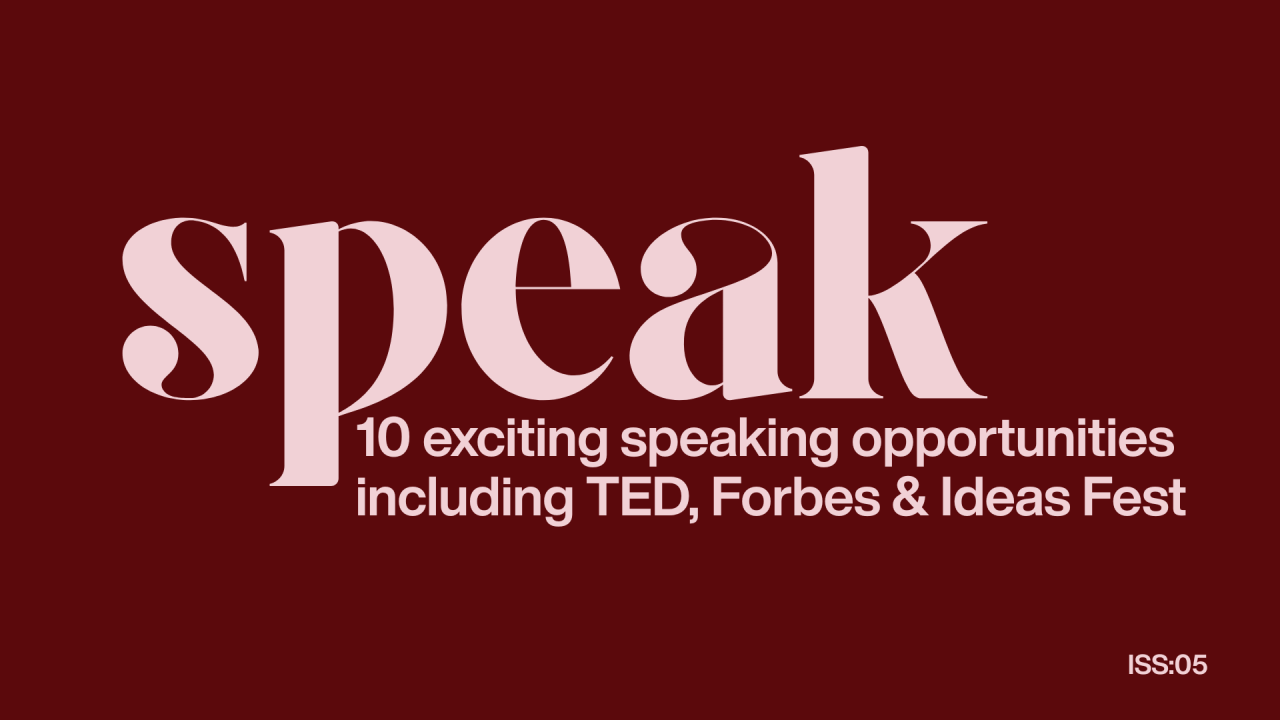
In a recent LinkedIn post, Sallee Poinsette-Nash offers valuable guidance for business leaders looking to secure speaking opportunities in 2026. Poinsette-Nash, who publishes the SPND IT newsletter, highlights that applications for many prominent speaking platforms are already open, often well in advance of the actual events.
She emphasizes that discovering these opportunities requires proactive effort, as many are not widely circulated on professional networks like LinkedIn. Poinsette-Nash states:
“Many of these ‘Speakers Wanted’ and Call for Submissions requests are never circulated on LinkedIn. You have to find them yourself.”
This proactive approach, according to Poinsette-Nash, is crucial for leaders who view public speaking as an integral part of their personal brand strategy for the upcoming year. She notes that even if the initially identified opportunities aren’t a perfect fit, a vast number of other speaking platforms exist, ranging from global stages to more accessible local events.
Strategic Approaches to Speaking Engagements
Poinsette-Nash’s insights extend beyond simply finding opportunities; she also addresses the practicalities of securing them. A significant portion of her post is dedicated to advising on how to approach events that may not offer speaker fees. She advocates for negotiating a “fair exchange” to ensure that participation remains mutually beneficial.
As Sallee Poinsette-Nash outlines:
“This edition also outlines how to approach events that do not offer speaker fees and how to negotiate fair exchange so that your contribution still delivers mutually beneficial value.”
This strategic negotiation is key to maximizing the value derived from speaking engagements, even when traditional compensation is not on the table. It encourages speakers to think critically about the non-monetary benefits, such as audience reach, networking opportunities, and brand alignment.
Navigating Rejection and Maximizing Application Success
The reality of applying for speaking slots, as Poinsette-Nash points out, includes the possibility of rejection. She acknowledges that not every application will be successful, and alignment with an event’s theme is not always guaranteed. However, she frames this as a necessary part of the process for those serious about building their speaking profile.
Poinsette-Nash offers a pragmatic perspective on the importance of applying:
“Rejection is a possibility and you may not be selected or align with this year’s theme… But if you don’t apply, the outcome is guaranteed 😉”
This sentiment underscores the importance of taking action, as inaction guarantees a lack of opportunity. She encourages potential speakers not to be deterred by the prospect of rejection but to view it as a learning experience and a step closer to success.
Sharing Opportunities and Continuous Learning
Finally, Poinsette-Nash calls on her audience to share these opportunities, promoting a collaborative approach to professional development within the business community. She also encourages readers to subscribe to her SPND IT newsletter for ongoing access to similar opportunities and resources.
According to Sallee Poinsette-Nash, the landscape of speaking engagements is vast, and with the right strategy and persistence, leaders can effectively leverage these platforms to enhance their visibility and influence in 2026 and beyond.
📝 About This Content
This article is based on insights shared by Sallee Poinsette-Nash on LinkedIn.
📅 Originally posted on February 17, 2026 | View original post on LinkedIn →