
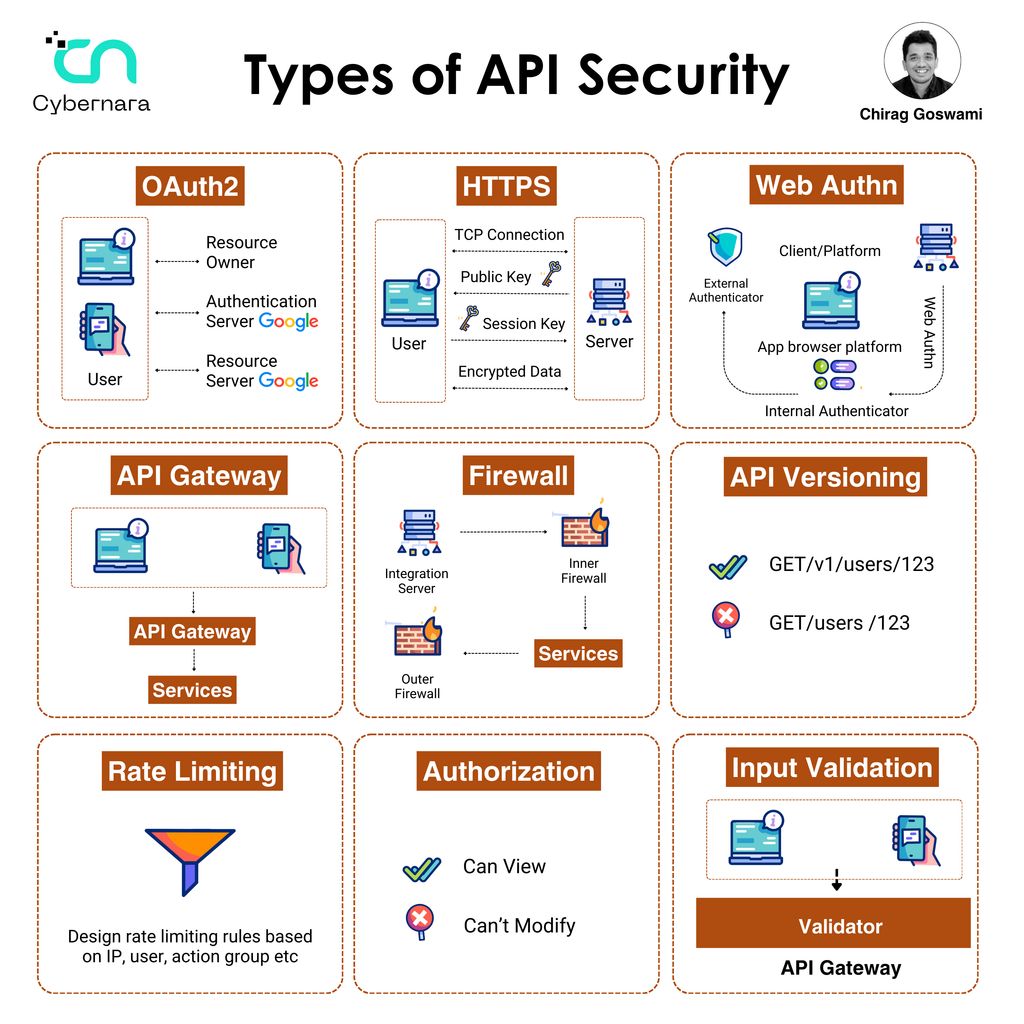
In a recent LinkedIn post, Chirag Goswami discusses the critical role of APIs in modern applications and the corresponding security challenges they present. Goswami emphasizes that while APIs are fundamental to nearly every digital service, they also represent a primary target for cyber attackers.
The Pervasive Threat to APIs
Chirag Goswami highlights the significant risks associated with inadequately secured APIs, stating:
APIs are the backbone of every modern app — which also makes them one of the biggest targets for attackers.
Goswami elaborates on the potential consequences of a single weak API endpoint, noting that it can lead to severe breaches such as exposing sensitive user data, compromising authentication mechanisms, or enabling widespread abuse of services. This underscores the urgent need for robust security measures across all API implementations.
Core Layers of API Security
To address these vulnerabilities, Chirag Goswami outlines a comprehensive set of security layers essential for protecting APIs. These layers work in concert to create a multi-faceted defense against various threats.
Authentication and Encryption
Goswami points to several key technologies for securing access and data transmission. He emphasizes the importance of OAuth2 for modern token-based authentication, which allows users to authenticate without directly sharing passwords. Furthermore, HTTPS is identified as crucial for encrypting traffic end-to-end, preventing eavesdropping or tampering with data while it is in transit.
HTTPS – Encrypts traffic end-to-end so no one can snoop or tamper with data in transit.
For enhanced security, Goswami also mentions WebAuthn, a standard that provides strong, phishing-resistant authentication through biometrics or hardware keys, offering a significant upgrade over traditional password-based methods.
Access Control and Traffic Management
Beyond authentication, Chirag Goswami stresses the importance of controlling access and managing traffic flow. An API Gateway is presented as a central hub for managing authentication, monitoring API usage, routing requests, and implementing throttling or blocking mechanisms against malicious actors. He also includes traditional but vital components like Firewalls, which filter malicious traffic at the network and application layers before it can impact backend services.
API Gateway – Central point for authentication, monitoring, routing, throttling, and blocking bad actors.
Goswami further details protective measures such as API Versioning, which helps prevent compatibility issues and avoids leaving older, potentially vulnerable clients exposed. Rate Limiting is also highlighted as a critical defense against brute-force attacks and credential stuffing. Crucially, Authorization ensures that users only access the resources they are permitted to, preventing misuse of privileges.
Defensive Programming Practices
The discussion extends to fundamental development practices. Chirag Goswami emphasizes Input Validation as a key defense, designed to block malicious injections, malformed requests, and harmful payloads before they can reach and compromise backend systems.
The Imperative of API Security
Concluding his post, Chirag Goswami reiterates the pervasive nature of APIs, powering everything from mobile applications to internal tools. He argues that given their ubiquity and attackers’ awareness of this, strong API security is no longer a matter of choice but a necessity for any organization.
Strong API security is no longer optional.
Goswami offers the services of Cybernara for organizations seeking assistance with API security, architecture reviews, or vulnerability assessments, positioning himself and his company as resources for addressing these critical security needs.
📝 About This Content
This article is based on insights shared by Chirag Goswami on LinkedIn.
📅 Originally posted on January 5, 2026 | View original post on LinkedIn →