
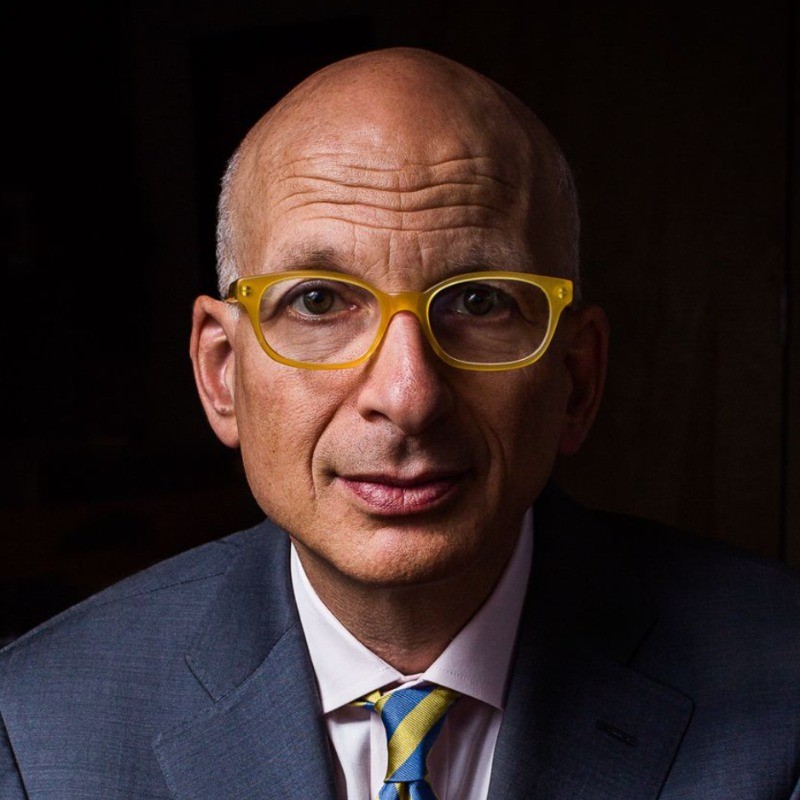
In a recent LinkedIn post, Seth Godin 🌔 discusses the inherent challenges in human interaction with numerical identifiers and proposes a novel, albeit unconventional, solution: using pronounceable words as a replacement for complex number sequences.
Godin 🌔 begins by highlighting the difficulty humans face in accurately recalling and transcribing long strings of numbers, a problem exacerbated by the reliance on numerical IDs in various transactional and service contexts. He points out the historical roots of serial numbers, noting their original utility in an era of simpler systems.
“If you tell me your ID number, your phone number or the wiring instructions for your bank account, not only will I forget them, I’ll need you to repeat it a few times so I write it down without making a transcription error.”
The core of Godin 🌔’s argument centers on the friction points created when humans are tasked with managing purely numerical data, especially when accuracy is paramount. He suggests that while computers are adept at handling numbers, the human element in the communication chain remains a significant bottleneck for error-free data transfer.
The Case for Word-Based Identifiers
Seth Godin 🌔 then introduces his proposed hack: a system that replaces numbers with sequences of easy-to-say, easy-to-spell, and easy-to-discern three-letter words. This approach, he explains, leverages the human brain’s greater capacity for remembering and distinguishing words over arbitrary numbers.
To illustrate the scalability of this method, Godin 🌔 provides a concrete example. He suggests that a combination of five such words could generate a vast number of unique identifiers, far exceeding the needs of many common applications.
“So, big bob zap car cat is five words next to each other. There are 75 billion combinations of five words, which means that it replaces a number like 4839450381 with room to spare.”
This imaginative proposal, according to Godin 🌔, could significantly simplify interactions for both consumers and service providers. He envisions its application in scenarios ranging from customer service calls to sharing Wi-Fi passwords.
Simplifying Everyday Transactions
Seth Godin 🌔 emphasizes that the goal is to reduce the cognitive load on individuals when dealing with identification numbers. He argues that by using memorable word combinations, the potential for transcription errors is drastically reduced.
Consider the common need to relay an order number or a Wi-Fi password. As Godin 🌔 points out, these are often sources of frustration due to the difficulty in accurately communicating and recording the correct sequence of digits or characters.
“Think about that the next time you need to tell a customer service person your order number or serial number, or share a wifi password.”
The underlying principle, as articulated by Godin 🌔, is to allow technology to handle the complexity of generating and managing vast numbers of unique identifiers, while simplifying the human interface to something more intuitive and less error-prone.
The Human Element in Data Transfer
Godin 🌔’s insight suggests a re-evaluation of how we design systems that involve human input and output. While numerical systems have served us for centuries, their limitations become more apparent in our increasingly digital and interconnected world.
He advocates for a more human-centric approach to interface design, where the strengths of human memory and pattern recognition are leveraged, rather than challenged. In Godin 🌔’s view, this shift could lead to more efficient and less frustrating user experiences.
“Let the computer do the work.”
Ultimately, Seth Godin 🌔’s post serves as a thought-provoking commentary on the often-overlooked usability issues in everyday digital interactions, proposing an elegant, word-based alternative to traditional numerical identifiers.
📝 About This Content
This article is based on insights shared by Seth Godin 🌔 on LinkedIn.
📅 Originally posted on March 24, 2026 | View original post on LinkedIn →