
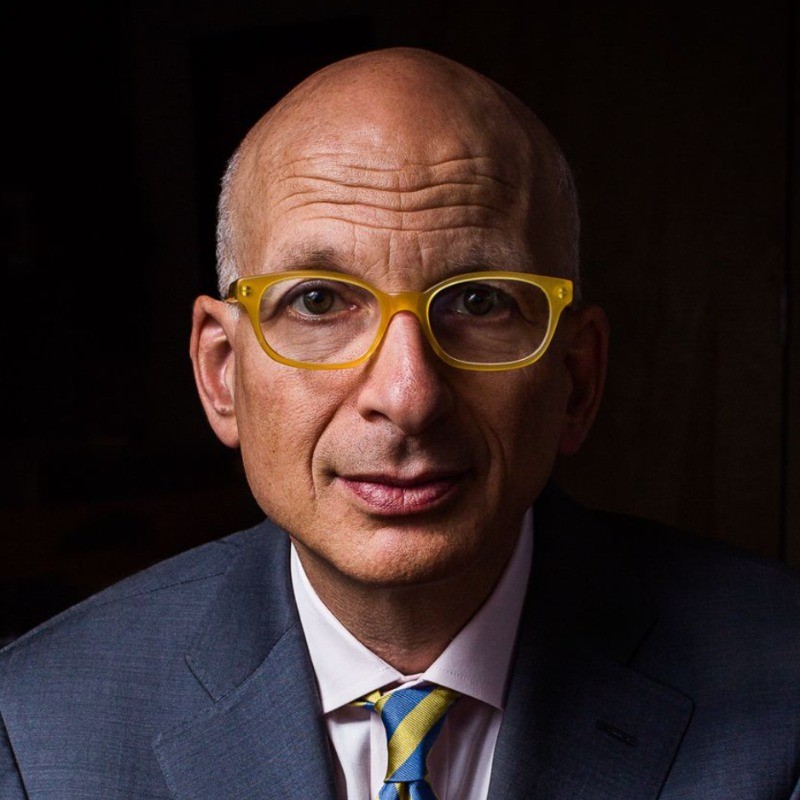
In a recent LinkedIn post, Seth Godin 🌔 discusses the significant impact of scale on customer service, particularly in the context of service disruptions like flight cancellations. Godin uses a hypothetical scenario of an airline needing to cancel just one flight to illustrate how a focused, customer-centric approach could salvage loyalty and minimize disruption, contrasting this with the often-overlooked costs of large-scale cancellations.
The ‘One Flight’ Thought Experiment
Godin 🌔 challenges readers to consider how they would manage the cancellation of a single flight with three days’ notice. He outlines a strategic approach that prioritizes travelers with the most critical itineraries and then focuses on high-value customers. This involves preparing alternative plans and ensuring easy, one-click rebooking options. Furthermore, he suggests that a modest increase in staff, trained to handle exceptions through direct communication, could resolve issues for passengers unable to use self-service models.
“Add it all up, and the overhead you’d need to create a layer of customer-service around a cancelled flight (with $180,000 in revenue) isn’t that much.”
This hypothetical exercise highlights that the resources required to manage a single, well-handled disruption are manageable. Godin 🌔 posits that with appropriate tech tools and training, a team could effectively save trips and preserve customer loyalty even in the face of unforeseen cancellations.
Scale and the Accountant’s Dilemma
The core of Godin 🌔’s argument emerges when this ‘one flight’ scenario is scaled up. He contrasts the manageable overhead of handling one cancellation with the chaos that arises when airlines, like KLM with its approximately 3,000 annual cancellations, face mass disruptions. Godin 🌔 attributes this disparity to the influence of accounting departments over marketing and customer service perspectives.
“Multiply it by the 3,000 or so flights that KLM cancels every year and it seems like a big number. Which is why it’s the accountants, not the marketers, that create so much chaos.”
According to Godin 🌔, the sheer volume of cancellations in large organizations leads to a perception of insurmountable cost, often leading to a less-than-ideal customer experience. He suggests that the focus shifts from proactive customer care to managing the financial implications, which can result in significant customer dissatisfaction.
Prioritizing the Customer Experience
Godin 🌔 advocates for a fundamental shift in how businesses, particularly those with large-scale operations, approach customer service during disruptions. He emphasizes that the complexity and inconvenience caused by an organization’s scale should not be passed on to the customer.
“Start with one.”
This simple directive encapsulates his philosophy: by focusing on solving the problem for one customer, or one instance, at a time, businesses can build the systems and processes that ultimately serve everyone better. Godin 🌔 concludes by stating a principle that should guide business operations:
“Your scale should not be your customer’s problem.”
In essence, Seth Godin 🌔’s post serves as a reminder that while scale presents operational challenges, it should not excuse a failure in customer care. By prioritizing individual customer needs and investing in responsive service, businesses can mitigate the negative impacts of disruptions and foster lasting loyalty, regardless of their size.
📝 About This Content
This article is based on insights shared by Seth Godin 🌔 on LinkedIn.
📅 Originally posted on September 14, 2026 | View original post on LinkedIn →