
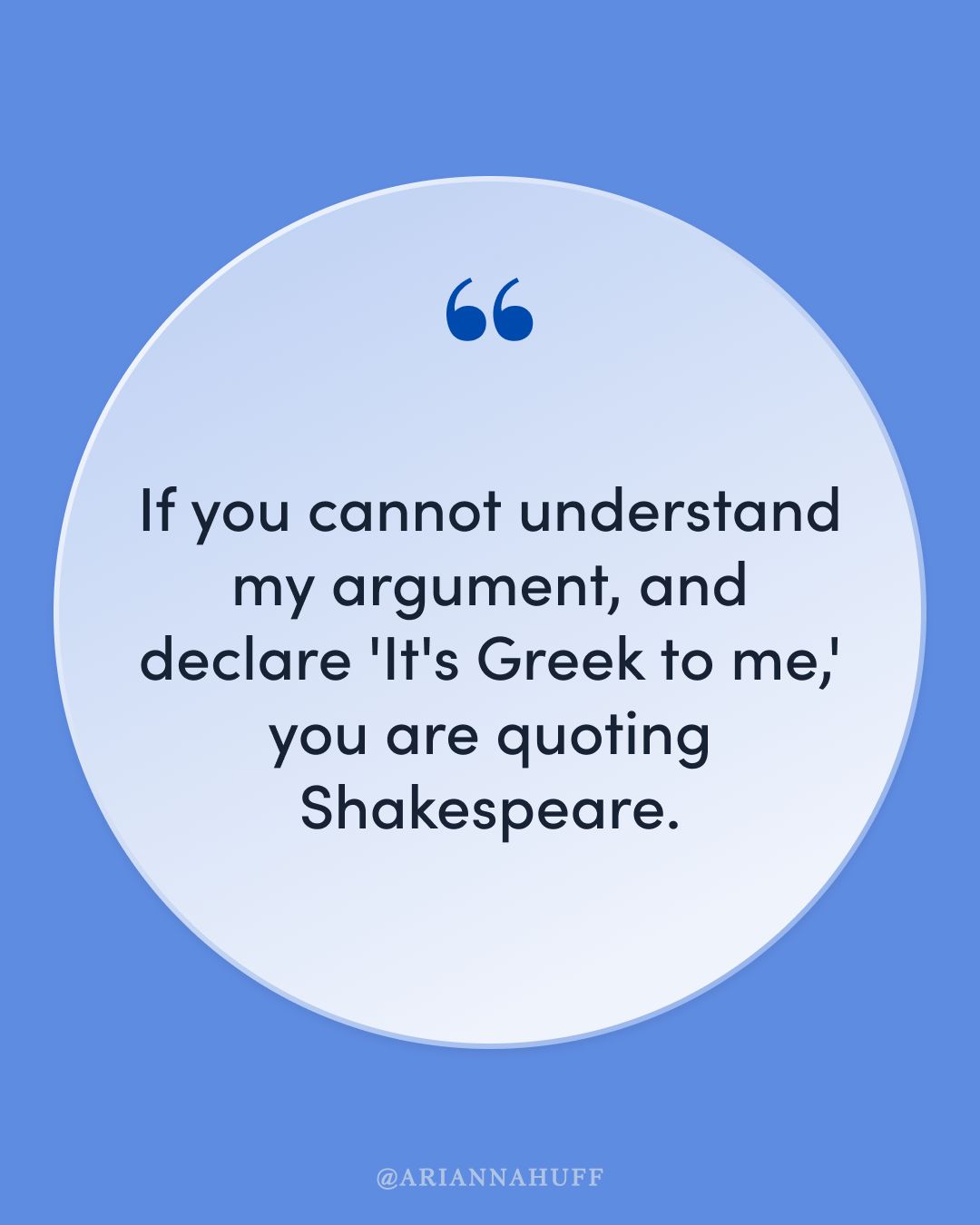
In a recent LinkedIn post, Arianna Huffington highlights the profound and lasting impact of William Shakespeare on the English language, coinciding with the Bard’s birthday and death anniversary.
Huffington notes the unique historical convergence of Shakespeare’s life, stating:
“On this day, April 23rd, Shakespeare was both born and died — 52 years apart.”
This observation serves as a jumping-off point for Huffington’s broader reflection on how Shakespeare’s words have become deeply embedded in our everyday communication, transcending centuries and his literal existence.
The Bard’s Living Language
Arianna Huffington emphasizes that Shakespeare’s true immortality lies not just in his plays and sonnets, but in the very fabric of our language. She points out the continued relevance of his vocabulary and phrasing, which are so common that we often use them without realizing their origin.
According to Huffington, the enduring power of Shakespeare is evident in how his language continues to shape our discourse. She suggests that recognizing this influence is a way to celebrate his genius:
“But he lives on in our daily language.”
Huffington’s post encourages readers to engage with this linguistic legacy, drawing attention to a collection of quotes curated by her friend, Bernard Levin. This curated list serves as a resource for those wishing to appreciate and perhaps even adopt some of Shakespeare’s most memorable lines.
Celebrating Shakespeare Through Usage
The core message from Arianna Huffington’s LinkedIn update is an invitation to actively participate in keeping Shakespeare’s linguistic contributions alive. By encouraging the use of his famous quotes, she proposes a dynamic way to honor his memory and the richness he brought to English.
Huffington shared the practical application of this idea, noting:
“The quotes in the carousel were taken from a list compiled by my dear friend Bernard Levin. So celebrate the Bard by using one, or many, of these today.”
This approach transforms a historical commemoration into an interactive experience, demonstrating that the best way to honor a master of language is to speak his language. Arianna Huffington’s post serves as a reminder of the tangible, everyday presence of Shakespeare’s work, urging a modern appreciation for his unparalleled contribution to global communication.
📝 About This Content
This article is based on insights shared by Arianna Huffington on LinkedIn.
📅 Originally posted on April 23, 2026 | View original post on LinkedIn →