
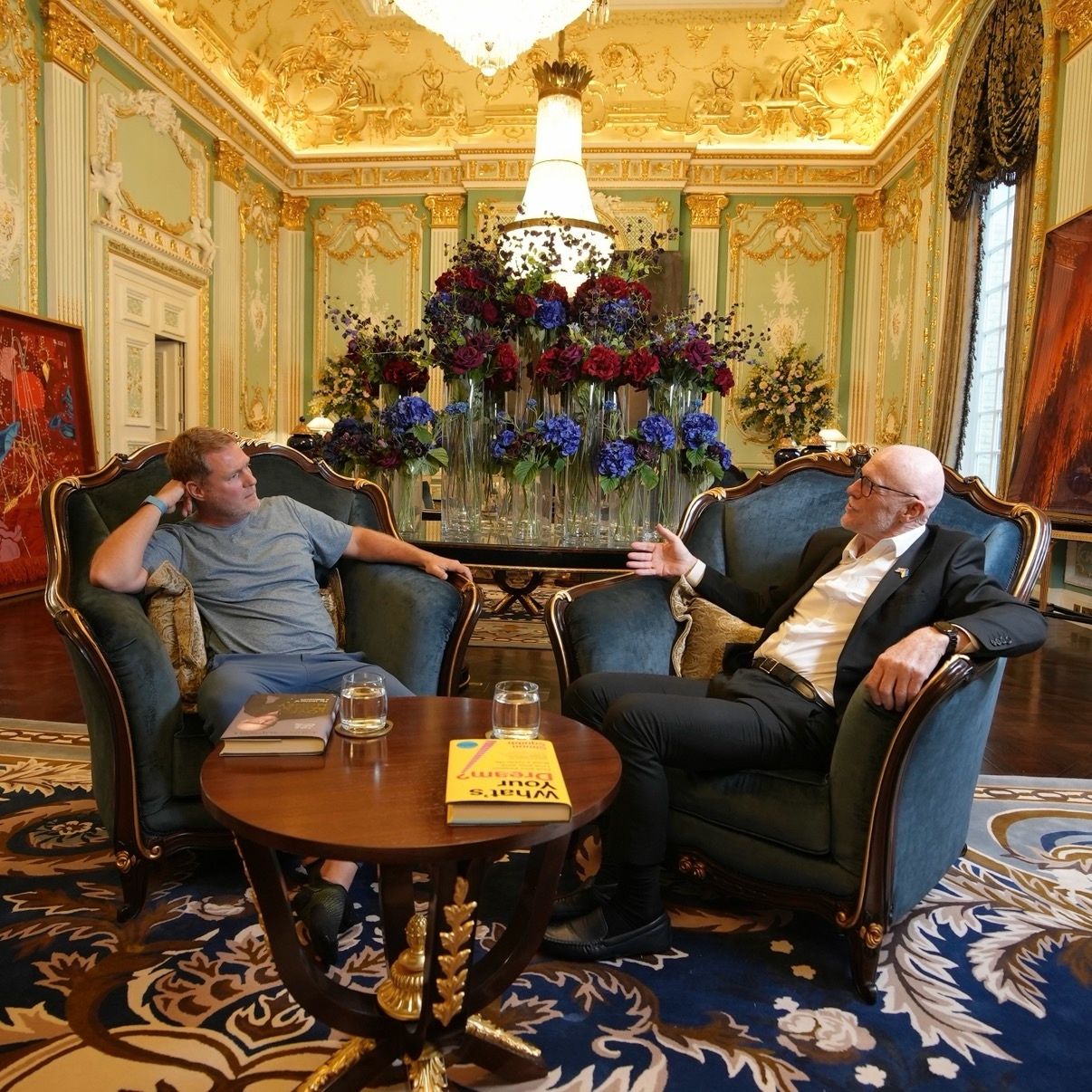
In a recent LinkedIn post, Simon Squibb shares insights gleaned from a conversation with billionaire John Caudwell, the founder of a company valued at $4 billion. Squibb frames Caudwell’s story as an exposure of societal “lies that keep people trapped,” suggesting that traditional schooling fails to impart crucial lessons for building significant wealth. Squibb prompts readers to self-assess their own habits, positing that failure to adopt certain principles could lead to self-sabotage.
The Foundational Role of Health in Wealth Building
Squibb highlights Caudwell’s assertion that optimal health is a critical, often overlooked, factor in achieving financial success. According to Caudwell, as relayed by Squibb, a lack of energy is a primary reason why many individuals do not accumulate wealth. Physical metrics such as VO2 max, diet, inflammation levels, and waist circumference directly impact cognitive functions like clarity, stamina, and consistency. Squibb emphasizes Caudwell’s perspective:
“Your health is your multiplier. John believes most people never get rich for one simple reason. They do not have the energy. … If you are tired or foggy, you will lose to someone who is not.”
This point underscores the idea that physical well-being is not merely a personal benefit but a strategic business advantage. Squibb further elaborates on Caudwell’s regimen, noting his commitment to fasting and fitness.
Fasting, Fitness, and an Unfair Advantage
Simon Squibb relays Caudwell’s practice of undertaking five-day fasts, attributing his remarkable energy levels at 72 years old to such disciplines. Caudwell’s philosophy, as presented by Squibb, is that one cannot effectively build wealth while in poor health. This connection between physical vitality and financial capability is a recurring theme in Squibb’s summary of Caudwell’s insights.
“He fasts for five days straight. He is 72 with the energy of someone in their 30s. His view is clear. You cannot build wealth if you are sick.”
Embracing Failure and Radical Thinking
Beyond physical health, Squibb explores Caudwell’s perspective on failure and conventional thinking. Caudwell, and Squibb himself, view fear of failure not as a deterrent but as a motivator. Squibb notes that successful founders often share this trait, finding excitement rather than trepidation in the prospect of failure.
“This is something I also swear by. Every successful founder I have ever met has this. They do not fear failure. It excites them.”
Furthermore, Squibb highlights Caudwell’s willingness to challenge established norms, exemplified by his decision to remove emails from his company’s operations. This move, Squibb explains, was not about deeming emails inherently bad but about questioning the adherence to rules without understanding their origin or purpose. Caudwell’s approach, according to Squibb, involves radical thinking, often initiated by asking fundamental questions like, “Why are we doing this at all?”
Transforming Adversity into Opportunity
The final secret shared by Squibb, attributed to Caudwell, concerns the reframing of misfortune. Caudwell’s experience witnessing a loved one suffer a stroke, and Squibb’s own experience with his father’s heart attack, serve as poignant examples. Caudwell believes that every instance of bad luck contains the potential for good luck, provided one actively seeks it out. This perspective encourages resilience and a proactive approach to overcoming challenges.
Squibb concludes by inviting readers to access the full interview for deeper insights into Caudwell’s strategies on risk-taking, managing employees, and hiring individuals with superior expertise.
📝 About This Content
This article is based on insights shared by Simon Squibb on LinkedIn.
📅 Originally posted on November 14, 2025 | View original post on LinkedIn →