
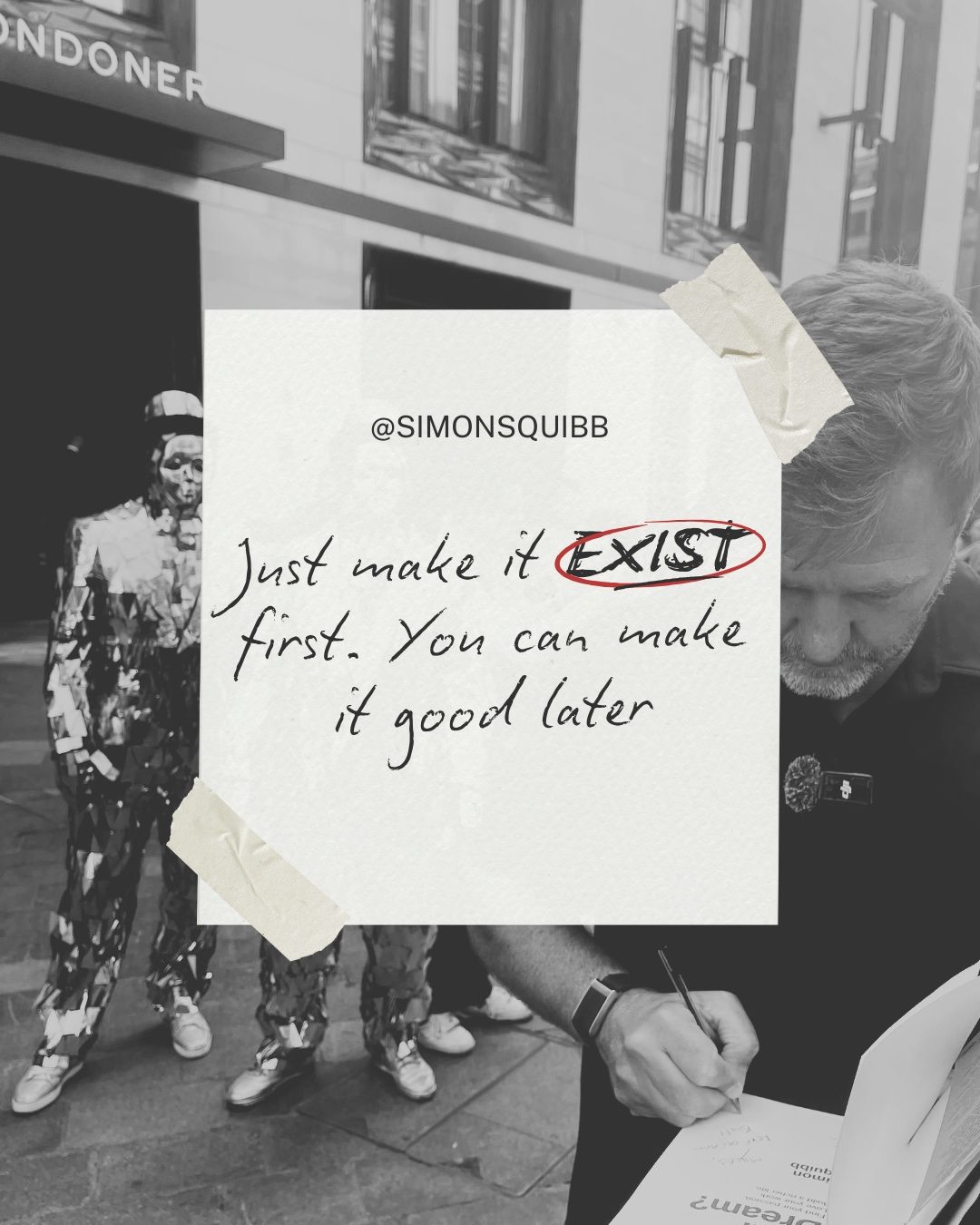
In a recent LinkedIn post, entrepreneur and author Simon Squibb discusses the shifting job market and offers advice on how individuals can pursue their dreams more safely. Squibb highlights a perceived change in the employment landscape, suggesting that the traditional path of leaving a job to chase a passion is now riskier than it once was.
Squibb notes the increased difficulty in finding employment, particularly for recent graduates, and points to broader economic factors influencing the job market. He states:
“The job market has changed. AI is replacing people and opportunity is no longer guaranteed.”
This assertion sets the stage for Squibb’s central argument: the need for tangible proof of concept before making a significant career leap. He questions whether the answer to these market changes is to abandon aspirations altogether, quickly dismissing the idea.
The Imperative of Proof
According to Squibb, the key to successfully transitioning to a dream career lies in demonstrating that the venture is viable and that there is market demand for it. He advocates for a strategic approach, emphasizing the importance of building evidence before taking the plunge.
Squibb elaborates on this strategy:
“No. The answer is proof. Proof your dream can work and proof people want what you’re building. Once you have that, you can quit safely and go all in.”
This emphasis on validation is a core theme in Squibb’s message. He suggests that by gathering this proof, individuals can mitigate the risks associated with leaving stable employment. The post also hints at a forthcoming resource to guide this process.
A Roadmap to Safe Transition
Squibb indicates that his book, ‘What’s Your Dream?’, provides a roadmap for achieving this necessary proof. He describes the book as a guide offering practical steps that can be taken in one’s spare time to make the eventual transition possible. The recent launch of the paperback edition, he notes, aims to make this guidance more accessible.
While Squibb maintains his belief that one cannot fully build a dream career while simultaneously working a traditional 9-to-5 job, he modifies this stance to acknowledge the importance of starting.
“P.S. I still believe that you can’t finish building your dream while working a 9–5. But you can start. And starting is what makes leaving possible.”
This perspective suggests a phased approach, where initial steps are taken during existing employment, building momentum and proof until a safe departure becomes feasible. Squibb’s advice underscores a pragmatic approach to entrepreneurship in the current economic climate, prioritizing validation and strategic planning over impulsive career changes.
📝 About This Content
This article is based on insights shared by Simon Squibb on LinkedIn.
📅 Originally posted on December 15, 2025 | View original post on LinkedIn →