
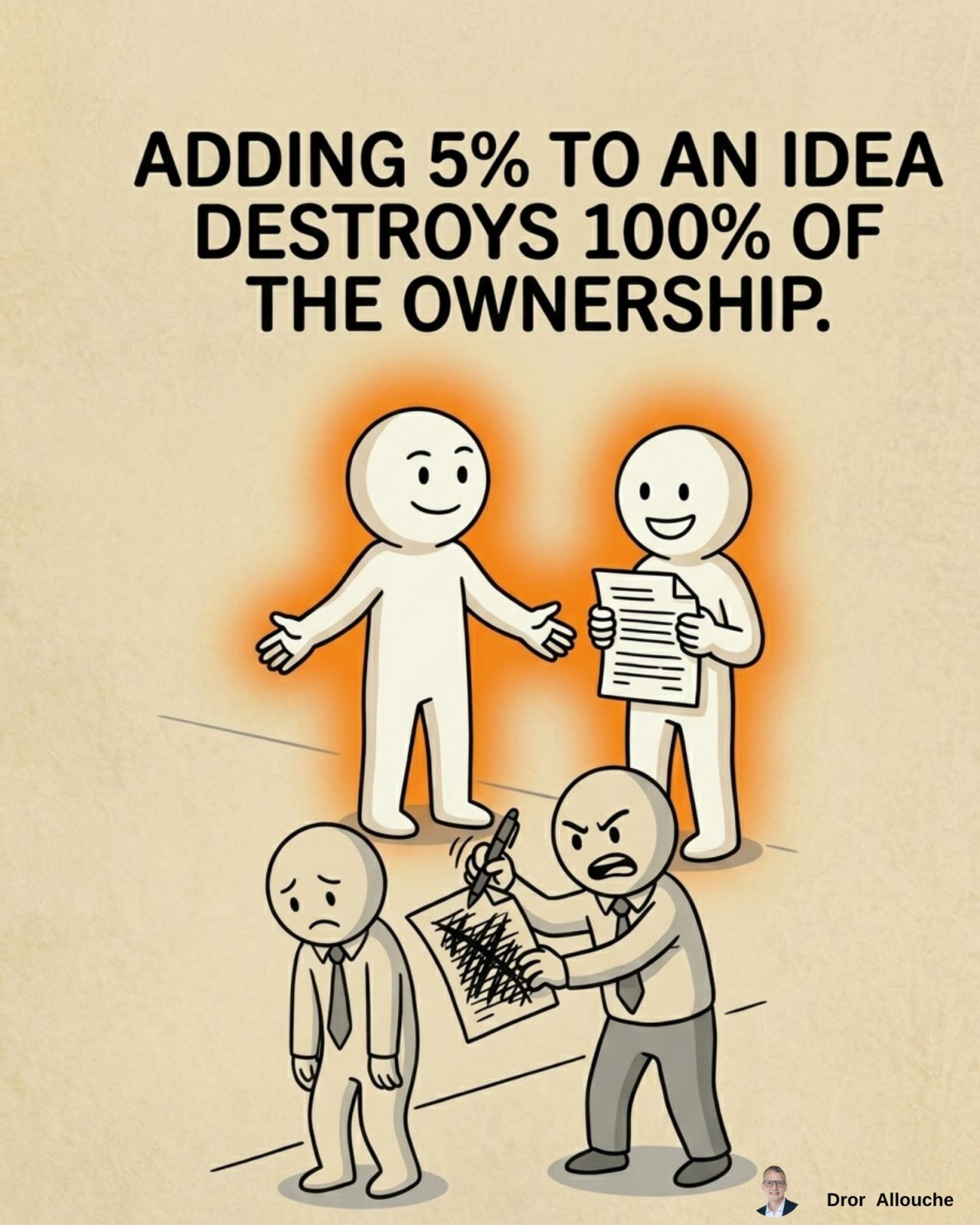
In a recent LinkedIn post, Drorallouche discusses a common leadership pitfall: the tendency to over-help, which can inadvertently undermine team ownership and commitment. Drorallouche argues that while the urge to contribute is natural, unchecked intervention can stifle a team member’s sense of responsibility and their belief in their own ideas.
The core of Drorallouche’s message is that true leadership involves building capacity and protecting the ideas of team members, rather than imposing one’s own solutions. “We possess an urge to contribute,” Drorallouche writes. “A colleague presents a project. We love the ideas. But we can’t resist adding a little something extra. Not for their success, but to satisfy our ego. We think we are adding value. In reality, we are destroying their ownership.”
The Execution Equation: Protecting Commitment
Drorallouche introduces the concept of the “Execution Equation,” emphasizing that results are directly tied to commitment. When a leader alters a strategy, it can diminish the creator’s dedication to the original plan. Therefore, Drorallouche advises a disciplined approach to feedback and contribution.
“Results require commitment. Altering a strategy reduces the creator’s commitment,” Drorallouche explains. The recommended action is to “Approve plans that meet the standard. Withhold your additions. Let the creator execute their vision.” This approach encourages leaders to reflect on their motivations, prompting the question: “Where do you sacrifice team commitment to satisfy your urge to contribute?”
The Intervention Threshold: Measuring Impact
To further refine the act of contributing without destroying ownership, Drorallouche proposes the “Intervention Threshold.” This principle suggests that leaders should only step in when their input is likely to significantly alter the outcome. Drorallouche posits that “Interventions require a standard. Adjustments of 5% damage ownership.”
To maintain team ownership, Drorallouche suggests implementing a “30% rule.” This means intervening only when a contribution is expected to change the outcome by 30% or more. This provides a clear, quantifiable guideline for when external input is truly necessary and valuable. The related coaching question for leaders is, “How do you measure the impact of your interventions?”
The Boardroom Application: Governance vs. Execution
Finally, Drorallouche addresses how these principles apply in a boardroom setting, distinguishing between the roles of advisors and operators. “Directors advise. Operators execute,” Drorallouche states. The effective approach for leaders in governance roles is to guide through questioning rather than direct intervention.
Instead of dictating solutions, leaders should “Address gaps with questions,” such as, “I see a gap in the timeline. Walk me through your plan to close it.” This method empowers the executing team to identify and solve their own problems, reinforcing their ownership. The guiding question for leaders here is, “What mechanisms keep your focus on governance over execution?”
By advocating for these strategies, Drorallouche aims to help leaders build more capable and self-reliant teams, ultimately fostering a stronger sense of ownership and commitment among employees.
📝 About This Content
This article is based on insights shared by Drorallouche on LinkedIn.
📅 Originally posted on May 27, 2026 | View original post on LinkedIn →