
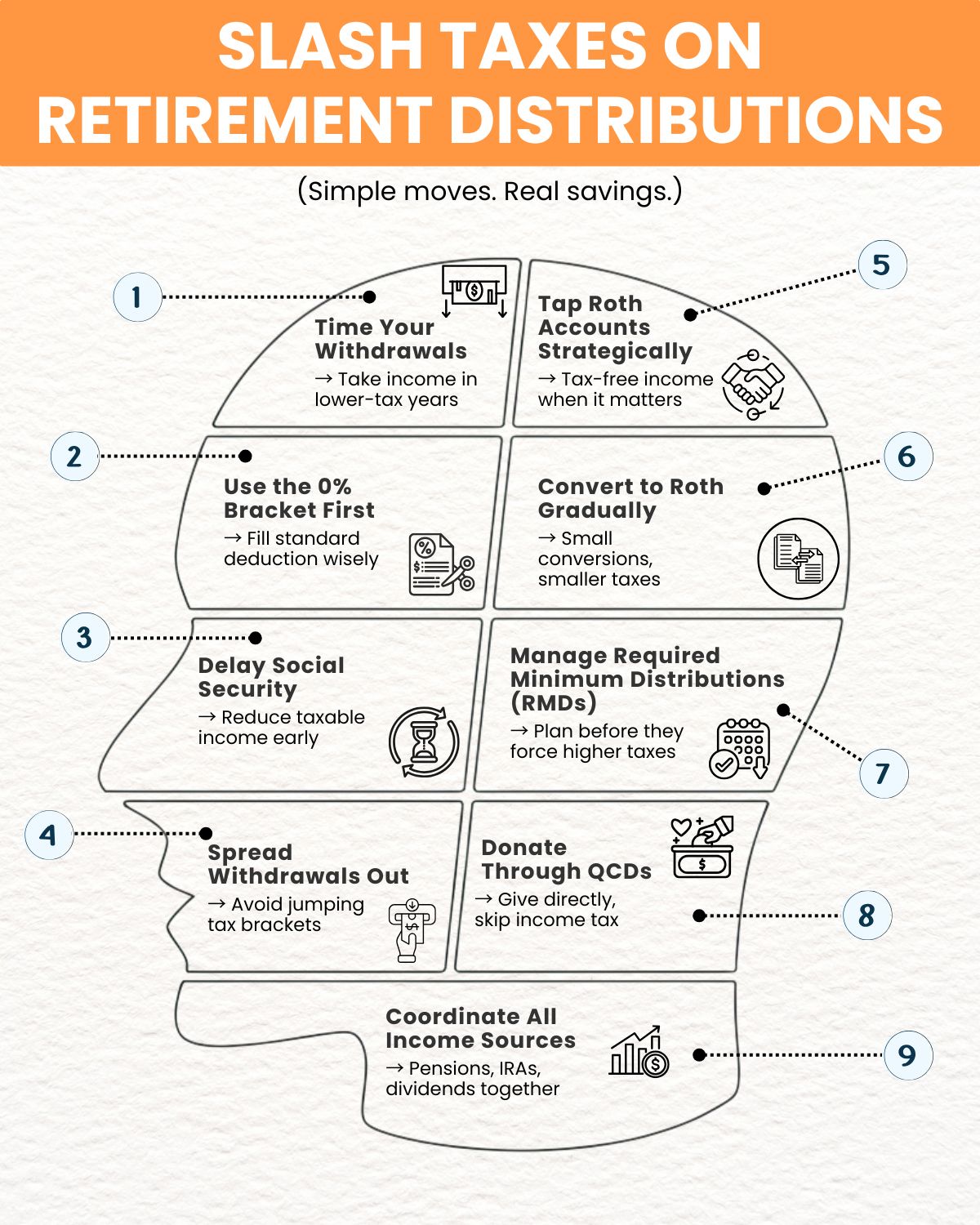
In a recent LinkedIn post, Marc Henn discusses a common misconception about retirement finances: the inevitability of high taxes. Henn argues that while retirement taxes can feel unavoidable, they are often the result of poor withdrawal sequencing rather than an inherent problem with retirement income itself. He emphasizes that the order in which individuals access their retirement funds significantly impacts their overall tax burden.
Marc Henn highlights that many individuals focus on the amount they withdraw, overlooking the critical importance of the order.
“Most people withdraw money. Few sequence it. And the order you take income decides how much you keep.”
Henn outlines a series of strategies for smarter retirement withdrawals, detailing how specific sequencing decisions can lead to substantial tax savings. He breaks down these strategies into actionable points, aiming to guide individuals toward a more tax-efficient retirement.
Understanding Tax Bracket Management
One of the core tenets of Henn’s advice revolves around managing income to avoid unnecessary tax bracket increases. He points out that high-income years, even within retirement, can disproportionately increase tax liabilities.
Timing Withdrawals for Lower Tax Rates
As Marc Henn notes, timing is crucial. Individuals should aim to withdraw funds during periods when their overall income, and thus their tax rate, is expected to be lower.
“Time withdrawals when your tax rate is lower.”
This strategy also involves strategically filling lower tax brackets before moving to higher ones. Henn suggests that delaying certain income sources, such as Social Security, can create lower-income years that are beneficial for taxable withdrawals or Roth conversions.
Optimizing Account Types and Conversions
Henn also delves into the nuances of different retirement accounts and conversion strategies. He contrasts the impact of depleting taxable accounts with the preservation offered by Roth accounts.
“Taxable accounts drain. Roth preserves. Use tax-free income when it matters most.”
Furthermore, Henn advises against large, one-time Roth conversions, which can trigger significant tax bills. Instead, he advocates for gradual conversions over several years to keep the tax impact manageable.
Leveraging Qualified Charitable Distributions (QCDs)
For those who plan to donate to charity in retirement, Marc Henn points out a tax-efficient method: Qualified Charitable Distributions (QCDs). Instead of withdrawing funds from an IRA and then donating, which incurs income tax on the withdrawal, QCDs allow direct transfers from an IRA to a charity, bypassing income tax altogether.
“Giving gets taxed. QCDs don’t. Donate directly and skip income tax.”
Henn underscores that proactive planning is key, especially concerning Required Minimum Distributions (RMDs). By anticipating RMDs and planning withdrawals accordingly, individuals can prevent forced distributions from unexpectedly increasing their tax rates in a given year.
The Power of Coordinated Income Streams
Finally, Marc Henn emphasizes the importance of coordinating various income streams in retirement. He suggests that pensions, IRAs, and dividend-paying investments should not be viewed in isolation but as parts of a cohesive financial plan.
In conclusion, Marc Henn’s insights on LinkedIn offer a clear roadmap for retirees seeking to minimize their tax obligations. By focusing on strategic withdrawal sequencing, understanding tax bracket implications, optimizing account usage, and coordinating income sources, individuals can significantly reduce their tax burden and retain more of their hard-earned retirement savings.
📝 About This Content
This article is based on insights shared by Marc Henn on LinkedIn.
📅 Originally posted on February 2, 2026 | View original post on LinkedIn →