
In a recent LinkedIn post, James Cox discusses the critical factors hindering the effective integration of Artificial Intelligence (AI) in pharmaceutical research and development (R&D), emphasizing that the primary bottleneck is not technology, but talent and organizational structure.
Cox highlights the significant investment in R&D, noting that “70% of R&D spend goes on Clinical Development.” He further elaborates on the rising costs and low success rates, stating, “The cost per successful new molecule has climbed from around $2.5bn in 2016 to $4bn today, and only about 13% of assets entering Phase I make it through.” This stark reality sets the stage for his argument that current approaches to AI implementation are fundamentally flawed.
The Flaw in Bolting AI onto Legacy Systems
Cox observes that many companies are attempting to integrate AI into their existing, rigid R&D frameworks. He criticulates this approach, writing,
“We keep talking about AI transforming pharma R&D, but most companies we speak to are bolting AI onto the same linear, stage gate model they’ve always used. The same red tape, corporate bureaucracy and legacy systems make this the least effective way to innovate and unlock the power of AI.”
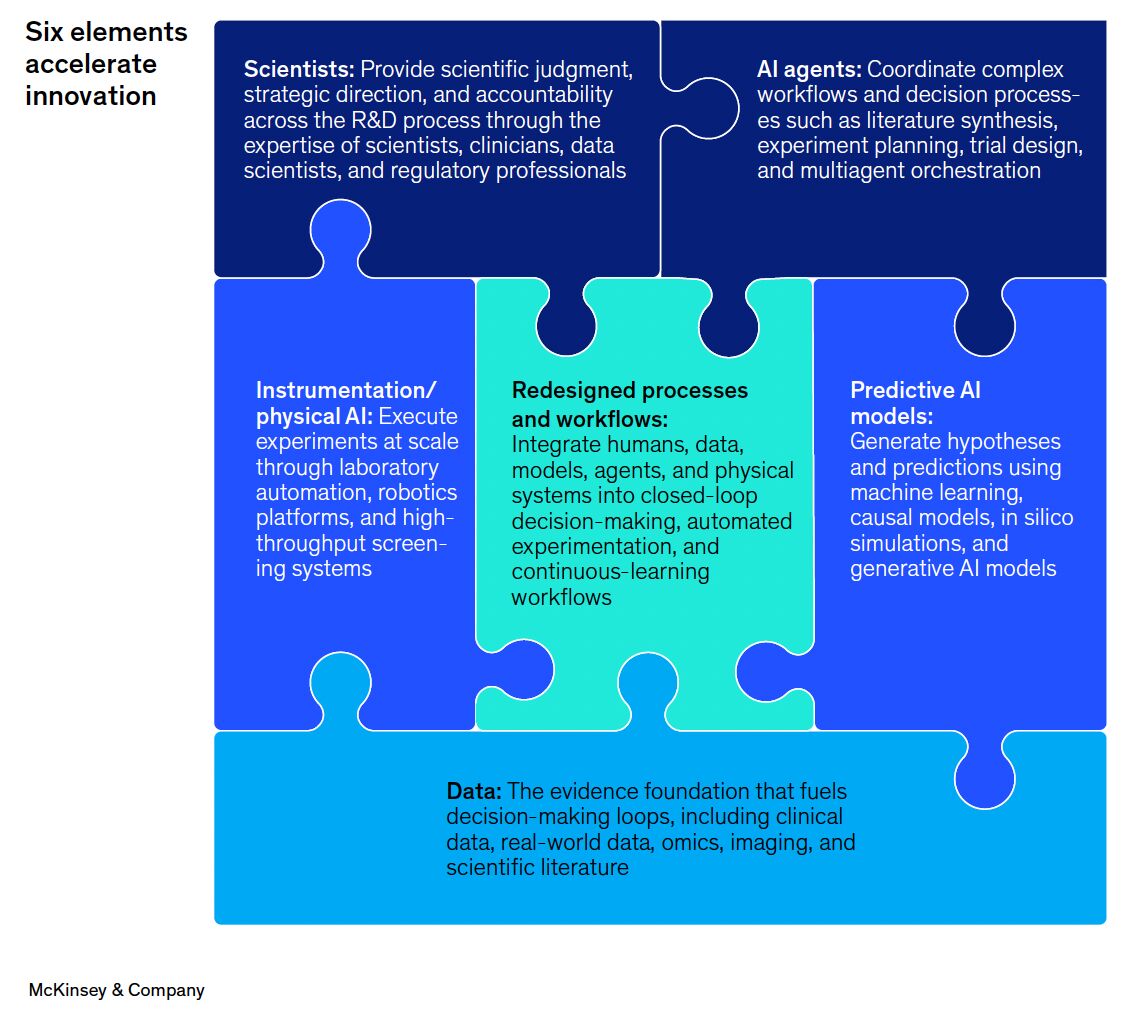
This reliance on traditional, bureaucratic processes, according to Cox, stifles the innovative potential of AI. He points to research from McKinsey & Company, which, as he notes, “nails why that doesn’t work, and the answer isn’t really about the technology at all.”
The Crucial Role of Specialized Talent
The core of Cox’s argument centers on the necessity of a new talent paradigm. He asserts that the true transformation requires a unique blend of skills that bridge the gap between advanced AI capabilities and scientific application. As Cox explains,
“The biggest shift is the talent. Closing the loop on AI powered R&D needs a very specific blend: causal modelling, foundation models, agentic AI, plus a new type of skill set and people who can actually connect the science to the business.”
He posits that cultivating this specialized talent is paramount, suggesting that getting it right can lead to dramatic improvements in human productivity, stating, “Get it right and human productivity can climb more than tenfold.”
Building In-House AI R&D Hubs
To truly harness the power of AI, Cox advocates for a strategic restructuring of R&D operations. He suggests that the most effective path forward involves building AI capabilities in-house. According to Cox,
“The best way to unlock productivity is to build these new AI powered R&D hubs in-house, embedded in the scientific workflows.”
This integrated approach, he argues, is more conducive to innovation than merely adopting new tools. Cox emphasizes that success will hinge on organizational courage and a willingness to adapt decision-making processes. He concludes by stating,
“The companies that win won’t be the ones with the flashiest tools. They’ll be the ones brave enough to hire differently and rewire how decisions get made.”
Cox’s insights underscore a critical shift required in the pharmaceutical industry: prioritizing the cultivation of specialized talent and fostering agile, AI-native R&D environments over simply investing in new technologies.
📝 About This Content
This article is based on insights shared by James Cox on LinkedIn.
📅 Originally posted on July 7, 2026 | View original post on LinkedIn →