
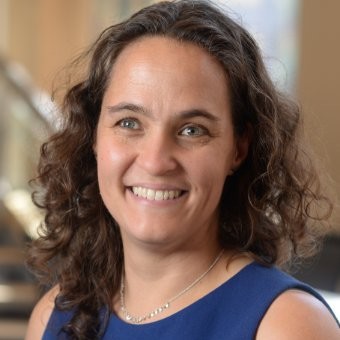
In a recent LinkedIn post, product discovery consultant Teresa Torres shares her journey into the intricacies of how transformer models work, sparked by a desire to understand “context rot” in large language models (LLMs).
Torres details her deep dive, which began with a specific question about context window size and expanded into a broader exploration of LLM architecture. She articulates the foundational elements she grappled with, including the use of tokens instead of whole words, the process of converting tokens to embeddings, and the mathematical underpinnings involved.
“I learned why LLMs use tokens and not whole words. I learned how we go from tokens to embeddings (and had a quick detour relearning vector and matrices math), visualized sand in a really large multi-dimensional space, I learned about attention (like in how it’s computed with query, key, value vectors), how the attention layer embeds context into each token, so that when each token is sent through a neural net in isolation it brings context with it.”
Understanding the ‘Attention’ Mechanism
A significant portion of Torres’s exploration focused on the concept of ‘attention’ within transformer models. As she explains, this mechanism is crucial for embedding context into each token, allowing the model to retain relevant information even when processing tokens individually.
Torres highlights the iterative nature of these processes in modern LLMs:
“I learned that modern LLMs repeat this process over and over again for every input token and again when generating tokens. I learned about attention heads and why more are better and that it’s not the same as just lengthening the embedding vector.”
She also touched upon the technical nuances of KV caching, clarifying its specific application during token generation rather than input processing.
From Complexities to Clarity
Beyond the technical details, Torres expressed a personal enjoyment in dissecting complex systems and finding accessible ways to explain them. This intrinsic motivation led her to consider developing an article that demystifies these LLM concepts for a broader audience.
A Call for Accessible Explanations
Torres posed a question to her LinkedIn network, gauging interest in an article that would break down transformer mechanics conceptually, with a light touch on the underlying mathematics. Her stated goal is to make the information accessible at a foundational level, avoiding overly advanced mathematical treatments.
According to Torres, the ultimate outcome of her investigation was the ability to formulate her own hypotheses regarding context rot:
“And now, I can generate my own theories about why context rot happens. And that’s fun.”
This pursuit of understanding, coupled with a desire to share that knowledge simply, underscores Torres’s approach to complex technological topics. Her post serves as a testament to the value of deep, self-directed learning and the potential for making sophisticated concepts understandable to a wider professional audience.
📝 About This Content
This article is based on insights shared by Teresa Torres on LinkedIn.
📅 Originally posted on January 15, 2026 | View original post on LinkedIn →