
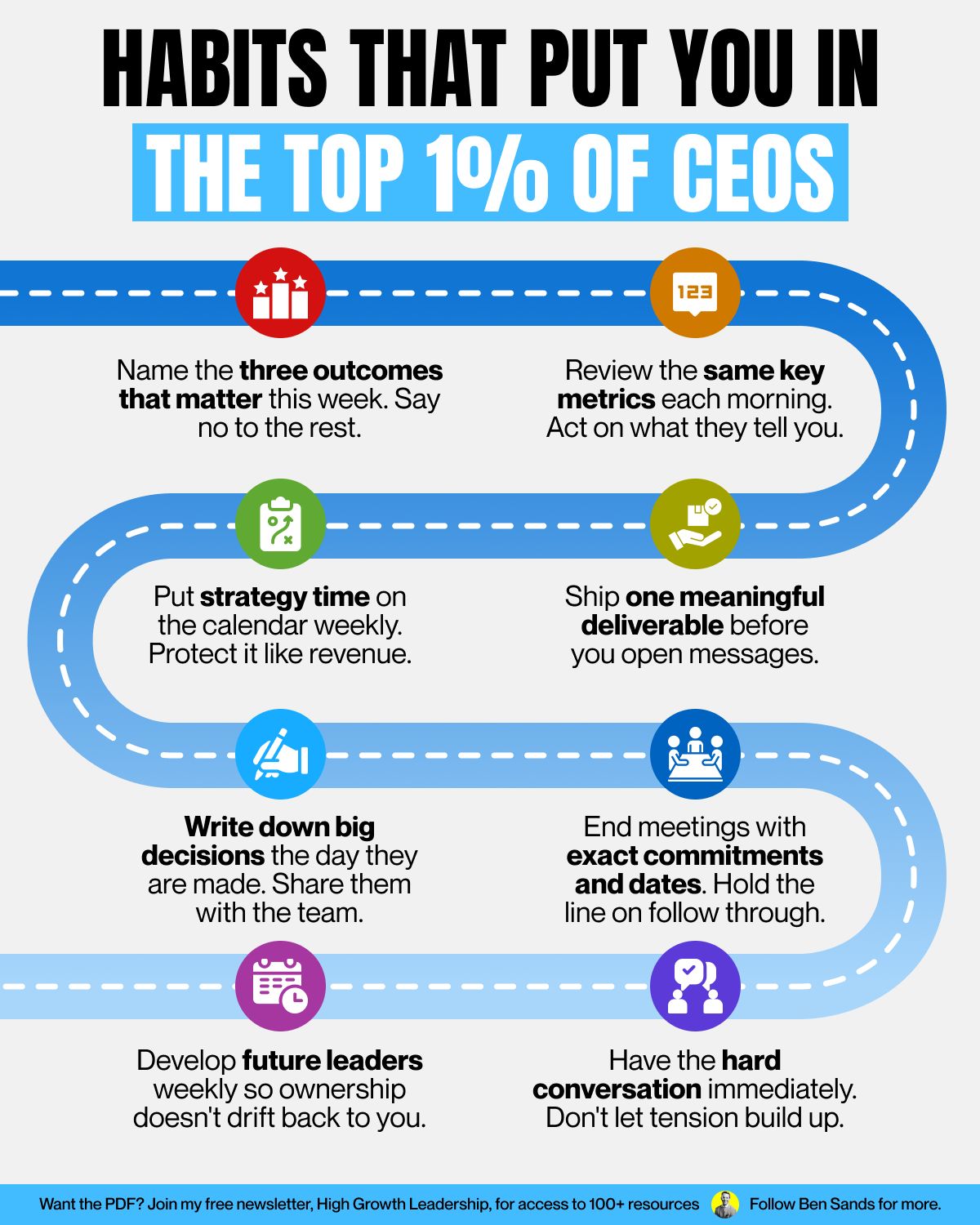
In a recent LinkedIn post, Ben Sands explores the often-overlooked habits that differentiate top-performing CEOs from their peers. Contrary to popular belief, Sands argues that exceptional leadership isn’t born from extraordinary talent or flashy routines, but rather from the consistent application of seemingly mundane practices.
Sands challenges the common narrative that success hinges on innate ability or sheer luck. He states:
The top 1% of CEOs aren’t more talented than you. They’ve mastered boring habits you avoid.
Drawing on his experience working with hundreds of senior leaders, Sands identifies a pattern of deliberate habit-building that underpins sustained high performance without leading to burnout. According to Sands, these leaders don’t rely on fluctuating motivation; instead, they proactively design their environments and routines to minimize friction, preserve energy, and ensure clarity of purpose.
The Foundation of Consistent Performance
Sands emphasizes that the key to consistent high-level execution lies in building systems that support, rather than drain, a leader’s energy. He outlines several actionable habits that contribute to this:
- Clearly defining weekly priorities and learning to decline extraneous tasks.
- Establishing a daily review of key metrics to inform immediate actions.
- Prioritizing the completion of significant deliverables before engaging with communications.
- Scheduling and rigorously protecting dedicated time for strategic planning each week.
- Documenting major decisions and communicating them transparently to the team.
- Ensuring all meetings conclude with defined commitments and accountability for follow-through.
- Addressing difficult conversations promptly to prevent escalating tension.
- Actively developing future leaders to foster distributed ownership and prevent bottlenecks.
These practices, while straightforward, require intentionality. As Sands notes:
None of this is complicated. You just have to be intentional with your energy.
When these habits are ingrained, Sands explains, the result is a more streamlined execution process, faster decision-making, and prolonged energy reserves, leading to predictable and sustainable performance.
The Importance of Foundational Well-being
However, Sands cautions that even the most effective habits are unlikely to take root if a leader is operating from a place of depletion. He highlights the critical prerequisite of physical and mental readiness.
The Executive Health Quiz
To address this, Sands has developed a free resource, the Executive Health Quiz. He explains its purpose:
That’s why I built the Executive Health Quiz. It gives you a clear snapshot of what’s supporting your performance — and what’s quietly working against it — so you know exactly where to focus.
This tool aims to provide leaders with a clear understanding of their current state, identifying factors that either bolster or undermine their performance. By pinpointing areas of weakness, leaders can more effectively direct their efforts toward building the foundational well-being necessary for sustainable habit formation and, ultimately, consistent leadership success.
📝 About This Content
This article is based on insights shared by Ben Sands on LinkedIn.
📅 Originally posted on February 1, 2026 | View original post on LinkedIn →