
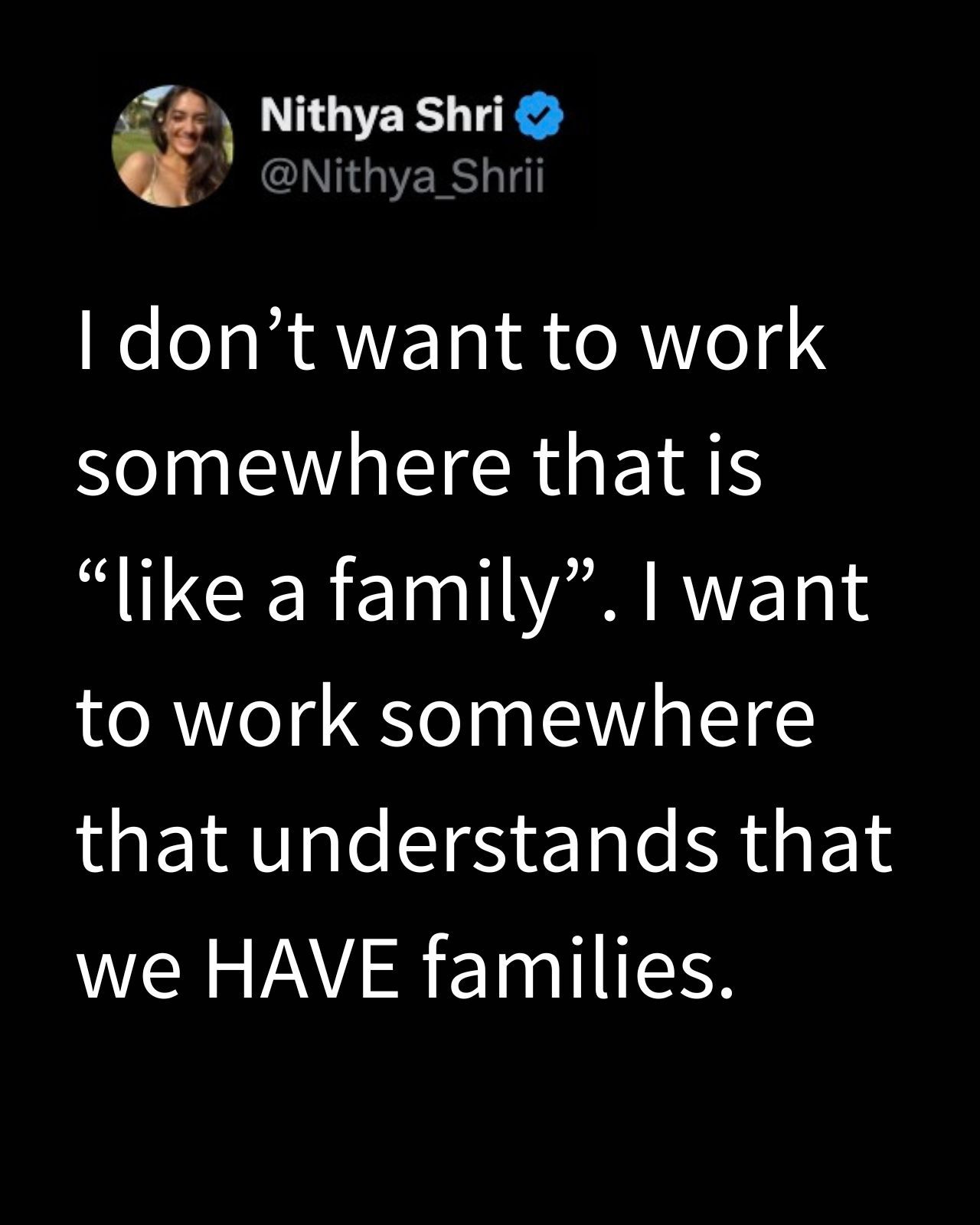
In a recent LinkedIn post, Tim Denning explores a common workplace phrase that he argues serves as a significant red flag for potential employees: “We’re like a family here.” Denning, drawing on over a decade of experience in corporate banking, contends that this seemingly warm invitation often masks an expectation of extreme personal sacrifice, where employees are encouraged to prioritize the company over their own families.
Denning recounts observing colleagues repeatedly miss important family events, such as birthdays and school plays, due to demanding work schedules and the perceived need to always be available. He highlights the pressure to respond to emails during personal time, including vacations and even significant life events, all under the guise of company loyalty.
“We’re like a family here” is the biggest red flag in any job interview.
The author contrasts this corporate notion of family with the reality of genuine familial bonds. “Real families don’t guilt you into working weekends. Real families don’t make you feel replaceable if you take a sick day,” Denning writes, emphasizing that true family support does not come with professional repercussions.
The Personal Reckoning: Daughters and Shifting Priorities
Denning shares a pivotal moment in his career when the birth of his daughters fundamentally shifted his perspective. He realized that every hour dedicated to a company that demanded such extreme commitment was an hour taken away from his actual family. This realization led him to re-evaluate his priorities, understanding that his personal family’s needs and well-being were paramount.
Suddenly the math didn’t work anymore. Every hour I gave to a company that called itself a family was an hour stolen from the actual family waiting for me at home.
What Truly Respectful Organizations Look Like
According to Denning, companies that genuinely respect their employees do not need to use familial metaphors. Instead, they demonstrate respect through their actions and policies. These organizations, in his view, operate like mature, adult environments where the importance of work-life balance is understood and accommodated.
Characteristics of Healthy Workplaces
Denning points out several characteristics of such organizations:
- They avoid scheduling meetings at inconvenient early morning or late evening hours.
- They do not penalize employees for taking earned vacation time.
- They do not foster an environment of guilt or pressure regarding personal boundaries.
He argues that these practices lead to better employee performance. “You work better when you’re not running on empty. You think clearer when you’re not stressed about missing your kid’s first steps,” Denning explains. This approach, he suggests, fosters loyalty and reduces burnout, ultimately benefiting both the employee and the organization.
A Deliberate Choice for Work-Life Integration
Now running his own business, Tim Denning has intentionally structured his work life to be present for his daughters. He emphasizes that this integration is not a matter of luck but a conscious decision made after recognizing that no employer’s commitment to his family could match his own.
That’s not luck. That’s a choice I made after realizing that no company would ever care about my family as much as I do.
Denning concludes his post by offering a practical piece of advice for job seekers. He suggests asking potential employers a specific question to gauge their true culture: “Do they let you leave early for your kid’s school play without making you feel like you’re letting the team down?” He believes the answer to this question reveals the authentic nature of a company’s respect for its employees’ lives outside of work.
📝 About This Content
This article is based on insights shared by Tim Denning on LinkedIn.
📅 Originally posted on May 1, 2026 | View original post on LinkedIn →