
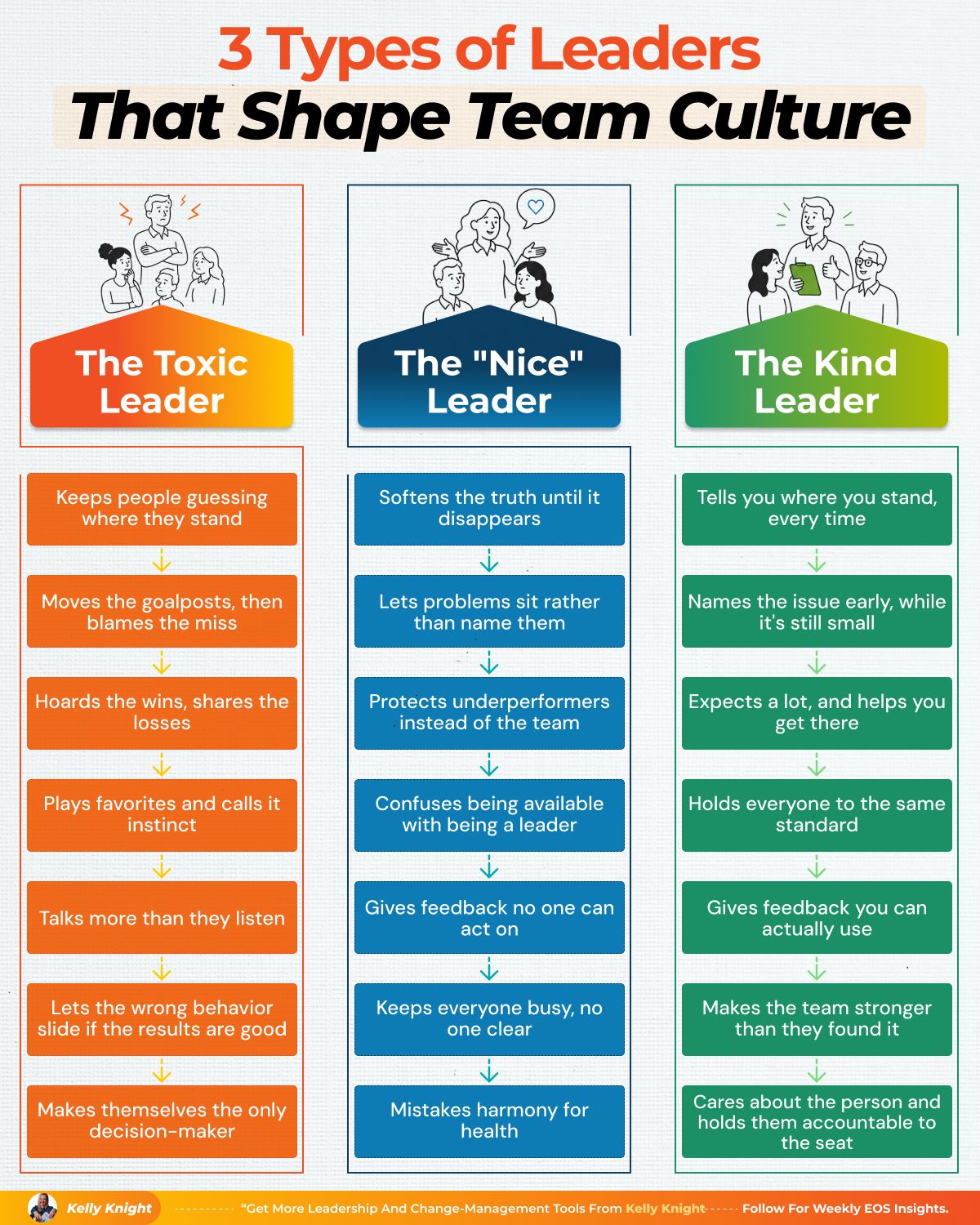
In a recent LinkedIn post, Mark O’Donnell offers a nuanced perspective on leadership, distinguishing between seemingly positive traits that can be detrimental and those that genuinely foster growth. O’Donnell, an Integrator, highlights a common misconception in leadership advice that equates being “nice” with being effective, arguing that this conflation can lead to significant organizational problems.
According to O’Donnell, the leadership landscape can be broadly categorized into three types, with one being particularly insidious due to its subtlety. He begins by detailing the characteristics of a “bad boss,” which are often overtly negative and easily identifiable.
“They move the goalposts, then act like you missed
Bad behavior gets a pass as long as the numbers hold
They’ve got favorites, and they call it instinct
You never quite know where you stand
They talk far more than they listen
Wins are theirs, losses are yours
Every decision routes back through them”
The Pitfalls of the ‘Nice’ Leader
O’Donnell then pivots to the more dangerous category: the “nice” boss. This leader, he explains, appears well-intentioned but ultimately erodes team performance and morale through a lack of candor and accountability. This type of leadership, while superficially caring, can drive away top talent.
“This is the one that gradually costs you your best people, because on the surface it looks like care,” O’Donnell writes. He elaborates on the subtle but damaging behaviors associated with this leadership style:
- Everyone’s busy, nobody’s clear
- A silent room reads as a healthy one
- Problems get to sit instead of getting named
- The feedback is so soft there’s nothing to act on
- The truth gets watered down until it’s useless
- Being around all the time gets mistaken for leading
- The struggler gets protected while everyone else carries the weight
The core issue, as O’Donnell points out, is that “Staying quiet to keep the room comfortable isn’t kindness, only avoidance.” This approach, he argues, signals to employees that honesty is not valued, leading to a decline in trust and engagement.
Defining the ‘Kind’ Leader
In contrast to both the “bad” and “nice” boss, O’Donnell introduces the “kind” leader as the ideal to strive for. This leader, he emphasizes, balances high expectations with genuine support and clear communication. Kindness, in O’Donnell’s view, is not about avoiding difficult conversations but about addressing them constructively.
“They set the bar high and stand right next to you to help you clear it
They care about you and still hold you to your seat
They name the issue while it’s small enough to fix
They leave the whole team better than they found it
Same standard for everyone, no exceptions
Their feedback actually gives you something to use
You always know where you stand”
O’Donnell underscores the fundamental difference between niceness and kindness, quoting Randy Gariss in agreement: “nice does not equal kind.” He defines kindness as “truth plus grace,” suggesting that a kind leader has difficult conversations out of respect for an individual’s potential and growth, rather than out of a desire to maintain superficial comfort.
Kindness as Strength, Not Weakness
The article concludes by challenging the common perception that kindness in leadership is a sign of weakness. O’Donnell asserts that true kindness is “the harder, braver thing,” as it requires the courage to deliver difficult truths with empathy. “Nice protects how you feel today. Kind protects who you’re capable of becoming,” he states, encapsulating the long-term developmental benefit of authentic, kind leadership.
O’Donnell prompts his audience to reflect on leaders who have embodied this principle, encouraging engagement and further discussion on the subject.
📝 About This Content
This article is based on insights shared by Mark O'Donnell on LinkedIn.
📅 Originally posted on July 1, 2026 | View original post on LinkedIn →