
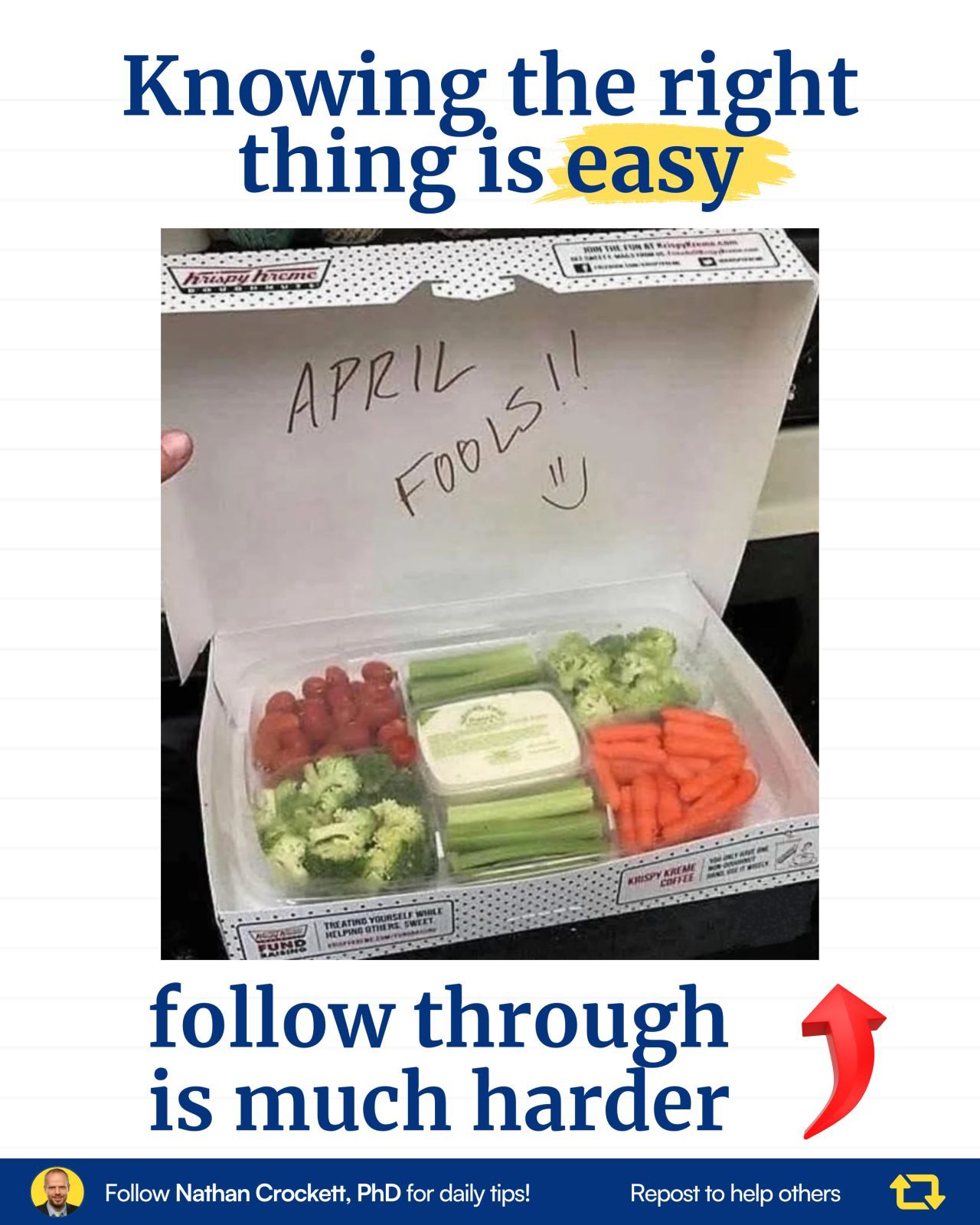
In a recent LinkedIn post, Nathan Crockett, PhD delves into the common struggle between knowing what needs to be done and actually doing it, challenging the notion that inaction stems from laziness or a lack of knowledge. He posits that the real obstacle is the daily negotiation with comfort and the inherent risks associated with taking action.
Nathan Crockett, PhD highlights the internal conflict many face, stating:
“Discipline is a daily negotiation And comfort makes a strong case.”
According to Nathan Crockett, PhD, the issue isn’t a deficit of information. We are often fully aware of healthier choices, productive tasks, or necessary conversations. The problem arises when the immediate comfort of inaction or less demanding options outweighs the perceived long-term benefits of action. He illustrates this with the common scenario of choosing less healthy food options, not because the healthier alternative is unknown, but because the immediate gratification is more appealing.
The Fear of Action
The core of Nathan Crockett, PhD’s argument centers on the fear that accompanies action. While knowledge feels safe and theoretical, taking action introduces elements of risk, effort, and discomfort. This makes the immediate choice to delay or avoid tasks, even those we know are beneficial, a recurring pattern.
As Nathan Crockett, PhD points out:
“We love clarity. We fear action. Because action comes with risk. Effort. Discomfort. Exposure.”
He elaborates that knowledge, while valuable, is passive. It doesn’t require the same internal fortitude as executing a plan. Discipline, in his view, is not an innate personality trait but a result of repeated, often small, conscious decisions made in the face of this discomfort. It’s the internal tug-of-war that plays out in seemingly minor choices, like opting for a salad over a donut, or sending a difficult email instead of scrolling through social media.
Beyond Strategy: The Need for Follow-Through
Nathan Crockett, PhD contends that many individuals are not lacking in strategies or insights but in the ability to implement them consistently. The focus, he suggests, should shift from acquiring more knowledge to strengthening follow-through.
He emphasizes:
“You don’t need another strategy. ↳ You need stronger follow-through.”
The path forward, according to Nathan Crockett, PhD, involves starting small and focusing on consistency rather than perfection. He advises selecting one known positive action and committing to it immediately, rather than waiting for an ideal moment or feeling ready. This iterative process of making small, deliberate choices builds the muscle of discipline over time.
Building a Life Through Consistent Action
Ultimately, Nathan Crockett, PhD frames discipline as a series of quiet, relentless decisions. The space between understanding what to do and actually doing it is where significant life changes and achievements are forged. By consistently choosing action, however small, over the allure of comfort, individuals can bridge this gap and build the lives they envision.
Nathan Crockett, PhD concludes by reiterating that discipline is a choice, one that must be made repeatedly. The true construction of one’s life happens in the consistent effort to act on what is known.
📝 About This Content
This article is based on insights shared by Nathan Crockett, PhD on LinkedIn.
📅 Originally posted on January 15, 2026 | View original post on LinkedIn →