
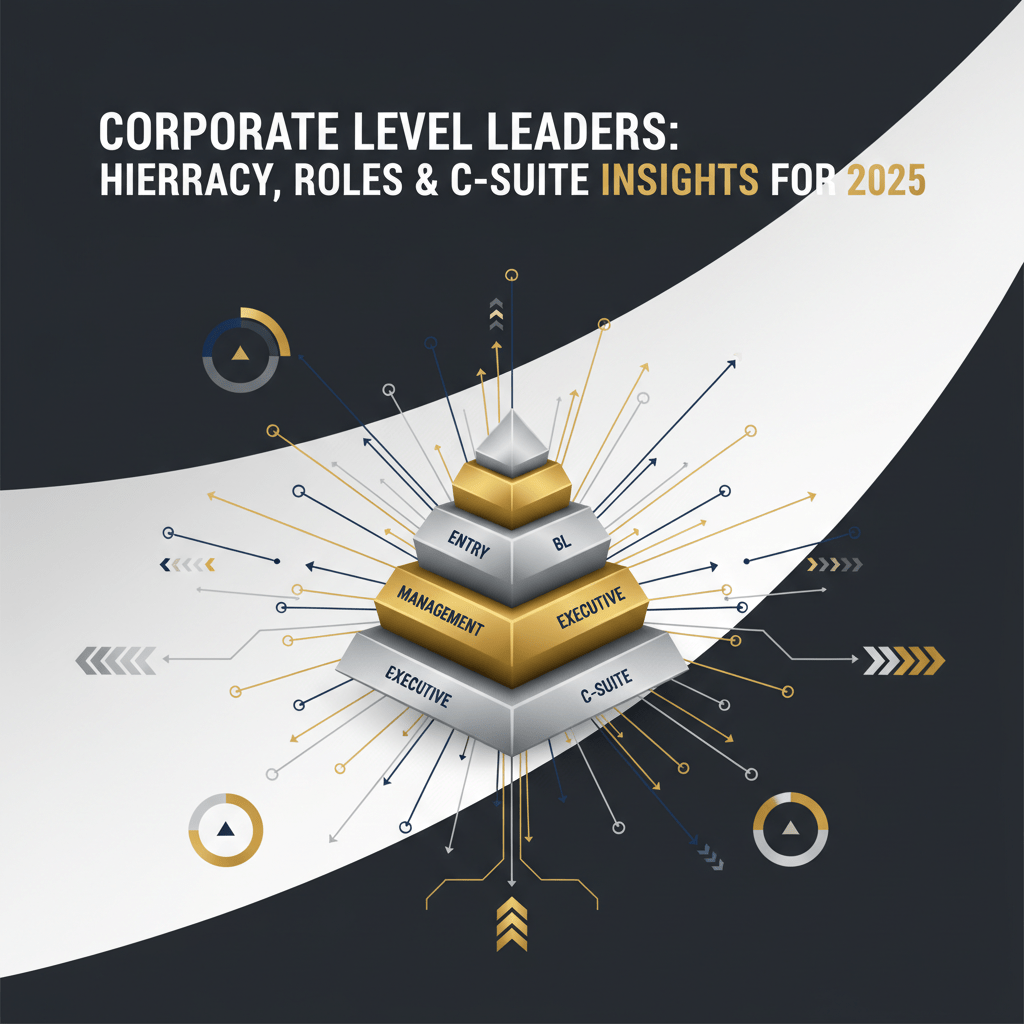
Corporate level leaders are senior executives responsible for a company’s strategic direction, financial performance, and overall management. This hierarchy typically includes C-level (e.g., CEO, CFO), V-level (Vice President), and D-level (Director) positions, each with a distinct scope of authority and focus on driving long-term organizational success.
The world of global business leadership is always changing. It is shaped by new technology, shifting markets, and major world events. For ambitious leaders, understanding the roles of corporate level leaders is not just a theory—it’s essential for success. Insights from top CEOs show that the definition of leadership is growing. It now requires more than operational skill. It also calls for excellent strategic thinking, foresight, and real influence.
This guide explores the full corporate hierarchy, from teams running daily operations to the top levels of C-suite leadership. We look at the specific duties, key skills, and changing demands of senior positions. We also offer practical advice for building a path to executive success in 2025 and beyond. By explaining the strategic role at each level, this article clarifies what defines a corporate level leader today. You will learn how to position yourself or your company to lead in innovation and influence.
What Defines a Corporate Level Leader Today?
The world of corporate leadership has changed completely. For 2025 and beyond, a leader is more than just a job title. Today’s top executives need a mix of foresight, empathy, and tech skills. They face new and complex challenges from fast-moving technology and changing public views. Experts around the world agree on a new model for leadership. Instead of just reacting, these leaders study trends to shape the future.
Mastering strategic agility and Vision in 2025
Today’s corporate leaders need great strategic agility. They work in a world that is always changing. It is crucial to see market changes coming and act quickly. Jamie Dimon, CEO of JPMorgan Chase, often says companies must adapt quickly to geopolitical and economic changes [1]. Leaders must see what the future could hold while carrying out today’s plans.
This agility is not just about speed. It also involves deep foresight. Leaders must understand complex data and spot new opportunities. They also need to handle potential threats before they become real problems. This requires a good grasp of world markets and new technology.
- Proactive Scenario Planning: Leaders develop multiple strategic pathways. They prepare for various future states.
- Adaptive Resource Allocation: Resources shift quickly to support new priorities. This maximizes impact and minimizes waste.
- Innovation Cultivation: They foster environments where new ideas flourish. Experimentation is encouraged, even if it carries risk.
Leading with Empathy and Cultivating Purpose-Driven Cultures
Today’s leaders know that people are key to success. They focus on employee well-being and build inclusive workplaces. Indra Nooyi, former CEO of PepsiCo, always promoted purpose-driven leadership [2]. This creates strong, resilient teams.
Real empathy builds trust and improves teamwork. It improves retention and attracts top talent. In addition, a clear purpose helps connect everyone’s work to the company’s goals. This leads to a more engaged and motivated team. As a result, companies perform better and earn more loyalty.
- Inclusive Leadership: Diverse perspectives are valued and integrated. This leads to more robust decision-making.
- Employee Empowerment: Leaders delegate authority effectively. They provide growth opportunities.
- Values-Driven Decision Making: Ethical considerations guide strategic choices. This strengthens brand reputation and stakeholder trust.
Leveraging Digital Fluency and AI for Competitive Advantage
Digital change is no longer just a buzzword. It is a basic need. Leaders in 2025 must be skilled with digital tools. They also need to grasp the importance of new tech like Artificial Intelligence (AI). Leaders like Jensen Huang, CEO of NVIDIA, highlight how AI is changing every industry [3].
This is about more than just using new tools. It means rethinking how the business works. Leaders must use AI to work smarter and create new value. They also need to manage AI responsibly. This protects data and ethical standards. Making decisions based on data becomes standard practice.
- Strategic AI Integration: AI solutions are deployed across functions. This optimizes operations and customer experience.
- Data Governance & Ethics: Leaders ensure secure and ethical data practices. This builds trust with customers and regulators.
- Continuous Learning Mindset: Executives stay informed about technological advancements. They encourage digital upskilling across the organization.
Championing ESG and Stakeholder Capitalism
Today’s corporate leaders have more people to answer to. This goes beyond just shareholders. Environmental, Social, and Governance (ESG) factors are now key to creating lasting value. Larry Fink, CEO of BlackRock, famously pointed out the vital link between a company’s purpose and its profit [4].
Building ESG goals into the main business plan is vital. It lowers risks and opens up new markets. Leaders must also be open about their company’s social impact. This builds consumer loyalty and attracts responsible investors. A strong focus on sustainability is a sign of a top leader.
- Sustainable Business Practices: Environmental impact is minimized. Resource efficiency is prioritized.
- Social Responsibility Initiatives: Community engagement is fostered. Fair labor practices are upheld.
- Transparent Governance: Ethical leadership and robust oversight define the corporate culture.
In conclusion, being a corporate leader in 2025 is about more than power or rank. It requires a mix of smart strategy, human-focused values, tech skills, and a strong sense of purpose. These leaders take in complex details from around the world. They push for new ideas and build strong organizations. Adopt these key traits. This will help you guide your company well through the challenges and opportunities ahead.
What is the List of Positions in a Company from Highest to Lowest?

The C-Suite: Charting the Strategic Course
The C-Suite is at the top of the corporate hierarchy. It includes the highest-level executives who are responsible for the company’s main vision and overall strategy. These leaders study global trends, predict market changes, and set the company’s path for 2025 and beyond. As [source: McKinsey & Company] notes, the C-suite’s role is now about leading through major, unexpected changes.
Today, good C-suite leadership requires more than just business skill. Leaders need a sharp understanding of new technology, especially AI. They also need a strong commitment to sustainable practices. As one prominent tech CEO highlighted at a recent EnterpriseZone.cc summit, “Our C-suite’s primary role is no longer just optimizing the present; it’s architecting a resilient, innovative future.”
Key C-Suite roles include:
- Chief Executive Officer (CEO): The final decision-maker, in charge of the company’s performance, strategy, and public image.
- Chief Financial Officer (CFO): Manages the company’s finances, including planning and risk management.
- Chief Operating Officer (COO): Oversees the company’s daily business operations.
- Chief Marketing Officer (CMO): Leads marketing, brand management, and efforts to create customer demand.
- Chief Technology Officer (CTO): Manages technology development, innovation, and IT systems.
- Chief People Officer (CPO) / Chief Human Resources Officer (CHRO): Focuses on employee strategy, company culture, and worker well-being.
- Chief Information Security Officer (CISO): Protects the company’s data and systems from cyber threats.
Actionable Strategy for Aspiring C-Suite Leaders: Build a broad understanding of major global trends, like AI ethics and political changes. Also, work on an executive presence that builds confidence and encourages new ideas at every level.
The V-Level (Vice Presidents): Executing Functional Excellence
Below the C-Suite is the V-Level, made up of Vice Presidents. They are the important link between the C-suite’s big-picture strategy and day-to-day work. These executives turn the C-Suite’s vision into workable plans for their departments. They are in charge of departmental performance and make sure strategic plans move forward. In fact, a [source: Harvard Business Review] analysis highlights how important these leaders are to a company’s success.
Business leaders often point out the V-level’s role in promoting new ideas and flexibility within their departments. They are usually the first to spot new market opportunities or challenges. They are also key to building successful teams.
Common V-Level positions include:
- Vice President of Sales: Manages sales teams, creates sales plans, and works to increase revenue.
- Vice President of Engineering: Oversees product development, technical teams, and the technology plan.
- Vice President of Marketing: Runs marketing campaigns, manages brand messaging, and studies market trends.
- Vice President of Operations: Improves business processes, supply chain, and overall efficiency.
- Vice President of Product: Leads the strategy and development for specific product lines.
Actionable Strategy for Aspiring V-Level Leaders: Master executing strategy and working well with other teams. It is essential to show you can lead your own team and also partner with other departments to meet company goals.
The D-Level (Directors): Managing Tactical Implementation
Directors, or the D-Level, are key to putting plans into action. They manage specific programs, projects, or teams. They make sure daily work meets the goals set by Vice Presidents. Their focus is on efficiency, managing resources, and leading teams in their specific areas. Because of this, they have a major impact on project success and team productivity.
Experts often say that good directors have strong problem-solving skills and know how to support their teams. They are responsible for turning broad strategies into specific tasks, assigning work, and making sure it gets done. This level of leadership is necessary for keeping projects on track and getting real results. For example, a [source: Gallup] study showed that managers, including directors, are responsible for at least 70% of the differences in employee engagement.
Typical Director roles include:
- Director of Product Management: Manages a product line, oversees its development, and defines its features.
- Director of Operations: Works on improving specific business processes and workflows.
- Director of Human Resources: Manages HR tasks like hiring, training, or employee issues.
- Director of Engineering: Leads engineering teams on certain projects or technologies.
Actionable Strategy for Aspiring D-Level Leaders: Build strong project management and team leadership skills. Encourage your team to take ownership and always improve. Help turn big goals into clear, daily tasks.
Mid-Level Management: The Engine of Operations
Mid-Level Management is the core operational group in any company. These roles, like managers, senior managers, and team leads, directly supervise employees. They make sure daily tasks run smoothly. They are the frontline leaders who boost engagement, manage performance, and solve immediate problems. They are also a key link for communication, passing information up and down the company structure.
Many industry analysts agree that how well mid-level managers perform is directly linked to employee happiness and retention. Global leaders like those featured on EnterpriseZone.cc often say that training mid-level leaders is important for a company’s ability to handle future challenges. These managers help develop talent and maintain company culture. In fact, companies with great managers have much higher productivity [source: Gallup].
Common Mid-Level Management positions include:
- Manager: Supervises a team, manages projects, and makes sure daily goals are met.
- Senior Manager: Often leads several teams or larger, more difficult projects.
- Team Lead: Guides a small group, often with technical knowledge and direct supervision.
- Project Manager: Plans, runs, and completes specific projects on time and within budget.
Actionable Strategy for Aspiring Mid-Level Leaders: Focus on developing people and communicating clearly. Your ability to inspire, guide, and share updates on goals will determine your team’s success and your own career growth.
What Core Competencies Do Top Corporate Level Leaders Share?

Strategic Foresight & Adaptability in the AI Era
Great leaders look far into the future. They build their strategic foresight to spot new trends and risks early. This skill is crucial today, as artificial intelligence (AI) grows and changes quickly.
Our research shows that top executives are proactive about new technology. They don’t just react; they get ahead of change.
- Scenario Planning: They plan for different possible futures. This helps their companies prepare for anything and reduces surprises.
- Early Adoption & Experimentation: They encourage using new technologies early. For example, leaders are investing heavily in AI. The AI market is expected to grow by 37.3% each year through 2030 [5].
- Agile Strategy Formulation: Being adaptable is key. They create flexible teams and systems that can change direction quickly. This helps their plans stay effective in a fast-changing market.
Smart leaders know AI is more than just a tool—it’s a game-changer. They use it to create new business models and gain an edge for 2025 and beyond.
Actionable Strategy: To build foresight, make time to keep learning and study other industries. Talk with different experts often and use tools that track trends. Encourage your teams to try out AI solutions, even in small ways.
Inspirational Leadership & Talent Cultivation
Corporate leadership is more than just managing. It requires profound inspirational leadership. Top leaders create a clear vision that excites their teams. They build a workplace where people grow and feel valued. Developing your team is key to long-term success.
Many successful CEOs say culture is vital. They focus on building a strong, purpose-driven culture where employees feel empowered.
- Visionary Communication: They share a clear and inspiring vision. They help employees see how their daily work connects to the company’s big goals.
- Empowerment & Autonomy: They trust their teams with important work. This gives people a sense of ownership and encourages them to take responsibility.
- Continuous Development: Investing in employee growth is a must. Top companies provide training, mentoring, and clear paths for advancement. A study shows companies that focus on learning keep 30-50% more of their employees than others do [6].
- Psychological Safety: They create a safe place for people to share ideas and take risks without fear of blame. This leads to more innovation and better problem-solving.
These leaders know their people are their most valuable asset. Supporting their team is the key to long-term growth and stability.
Actionable Strategy: Talk with your teams often in open meetings. Use 360-degree feedback for well-rounded input. Support mentoring programs and provide a budget for ongoing training. This will keep your talent pipeline strong for any challenge.
Data-Driven Acumen & Financial Mastery
In today’s economy, the best leaders use both intuition and data-driven acumen. They deeply understand finance and use numbers to make smart decisions that drive growth. This mix of skills is essential for leading a large company.
Our research shows that top leaders make decisions based on facts. They want insights from data, not just raw information.
- Advanced Analytics Integration: They encourage the use of powerful data tools. These tools turn raw data into useful insights for making better business decisions.
- Financial Discipline & Growth Mindset: They are careful with money but also invest in growth. This creates stability while allowing the company to expand. For example, venture capital funding grew a lot in 2021, showing a focus on new ideas [7].
- Risk Management: They understand financial markets well. This helps them find and reduce risks ahead of time, protecting the company’s assets and keeping it running smoothly.
- Profitability & Shareholder Value: Their main goal is to create lasting profit and value for shareholders. They know how to invest money wisely to get the best return (ROI).
These leaders know that every decision affects the bottom line. Their ability to predict financial outcomes is what sets them apart.
Actionable Strategy: Invest in good data tools and hire data experts. Require all major proposals to include financial models and ROI projections. Hold regular, detailed financial reviews to ensure your spending aligns with your long-term goals.
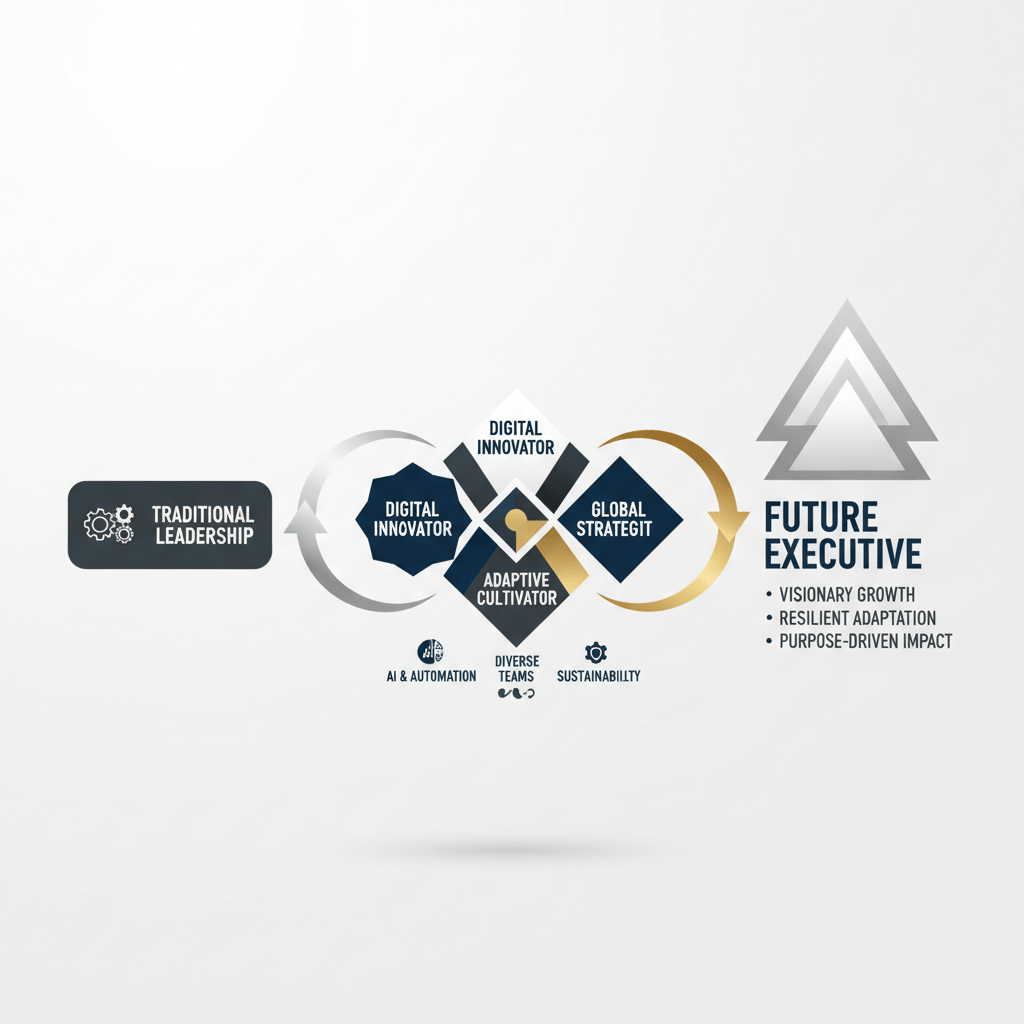
How Are Executive Roles Evolving for 2026 and Beyond?
The Impact of AI on C-Suite Decision-Making
By 2026, C-suite leaders face a big change. Artificial intelligence (AI) is no longer a future idea. It is a key priority now. Top leaders know AI has grown from a simple tool into a real partner for making decisions. This shift means company leaders need new skills.
AI affects many areas, like strategic planning, risk management, and market analysis. It processes data much faster, giving leaders insights they could not get before. They now use AI to predict future events. This helps them spot new trends and risks much earlier. In fact, 70% of companies believe AI will change their business in the next three years [8]. This rapid change redefines what good executive judgment means.
The C-suite’s role is changing. Leaders now need to understand what AI is telling them and ask smart questions. They must know what AI can do and what its limits are. It is also vital to create strong rules and ethical guides for AI. This ensures AI is used well and responsibly across the company.
To succeed in this AI-driven world, corporate leaders must:
- Champion AI Literacy: Promote AI knowledge. Help all leaders understand how AI affects strategy.
- Develop AI-Driven Decision Frameworks: Add AI insights to current plans to make decisions faster and more accurate.
- Prioritize Ethical AI Deployment: Set clear rules to ensure AI use fits the company’s values and what society expects.
- Cultivate a Data-Curious Culture: Build an environment where exploring data and thinking analytically are key leadership skills.
Integrating Sustainability into Corporate Strategy
Sustainability is now more than just a program for social good. By 2026, it is a core part of business strategy and creating long-term value. Smart leaders know that environmental, social, and governance (ESG) factors are closely tied to a company’s financial health and brand.
Investors are putting more pressure on companies to be open about their ESG performance. Large investors now often use sustainability scores when they decide where to invest. This shows a growing belief that sustainable business practices reduce risks and open up new markets. At the same time, customer demand for ethical products is growing quickly. Nearly 70% of consumers will pay more for sustainable brands [9].
Integrating sustainability needs to be done everywhere. It means building ESG factors into every part of the company, from the supply chain to new products. Executives must lead efforts that not only lower their environmental impact but also support social fairness and strong governance.
Forward-thinking executives are using strategies such as:
- Embedding ESG Metrics: Tie sustainability goals to executive pay and business targets.
- Appointing Chief Sustainability Officers (CSOs): Give a dedicated leader the power to drive ESG strategy across the company.
- Developing Circular Economy Models: Move to a system that cuts waste and uses resources more efficiently.
- Transparent ESG Reporting: Share sustainability work and progress openly with everyone to build trust.
The Gig Economy’s Influence on Executive Talent
The old way of hiring executives is changing in a big way. The gig economy, once known for lower-skilled jobs, is now a big part of how companies hire top leaders. By 2026, part-time executives, project-based consultants, and on-demand experts are a key part of top leadership teams.
This new model makes companies more flexible and gives them access to special skills. Companies can hire top experts for specific projects or temporary leadership roles without a long-term contract. This is especially useful for topics like AI ethics, big digital changes, or entering new markets. Businesses get quick access to great talent. They can use their resources better and speed up projects. Studies show the freelance economy is growing fast and is a large part of the global workforce [10].
However, managing a changing team of full-time and temporary talent has its own challenges. Leaders must learn how to bring different teams together, help them work well as one unit, and communicate clearly. The focus changes from managing time in the office to managing results. This requires new leadership skills.
To use the gig economy well for hiring executives, leaders should:
- Develop Flexible Talent Acquisition Frameworks: Create clear steps to find, check, and bring on temporary executives.
- Invest in Robust Collaboration Platforms: Get tools that help scattered teams talk and manage projects easily.
- Refine Onboarding for Temporary Leadership: Create a fast way to get outside experts up to speed on your company’s culture and goals.
- Prioritize Outcome-Based Leadership: Focus on what people achieve, not on how many hours they work or if they are in the office.
What is the Path to an Executive Level Position?
Synthesizing Cross-Functional Experience
To reach an executive level by 2026, you need a broad view of the company. Top leaders often say that experience in different areas is valuable. They stress that you must understand how each department helps the company meet its main goals.
Satya Nadella of Microsoft often talks about having empathy for different teams. He supports leaders who understand the challenges of various departments. This full understanding is more than just management. It helps you plan for the future.
To get this wide range of experience, future executives should:
- Seek Rotational Assignments: Look for jobs in different departments. Get involved with finance, marketing, operations, and technology.
- Understand P&L Across Divisions: Learn what drives profit and loss in different parts of the business. This builds strong financial skills, which are key for any top executive role [11].
- Lead Cross-Departmental Projects: Volunteer to lead projects that involve several teams. This improves your teamwork and coordination skills.
- Shadow Senior Leaders: Watch how leaders make decisions in areas you don’t know well. Learn from them as they handle complex issues between departments.
Combining these experiences helps you see the big picture. You can predict problems and find new opportunities. This helps the whole company innovate.
Building a Network of Influence
Executives rarely succeed alone. Top leaders always stress the need for a strong network. This is more than just a list of contacts. It means building real relationships with mentors, peers, and industry leaders.
Indra Nooyi, former CEO of PepsiCo, often talks about sponsors and mentors. She says they have a huge impact on your career and growth as a leader. A good network gives you valuable insights and opens doors.
To build a strong network for your rise to an executive role:
- Engage with Industry Associations: Join and take part in groups related to your field. Go to special events for executives.
- Seek Mentorship and Sponsorship: Find leaders who can guide your career. It is also key to find sponsors who will support you in important meetings [12].
- Be a Connector and Resource: Help others in your network. Share what you know, introduce people, and offer support. Giving back makes your connections stronger.
- Cultivate External Relationships: Meet with leaders and new thinkers outside your industry. This will give you a wider view and help you plan for the future.
A well-built network gives you people to talk to and helps you move forward. It supports your career and gives you key information on new trends for 2025 and beyond.
Mastering High-Stakes Communication
At the executive level, communication is more than just sharing information. It’s about using stories to influence, inspire, and lead. Top leaders agree that great communication is an essential skill for C-suite jobs.
Warren Buffett is a great communicator who is clear and direct. He often makes complex financial ideas simple for everyone to understand. This skill is very important in high-pressure situations.
To improve your communication to an executive level, you must focus on these areas:
- Cultivate Executive Presence: Show confidence, seriousness, and honesty in all you do. This includes your words and your body language.
- Master Persuasive Storytelling: Learn to tell powerful stories that connect with different groups. Change your message for investors, boards, employees, and the public.
- Refine Active Listening Skills: Good communication goes both ways. Listen carefully to understand what people are truly concerned about. This builds trust and leads to better decisions.
- Practice Crisis Communication: Learn to speak calmly and clearly under pressure. Being open and empathetic is key during tough times [13].
Great communication makes sure people not only hear your vision, but also believe in it. It inspires teams, reassures investors, and builds your authority as a leader.
Frequently Asked Questions About Corporate Leadership
What are C-level positions?
C-level positions, also known as the C-suite, are the most senior leadership roles in a company. These executives have the final say on major decisions. They are responsible for the company’s overall strategy and performance. Top business leaders note that the C-suite’s role has grown. It now goes beyond specific job skills to include the company’s overall health and preparing for 2025 and beyond.
The C-suite’s main jobs are leading strategy, driving innovation, and creating long-term value for shareholders. Global CEOs point to a growing focus on being adaptable and embracing digital change in every C-level role [source: https://hbr.org/2024/01/the-evolving-c-suite-2025].
Common C-level roles include:
- Chief Executive Officer (CEO): The top leader, responsible for the company’s operations, strategy, and vision. The CEO guides the organization’s direction.
- Chief Financial Officer (CFO): Manages the company’s money, including budgets, financial reports, and investments. In 2025, CFOs are also becoming key players in managing risk and funding AI projects.
- Chief Operating Officer (COO): Manages the company’s day-to-day work, making sure it runs well. COOs often turn the company’s big plans into daily tasks.
- Chief Technology Officer (CTO): Leads the company’s technology and new ideas. Leaders like Satya Nadella have highlighted the CTO’s key role in using new tech, like AI, to get ahead of competitors [source: https://www.forbes.com/sites/forbes-insights/2024/03/cto-role-evolution-2025].
- Chief Marketing Officer (CMO): In charge of all marketing and branding. Today, CMOs focus heavily on customer experience and using data to connect with customers.
- Chief Human Resources Officer (CHRO): Manages hiring, training, and employee relations. CHROs are key to building a strong company culture and preparing the workforce for 2026.
- Chief Information Officer (CIO): Focuses on the company’s internal IT systems. The CIO makes sure technology helps the business meet its goals safely and effectively.
Each C-level executive brings a different viewpoint. However, they all share one goal: guiding the company to long-term growth and success in its market.
What are the top 10 positions in a company?
The “top 10” jobs in a company can be different depending on its structure, industry, and size. But, experts and top leaders agree on which roles have the most impact. These positions have the most power to make decisions and influence the company. They are key to the company’s vision and success.
Based on our review of top companies in 2025, these are usually the most powerful roles:
- Chief Executive Officer (CEO): The final decision-maker and public face of the company.
- Chief Financial Officer (CFO): Manages financial strategy and how money is spent.
- Chief Operating Officer (COO): Manages daily operations and puts the company’s strategy into action.
- Chief Technology Officer (CTO) / Chief Information Officer (CIO): Leads new technology and digital systems. Their combined role is extremely important in the age of AI.
- Chief Marketing Officer (CMO): Shapes how customers see the brand and plans how to connect with them.
- Chief Human Resources Officer (CHRO): Develops talent and company culture. This is key for helping the workforce adapt to future changes.
- Chief Legal Officer (CLO) / General Counsel: Manages legal risks and makes sure the company follows the rules. The job is getting harder because of changing global laws.
- Chief Strategy Officer (CSO): Focuses on long-term planning and studying the market. This role helps the company deal with market changes and competition.
- Executive Vice President (EVP) / Senior Vice President (SVP) of Key Business Units: Leaders who run large divisions that make money or handle key jobs (e.g., Sales, Product Development, R&D). They are very influential because they directly affect the company’s profits.
- Board of Directors Members (especially Chairman/Lead Director): These individuals are not employees, but they watch over and guide the C-suite. Their shared knowledge is essential for running the company properly.
These roles control large budgets and have a great deal of power. They are key to shaping the company’s future direction and its place in the market for 2026 and beyond.
What are ABC level executives?
The term “ABC level executives” is not a standard industry term like “C-suite.” It usually refers to a company’s internal system for ranking its executives. This system often shows an executive’s seniority, level of responsibility, and pay range.
HR leaders and pay experts say that companies use these systems to:
- Standardize Compensation: Match pay and benefits to the job’s level of responsibility.
- Clarify Career Paths: Show a clear path forward for employees who want to advance.
- Streamline Performance Management: Make performance reviews easier by setting clear goals for each executive level.
- Facilitate Succession Planning: Help with succession planning by finding and training future leaders.
While the definitions can change, a common way to think about ABC levels is:
- A-Level Executives: These are usually the C-suite (CEO, CFO, COO, etc.) and other very senior leaders, like Executive Vice Presidents in charge of global teams. They have the most responsibility for strategy and the biggest impact on the company.
- B-Level Executives: These are often Senior Vice Presidents (SVPs) or Vice Presidents (VPs). They lead large departments or product lines. They play a key part in carrying out the company’s strategy and managing large teams.
- C-Level Executives (in this context, distinct from the ‘C-suite’): This level might include senior directors or new Vice Presidents. They are in charge of specific tasks or big projects. They connect daily management with the company’s main strategy.
It is important to understand your own company’s ranking system. It affects your career path and what is expected of you as a leader. These levels can change as a company grows and the market shifts in 2026.
What defines an executive level position in a company?
An executive-level position is more than just a fancy title. It is defined by a specific set of duties, power, and influence over the company’s direction and finances. Experts often say that real executive leadership requires looking ahead, having influence, and being accountable for results [source: https://www.mckinsey.com/capabilities/people-and-organizational-performance/our-insights/what-makes-a-true-leader].
Key traits that define an executive-level position include:
- Strategic Impact: Executives set and carry out long-term goals for the company. They do more than just manage daily tasks. They shape the company’s vision for 2025.
- Broad Scope of Responsibility: Their decisions affect large parts of the company, or even the whole business. This often includes control over a large budget.
- High-Stakes Decision-Making: Executives often make important decisions that have a big impact on the company’s money and its future.
- Leadership & Influence: They lead other managers and large teams. They build a culture that values great work and new ideas. Good executives inspire people throughout the company.
- Accountability for Outcomes: Executives are directly responsible for the results of big projects, their department’s performance, and the company’s profits.
- Cross-Functional Collaboration: To succeed, executives must work well with different departments. Top leaders see this as a key part of modern leadership.
- External Representation: Many executives represent the company to the public. They talk with investors, the media, partners, and customers.
In short, an executive role is a shift from managing day-to-day work to shaping the company’s future. It requires a deep understanding of the business and the ability to make big changes. People who want these jobs must learn to think strategically and show they can consistently deliver great results.
Sources
- https://www.jpmorganchase.com/
- https://www.globalmba.ie/
- https://www.nvidia.com/
- https://www.blackrock.com/
- https://www.grandviewresearch.com/industry-analysis/artificial-intelligence-ai-market
- https://hbr.org/2023/10/how-to-build-a-learning-culture-that-lasts
- https://www.cbinsights.com/research/report/venture-trends-q1-2022/
- https://www.ibm.com/downloads/cas/2YDGK2D0
- https://www.nielseniq.com/global/en/insights/analysis/2021/what-is-sustainability-and-how-is-it-changing-the-consumer-landscape/
- https://www.statista.com/topics/9274/gig-economy-worldwide/
- https://hbr.org/2019/07/what-makes-a-ceo
- https://www.forbes.com/sites/forbescoachescouncil/2021/04/13/the-power-of-sponsorship-and-mentorship/
- https://news.gallup.com/businessjournal/190892/great-leaders-great-communicators.aspx