
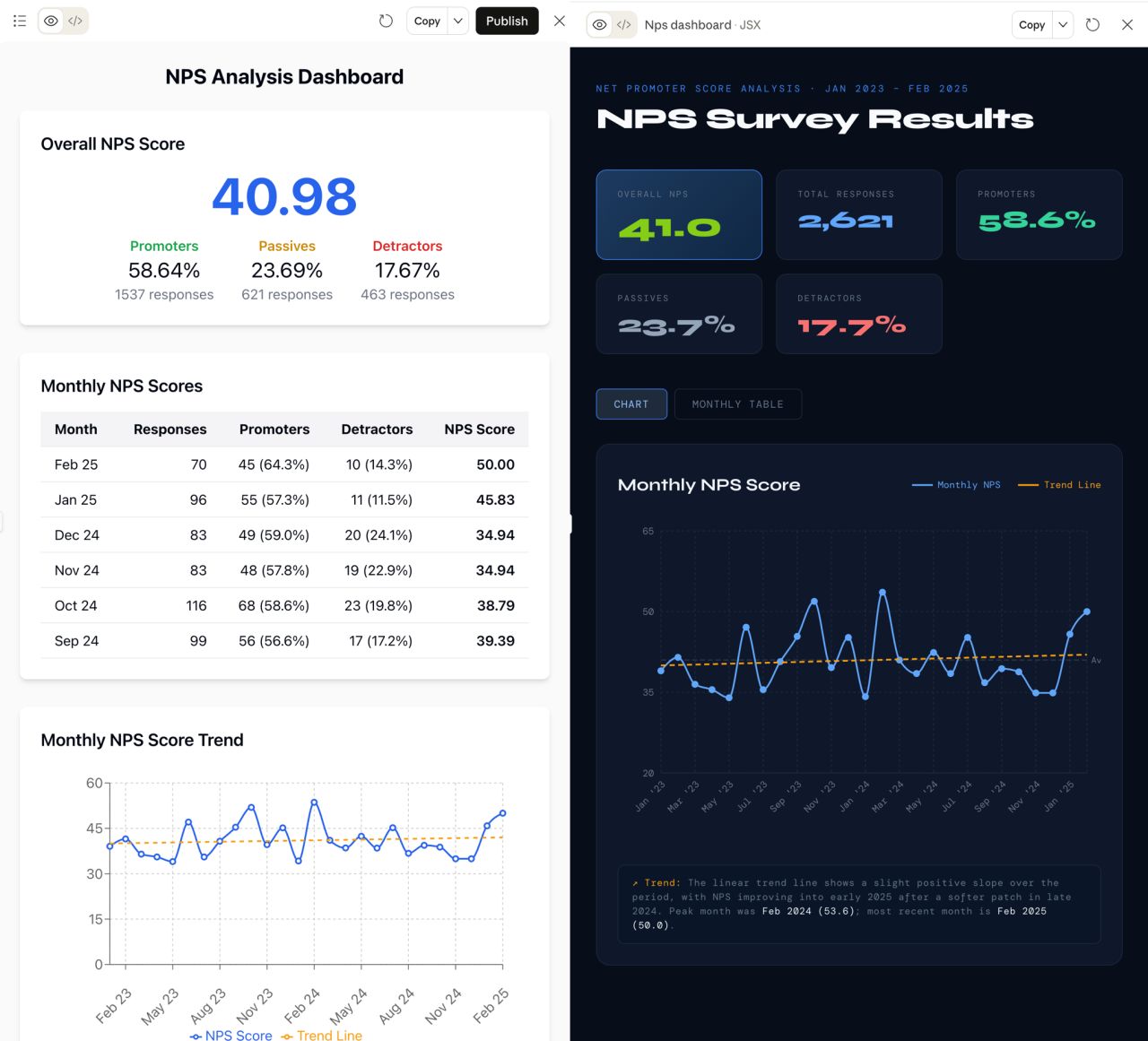
In a recent LinkedIn post, Sachin Rekhi shares a cautionary tale about the integration of AI “skills,” specifically highlighting his experience with Claude’s frontend-design capabilities. Rekhi, a prominent figure in product management, used his post to question the user experience implications when AI functionalities become auto-invoked rather than user-initiated.
Rekhi detailed how he typically uses Claude for tasks like Net Promoter Score (NPS) analysis, a function he finds highly effective. He often requests visualizations of NPS trends as part of this process. However, after installing the frontend-design skill, his routine monthly analysis yielded unexpected and, in his view, less desirable results.
The Unwanted Aesthetic Overhaul
Rekhi presented a visual comparison in his post, showing his standard, preferred output on the left and the output generated after installing the design skill on the right. He expressed surprise and disappointment, noting that the supposedly enhanced design was, in fact, harder to read.
“I get it’s fancy, but honestly, it’s way harder to read! I preferred the left version, the one before I installed the frontend-design skill in the first place!”
This stark contrast led Rekhi to a broader realization about user control in AI interactions. While he appreciates AI tools that augment his workflow, he finds himself frustrated by features that operate autonomously and negatively impact usability.
User Control vs. Automated Enhancement
The core of Rekhi’s critique centers on the invocation method of AI features. He posits that users benefit most from skills that can be summoned on demand, allowing for conscious decision-making about when and how to apply them.
“I’ve realized that I like skills that I invoke when I want to, but honestly struggle with skills that are auto-invoked that cause challenges like this.”
Rekhi elaborated on the difficulty of managing these auto-invoked skills, particularly when there’s limited control over when they are triggered. This lack of granular control, he suggests, can detract from the overall utility and user satisfaction of advanced AI models.
The Preference for Intentionality
According to Rekhi, the ideal scenario involves a clear user intent driving the AI’s action. When an AI proactively alters output format without explicit instruction, especially in a way that hinders clarity, it can undermine the very purpose of the tool. As Rekhi questioned his audience, the sentiment suggests a wider user base might share his preference for deliberate AI engagement over unsolicited interventions.
“Especially given I have limited ability now that it’s installed to control when it’s invoked.”
Rekhi’s experience serves as a valuable reminder for AI developers: while advanced capabilities are crucial, the interface and control mechanisms are equally important for ensuring a positive and productive user experience. The ability to choose when to leverage enhanced features, rather than having them imposed, appears to be a key factor in user adoption and satisfaction.
He concluded by asking his network for their opinions, posing the question:
“Is it just me that prefers the left version or do you agree?”
This open-ended question invites further discussion on the balance between AI’s potential for automated enhancement and the user’s need for control and predictability in their digital tools.
📝 About This Content
This article is based on insights shared by Sachin Rekhi on LinkedIn.
📅 Originally posted on March 5, 2026 | View original post on LinkedIn →