
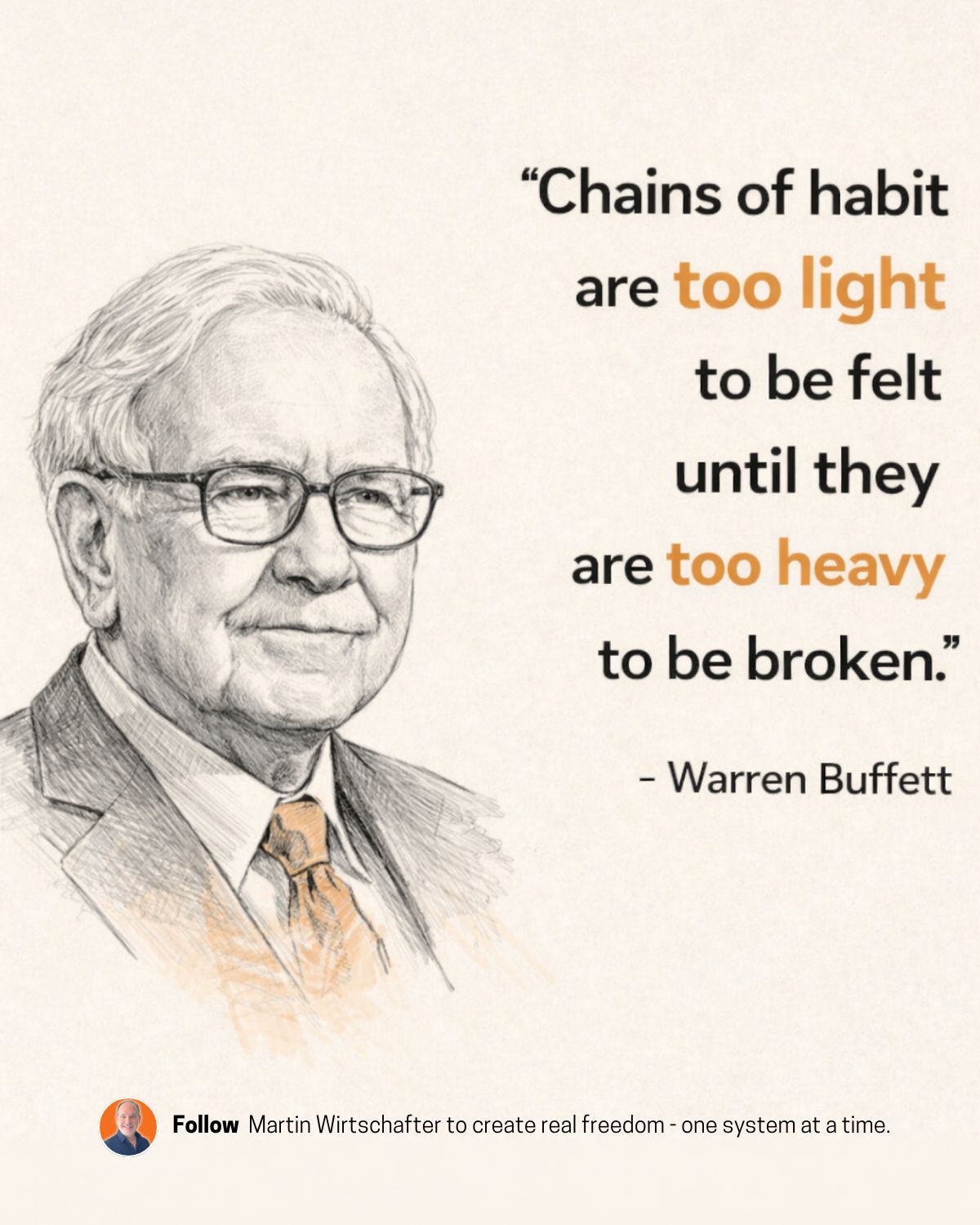
In a recent LinkedIn post, Martin Wirtschafter discusses a common pitfall for startup founders: the tendency to centralize responsibility to the point of creating a “Dependency Loop.” Wirtschafter argues that while taking responsibility is often equated with leadership in the early stages of a company, it can hinder long-term growth and founder freedom if not managed effectively.
Wirtschafter highlights how this pattern emerges organically as founders handle every question, decision, and problem. This constant involvement, while seemingly productive initially, trains the organization to rely solely on the founder for direction and resolution. He writes:
“Everything routes through you. Every answer. Every approval. Every fix.”
This pervasive involvement, according to Wirtschafter, leads to the creation of a structure where the company becomes incapable of functioning without the founder’s direct intervention. He explains the dangerous consequence of this habit:
“What you tolerate repeatedly becomes how the company operates.”
The Emergence of the Dependency Loop
Wirtschafter, writing as a keen observer of startup dynamics, explains that the initial phase of a startup often necessitates the founder being the central point of contact and decision-making. This is where the line between effective leadership and the formation of a dependency blurs. As he points out:
“In the beginning, responsibility feels like leadership.”
However, Wirtschafter cautions that this phase, if prolonged or unaddressed, solidifies into a detrimental operational model. He elaborates on how small, repeated actions by the founder create the foundation for this dependency.
From Habits to Structure
The transition from individual founder actions to organizational structure is a key theme in Wirtschafter’s analysis. He argues that the consistent routing of all operational aspects through the founder, whether it’s answering questions, approving requests, or solving problems, inadvertently trains the company to expect and require this centralized oversight. This repetition, he contends, transforms into the company’s operating procedure.
Wirtschafter makes a critical distinction between leading a strong company and carrying one. He states:
“The founder who is needed everywhere is not leading a strong company. They are carrying one.”
This statement underscores the core of his message: a truly strong company is one that can operate, innovate, and solve problems autonomously, without constant founder involvement. The dependency loop, therefore, is not a sign of effective leadership but a bottleneck to sustainable growth and scalability.
Breaking the Loop for Founder Freedom
The ultimate goal, as outlined by Wirtschafter, is to break this dependency loop. He suggests that achieving this allows for genuine founder freedom, which is distinct from simply being busy or indispensable within the company. This freedom, in his view, is about the company’s ability to thrive independently, freeing the founder to focus on higher-level strategy or other pursuits.
Wirtschafter concludes his post with a powerful statement on the nature of true founder freedom:
“Strong companies move without the founder. Break the loop. Optional at work. Available in life. That’s what real founder freedom looks like.”
His insights offer a valuable perspective for founders aiming to build resilient, scalable businesses and achieve a more liberated role within their own organizations.
📝 About This Content
This article is based on insights shared by Martin Wirtschafter on LinkedIn.
📅 Originally posted on March 15, 2026 | View original post on LinkedIn →