
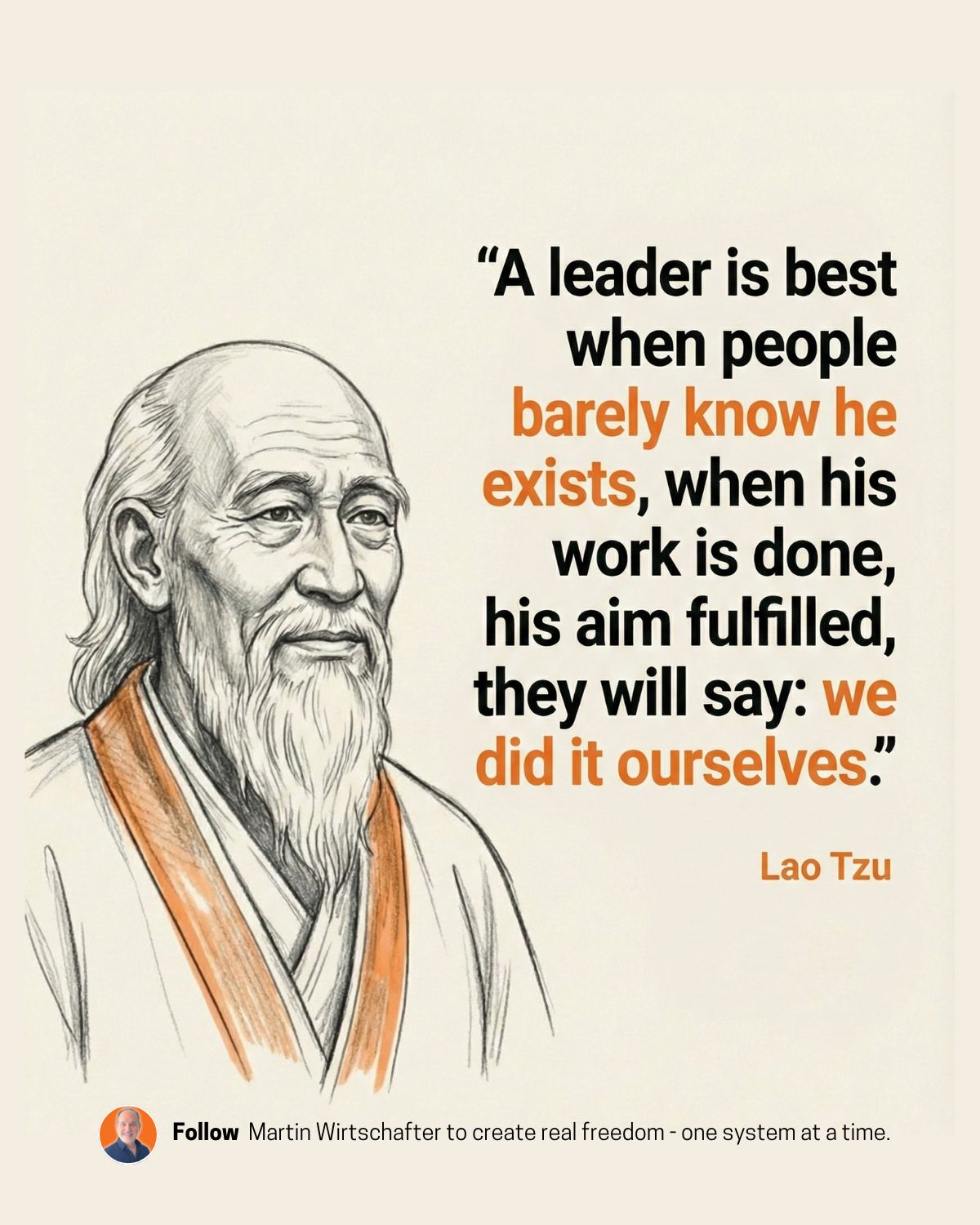
In a recent LinkedIn post, Martin Wirtschafter delves into a critical distinction he observes among startup founders: the difference between those who are “building something” and those who are “proving something.” This framing, shared by Wirtschafter, suggests that these two modes of operation are fundamentally at odds and that founders must choose which path to prioritize for long-term business success.
Wirtschafter poses a core question that separates these two types of founders: “What does this business need to thrive without me?” This is the builder’s mindset, focused on creating an entity that can operate and succeed independently. In contrast, the “prover” asks a different question: “How do I show I’m essential?” This approach, according to Wirtschafter, inherently ties the founder’s identity and the business’s survival together.
“You can’t do both. Because proving you’re essential means staying in the middle of everything. Building something that lasts means becoming optional.”
The crux of Wirtschafter’s argument is that a founder’s prolonged focus on proving their indispensability can inadvertently lead to the creation of a business that is deeply reliant on them, rather than a self-sustaining enterprise. He suggests that many founders may not realize they have been operating in “proving mode” for years, seeking external validation rather than building an autonomous business.
The Perils of Proving Necessity
According to Wirtschafter, the act of constantly proving oneself – whether it’s the ability to handle pressure, uniqueness, or worthiness of success – can lead to a significant, yet often unrecognized, outcome. He states that founders can end up:
And one day they look up and realize: They built a monument to their necessity. Not a business that transfers.
This “monument to necessity,” as Wirtschafter terms it, is a business that cannot easily scale or be transferred because its very structure and operational flow are centered around the founder’s constant involvement. This contrasts sharply with the goal of building a business that can thrive independently, a key characteristic of enduring enterprises.
Shifting from Proving to Building
Wirtschafter emphasizes that the transition from a proving mindset to a building one is not primarily a strategic shift, but rather an internal one. He posits that the change begins when a founder disconnects their personal sense of validation from the business’s performance.
The Internal Shift
The core of this transformation, as outlined by Wirtschafter, lies in the founder’s relationship with their own identity and the business. He argues:
The shift doesn’t start with strategy. It starts when you stop needing the business to validate who you are.
This internal recalibration is crucial because, as Wirtschafter points out, true scaling and growth are achieved not by remaining indispensable, but by creating a structure that can function and grow without the founder’s constant presence. This, in his view, is the essence of “freedom by design” – building a business that provides autonomy not just for the customers or the market, but for the founder themselves.
📝 About This Content
This article is based on insights shared by Martin Wirtschafter on LinkedIn.
📅 Originally posted on February 15, 2026 | View original post on LinkedIn →