
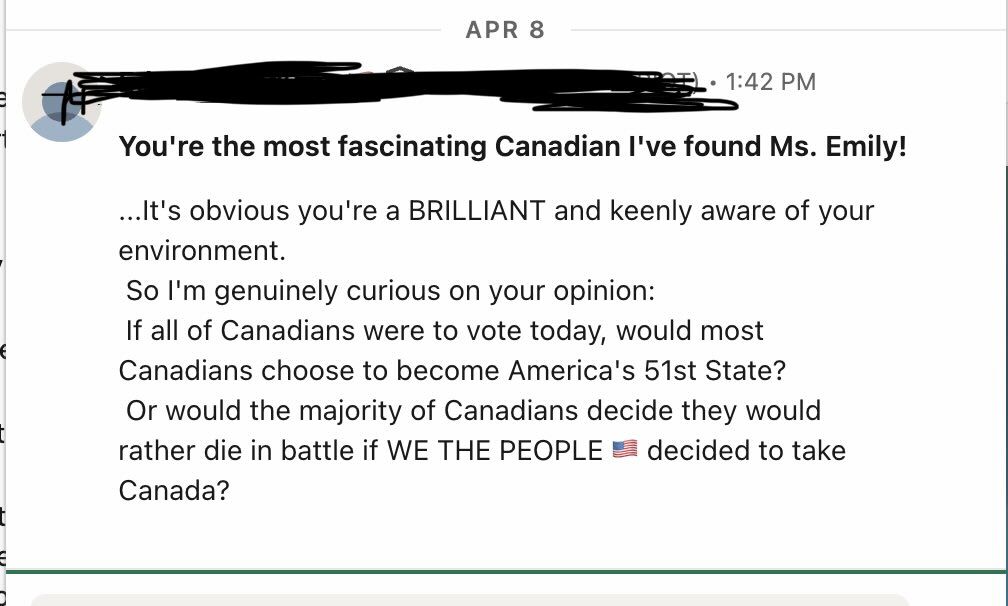
In a recent LinkedIn post, Emily Lyons explores a subtle but pervasive dynamic on professional networking platforms: the ‘compliment’ that is actually a veiled request. Lyons, a keen observer of professional interactions, highlights how certain forms of praise can be used not as genuine admiration, but as a tactic to gain access or elicit a specific response.
Lyons recounts a personal experience where a LinkedIn message lauded her as “the most fascinating Canadian” and “obviously brilliant.” However, this effusive praise was immediately followed by a demand for her opinion on a complex geopolitical issue. This, according to Lyons, illustrates a broader pattern.
“The praise comes first. Underneath it is the assumption that admiration creates entitlement.”
The core of Lyons’s argument is that this pattern reveals an underlying assumption: that being recognized as impressive or intelligent creates an obligation for the recipient to engage, share their attention, or expend their energy. This can lead to compliments feeling disingenuous, not because the words themselves are insincere, but because of the unspoken expectation they carry.
The Psychology of Transactional Praise
Lyons argues that this transactional nature of some compliments can be particularly disarming. The praise, while seemingly positive, is often a form of ‘positioning’ by the sender, an attempt to leverage perceived admiration for their own gain. As Emily Lyons notes, this can manifest as:
“A way of saying: I have approved of you. Now engage.”
This dynamic, as Lyons points out, is not necessarily gender-neutral in its impact. She suggests that many women have been conditioned to respond to such advances out of politeness, overriding any discomfort with the underlying expectation. This societal conditioning can make it harder to recognize or push back against these veiled requests.
Recognizing and Responding to Veiled Requests
The central thesis of Lyons’s post is that not all praise is offered with genuine kindness. Some, she contends, serves as a test of availability and willingness to engage on the sender’s terms.
“But some compliments are not kindness. They are a test to see whether you will make yourself available.”
By dissecting this common, yet often unacknowledged, social maneuver, Emily Lyons encourages a more critical evaluation of interactions on professional platforms. Her insights prompt a re-examination of how we perceive and respond to praise, urging a greater awareness of the potential ulterior motives that may lie beneath seemingly flattering remarks. According to Emily Lyons, understanding this dynamic is key to maintaining professional boundaries and ensuring that interactions are based on genuine connection rather than transactional expectation.
📝 About This Content
This article is based on insights shared by Emily Lyons on LinkedIn.
📅 Originally posted on April 22, 2026 | View original post on LinkedIn →