
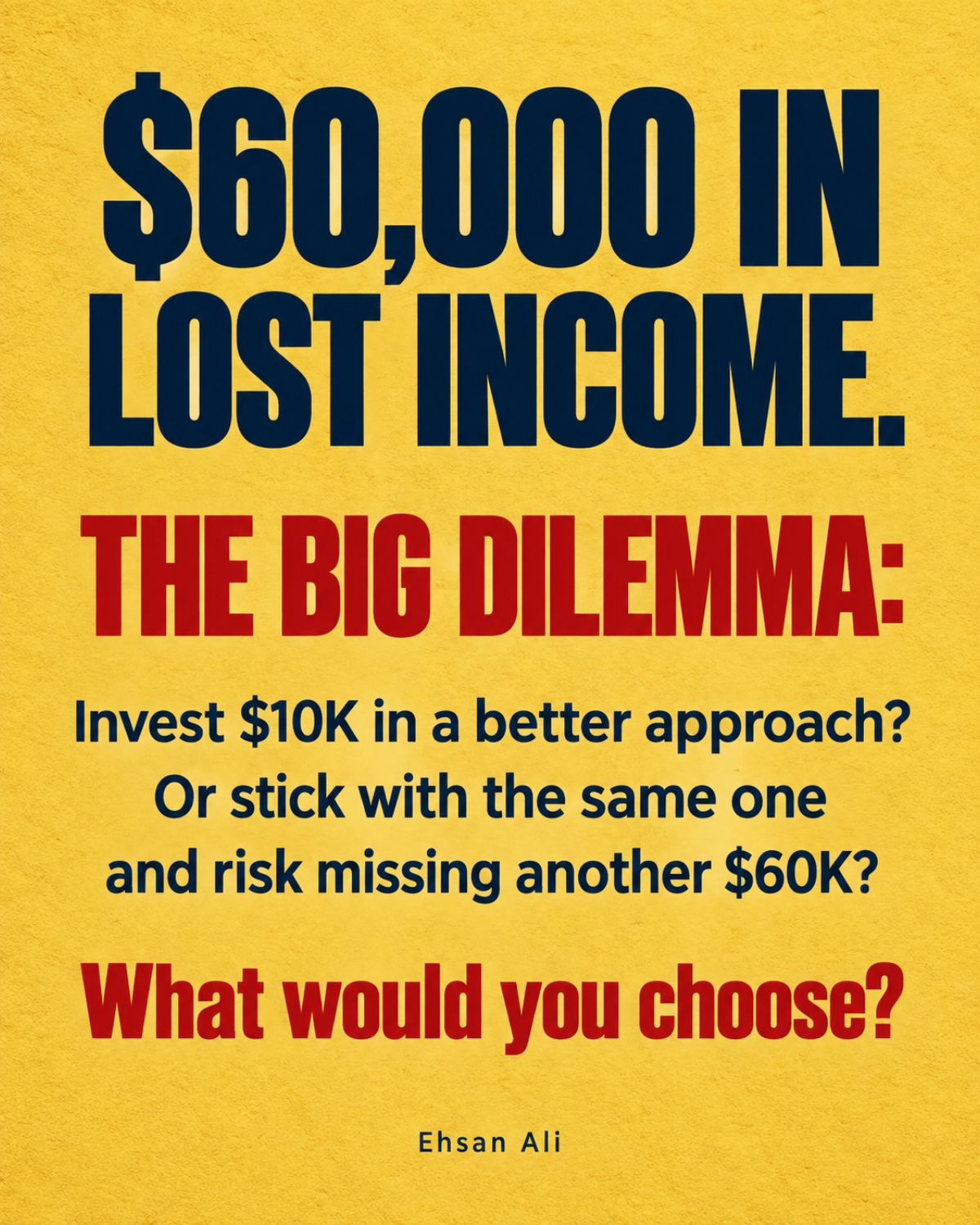
In a recent LinkedIn post, Ehsan Ali discusses the often-underestimated financial and emotional toll of prolonged job loss, particularly for senior professionals. He highlights a scenario where a Principal Engineer faced a $60,000 income deficit after losing their role, yet hesitated to invest $10,000 in a solution, perceiving the latter as the greater risk.
Ehsan Ali draws from personal experience, sharing his own two-year period without income after leaving corporate employment. This shared vulnerability underscores his empathetic approach to advising those in similar situations. He emphasizes that when income ceases, the weight of every financial decision intensifies, impacting not just finances but also confidence.
Assessing the True Cost of Inaction
Ehsan Ali challenges individuals to critically evaluate their current job-seeking strategies by asking what they are costing them. He points out that if interviews are not leading to meaningful conversations or offers, the financial drain continues.
“If not, the next 3 months can cost another $60K. That is not a number on a page. That is the mortgage, the fees, the plans you made for this year.”
As Ehsan Ali notes, this figure represents more than just lost wages; it encompasses tangible impacts on personal financial stability and future planning. He argues that continuing with ineffective methods, such as sending applications into a void, is a choice with significant hidden costs.
Identifying a Better Path Forward
The core of Ehsan Ali’s advice centers on identifying and implementing a more effective approach to career transition. He suggests that a refined strategy involves several key components:
- Establishing a clear target rather than a scattergun application approach.
- Developing a compelling way to showcase value that resonates with decision-makers.
- Engaging in direct conversations with those who have the authority to hire.
- Shortening the timeline to securing a role that aligns with one’s worth.
According to Ehsan Ali, the right support should not only facilitate landing the next position but also equip individuals with skills for future career moves. He posits that investing in a structured approach can yield returns that far outweigh the initial cost.
“The right support should help with the next role. Also leave you better prepared for the one after.”
The Choice Between Investment and Continued Loss
Ehsan Ali frames the decision not as a simple choice between spending money or not, but as a comparison of two potential costs: the cost of assistance versus the cost of prolonged unemployment. He encourages individuals to confront the fear associated with making a significant financial commitment, comparing it to the potentially larger, albeit more gradual, financial loss incurred by remaining in their current situation.
“Pick a new approach. Set a deadline. Watch what comes back. You may still decide not to invest. Just count both costs first. The cost of help. And the cost of another 3 months of no income. Which one scares you more? The $10K? Or the next $60K you never see?”
In Ehsan Ali’s view, the fear of spending $10,000 on career support can be paralyzing, yet it pales in comparison to the cumulative loss of $60,000 or more. His post serves as a call to action for professionals facing career setbacks, urging them to make informed decisions by weighing the investment in their future against the ongoing cost of stagnation.
📝 About This Content
This article is based on insights shared by Ehsan Ali on LinkedIn.
📅 Originally posted on September 15, 2026 | View original post on LinkedIn →