
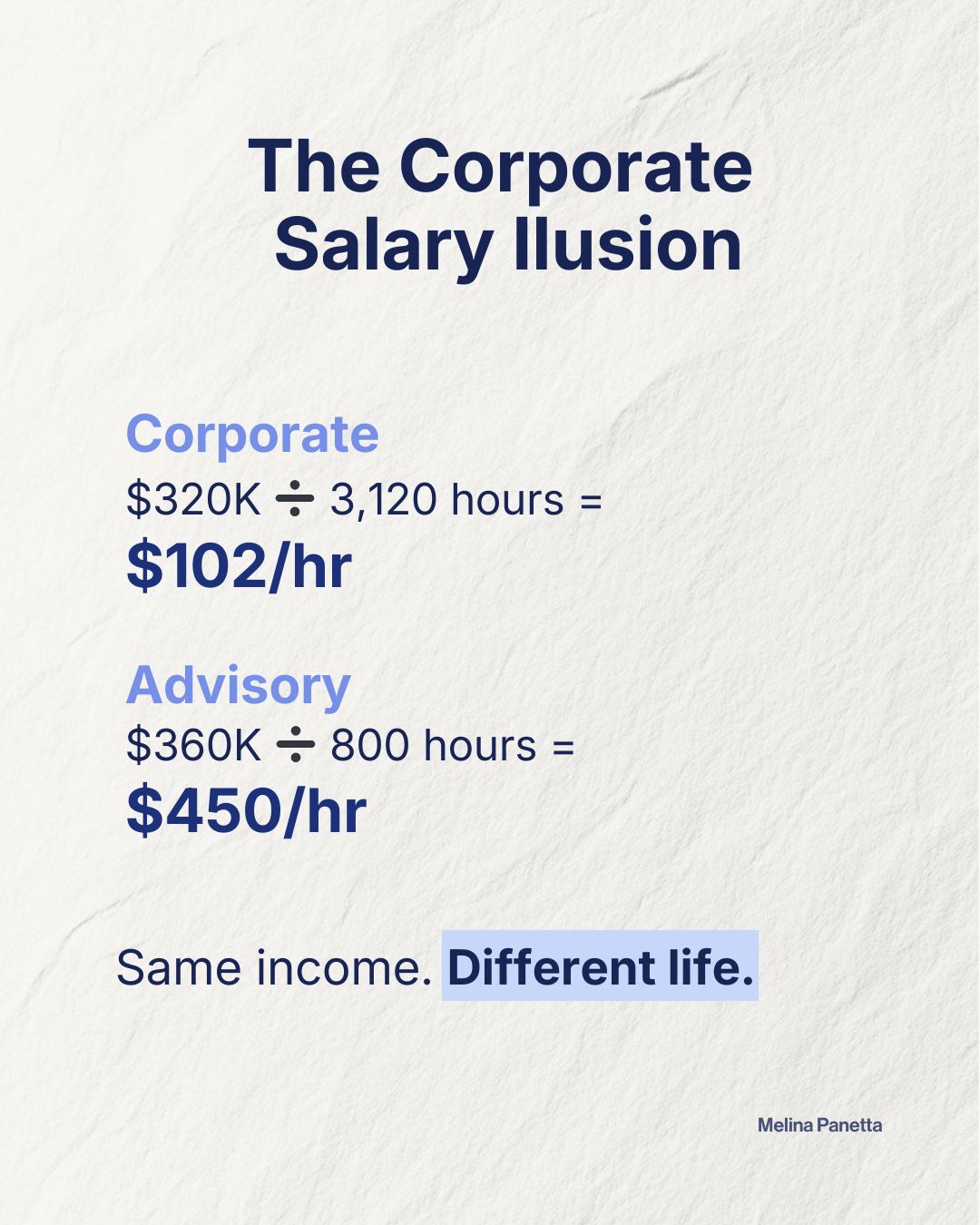
In a recent LinkedIn post, Melina Panetta challenges the conventional understanding of corporate compensation, arguing that high salaries often mask a significant personal cost. Panetta, who previously held a $320K corporate role, highlights how the long hours and constant demands associated with such positions drastically reduce the effective hourly wage and impact overall quality of life.
Panetta questions the true value of a corporate paycheck when factoring in the total time commitment and the intangible costs of workplace pressures. She writes:
On paper, your corporate salary is impressive. In real life, it’s quietly expensive. What most people never calculate is what they’re actually paid per hour.
Deconstructing the ‘Impressive’ Salary
Melina Panetta illustrates her point by detailing her own experience. Despite earning $320,000 in her last corporate position, the reality involved working 60-hour weeks, responding to emails late at night, and attending early morning meetings. This intense schedule, she notes, meant that the impressive salary translated to a much lower effective hourly rate when the actual time spent working was considered.
The calculation Panetta presents is stark: $320,000 divided by 3,120 hours (representing 60 hours a week for 52 weeks) equals approximately $102 per hour. However, she emphasizes that this figure doesn’t even account for the additional burdens of corporate politics, the inability to be fully present in personal life, and the pervasive Sunday anxiety.
Beyond the Numbers: The Unquantifiable Costs
Panetta further elaborates on the less tangible, yet equally significant, costs associated with demanding corporate roles. These include the sacrifice of personal well-being, such as skipping the gym due to lack of time or energy, and the constant mental load that detracts from life outside of work.
The biggest myth about leaving corporate is that you take a pay cut. What most senior leaders don’t realize is corporate was already cutting your pay.
She argues that every hour worked beyond a standard 40-hour week, every weekend check-in, and every postponed personal appointment represents a form of pay cut, as these encroachments diminish personal time and opportunities for growth and fulfillment.
A Different Measure of Success: Advisory Work
Transitioning to advisory work, Melina Panetta offers a contrasting model. She outlines a scenario where she can earn approximately $450 per hour by working 20 hours a week for 40 weeks a year. While this might fall within a similar income range to her previous corporate role, the lifestyle it affords is fundamentally different, allowing for greater flexibility and personal presence.
According to Panetta, the perception that leaving a high-paying corporate job inevitably means a financial sacrifice is a misconception. Instead, she posits that the corporate environment itself, through its demands on time and energy, is what often diminishes the true value of an employee’s compensation.
Same income. Different life.
Panetta’s analysis encourages a re-evaluation of career success, shifting the focus from a headline salary figure to a more holistic assessment that includes hourly earning potential, work-life balance, and overall quality of life. Her insights aim to empower senior leaders to consider alternative paths that offer both financial stability and personal fulfillment.
📝 About This Content
This article is based on insights shared by Melina Panetta on LinkedIn.
📅 Originally posted on February 10, 2026 | View original post on LinkedIn →