
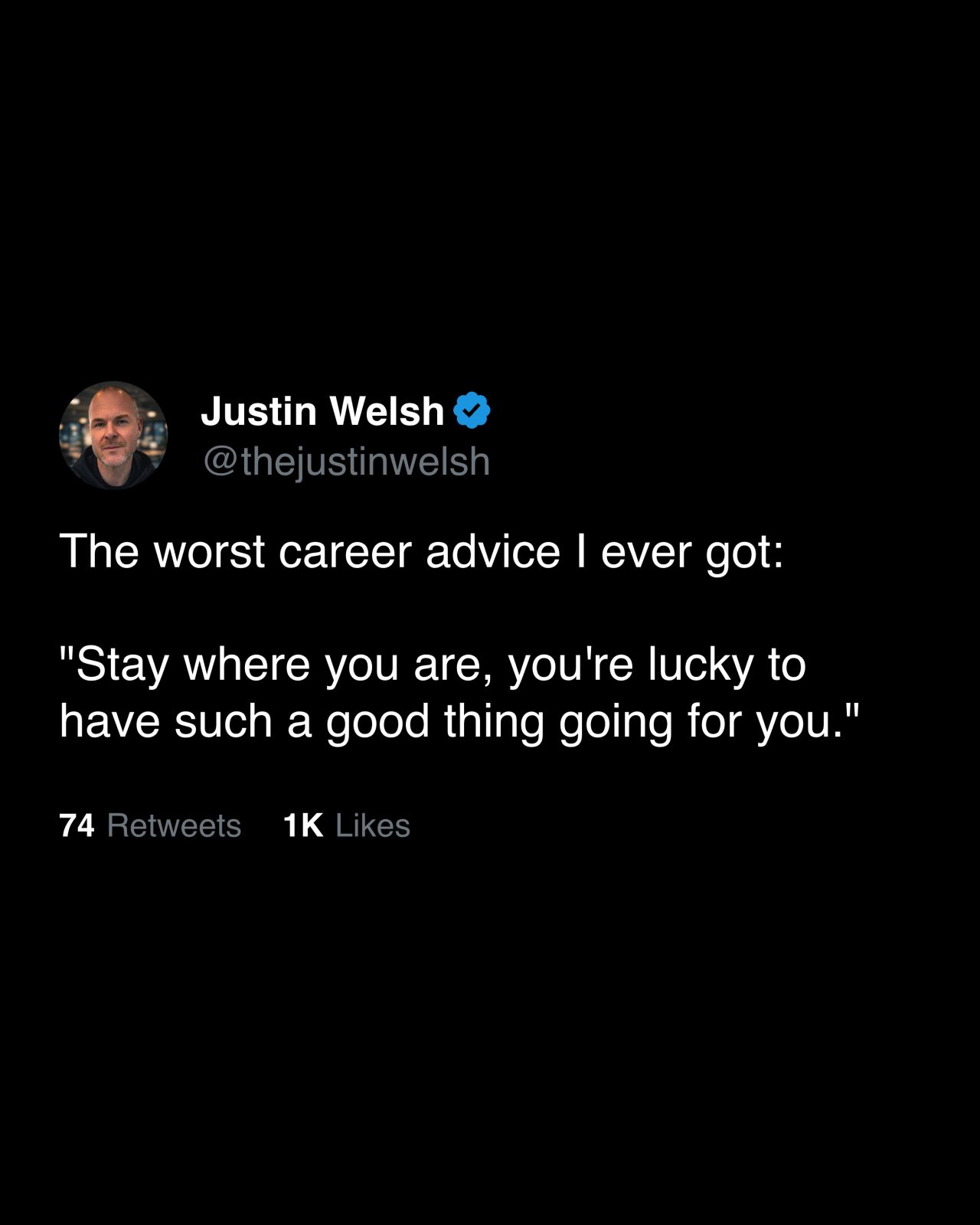
In a recent LinkedIn post, Justin Welsh discusses the often-overlooked personal motivations that can influence career advice given by others. Welsh urges readers to critically evaluate the source of advice, suggesting that well-intentioned guidance can sometimes stem from the advisor’s own unaddressed insecurities or unfulfilled ambitions.
Welsh shares a personal anecdote to illustrate his point:
“A colleague of mine once told me that I would be a fool to quit my job and do my own thing. And maybe, 90 out of 100 times, he would have been right. Maybe. But he wasn’t this time.”
The author posits that understanding the underlying reasons behind advice is crucial for discerning its true value. He suggests that some advisors might be projecting their own fears or regrets onto others.
Analyzing the Source of Advice
Justin Welsh highlights the importance of questioning the motivations of those offering career guidance. He argues that while many people genuinely want to help, their advice can be skewed by their personal experiences and internal struggles.
“It’s important to remember that. That doesn’t mean you shouldn’t listen to what people have to say. It just means that you should be wary of the source or motivation,” Welsh writes.
This perspective encourages a more nuanced approach to seeking and receiving career advice. Instead of blindly accepting suggestions, Welsh advocates for a thoughtful consideration of whether the advisor’s circumstances and mindset align with the recipient’s goals and situation.
The Projection of Insecurity
A core theme in Welsh’s post is the idea that advice can be a form of projection. He speculates about the motivations of the colleague who advised against his entrepreneurial leap:
“Perhaps he had always wanted to do his own thing, but lacked the courage? And keeping other people from trying made his own choice seem better in his mind?”
According to Welsh, this tendency to project personal limitations onto others is a common human behavior. By understanding this, individuals can better filter advice, recognizing when it might be more reflective of the giver’s internal state than an objective assessment of the situation.
Making the Leap Despite Doubts
Welsh’s personal experience serves as a testament to the value of sometimes disregarding conventional or fear-based advice. He emphasizes that while caution is warranted, it shouldn’t paralyze individuals from pursuing their own paths.
“Whatever the reason, I’m glad I didn’t listen. Maybe you shouldn’t either.”
This concluding thought encourages readers to trust their instincts and pursue their own unique aspirations, even when faced with discouraging counsel. Welsh suggests that the “90 out of 100 times” scenario might not apply to everyone, and personal conviction can sometimes lead to success where a more conservative approach would not.
For those interested in further exploring strategies for making significant career transitions and rethinking work, earning, and living, Justin Welsh invites readers to join his newsletter, which offers weekly essays on these topics.
📝 About This Content
This article is based on insights shared by Justin Welsh on LinkedIn.
📅 Originally posted on April 12, 2026 | View original post on LinkedIn →