
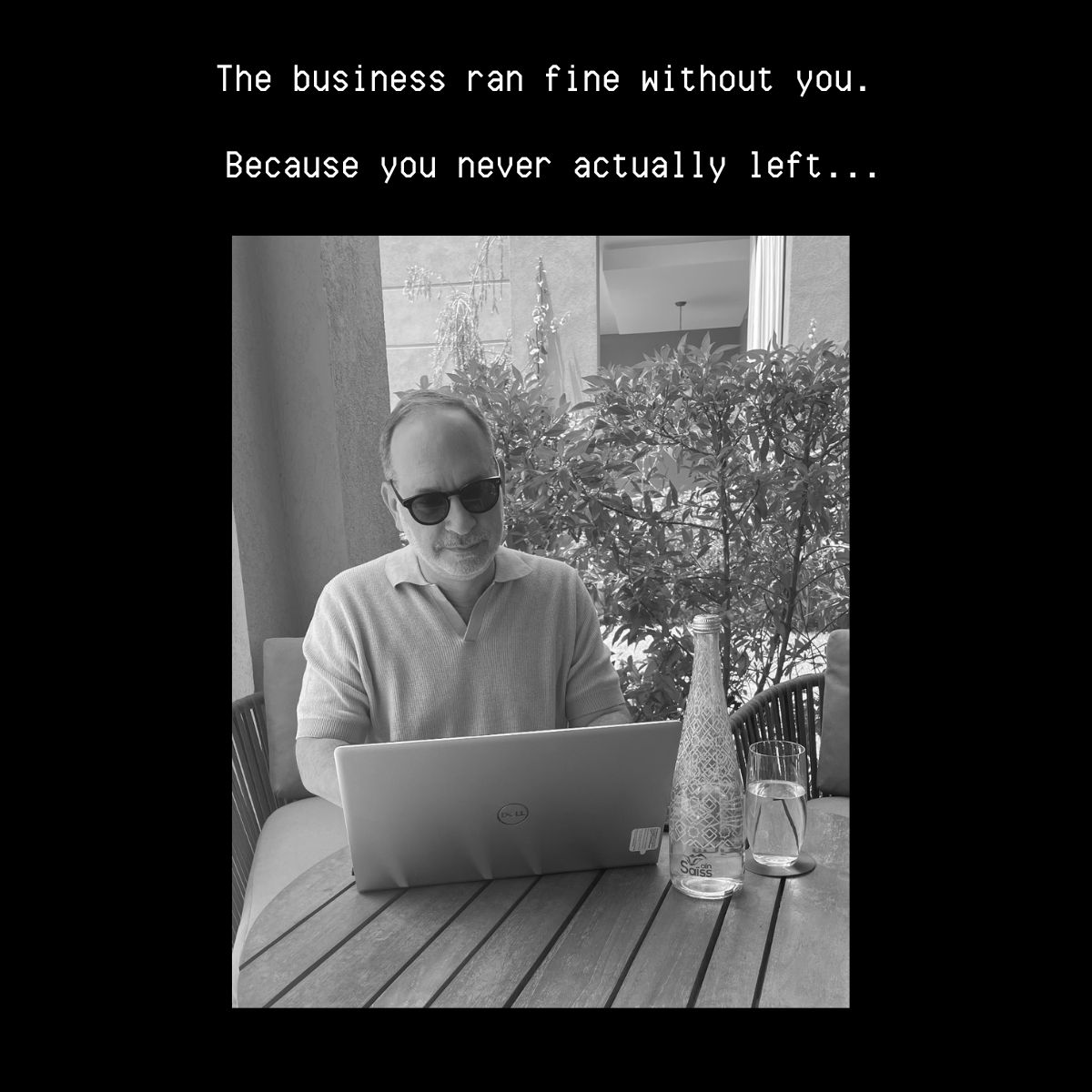
In a recent LinkedIn post, Martin Wirtschafter discusses a common pitfall for business founders: mistaking continued involvement during vacation for responsibility, when it actually signals a lack of team autonomy. Wirtschafter argues that true business resilience is demonstrated when a company can operate effectively without the founder’s constant presence.
Wirtschafter begins by painting a relatable picture of the founder who believes they are being diligent by taking their work with them on holiday. He highlights the paradox: the very act of staying connected, approving decisions, and offering a safety net prevents the team from truly stepping up and proving their capability.
“But a vacation where you still approve decisions doesn’t prove the business can run without you. It proves the team still knows where the real decision sits.”
The Founder’s Dilemma: Responsibility vs. Autonomy
The core of Wirtschafter’s argument centers on the founder’s perception of responsibility. For years, many founders, including Wirtschafter himself, have equated being constantly available and involved with being responsible. However, he posits that this mindset creates a dependency pattern that hinders the business’s growth and the founder’s own potential for genuine rest and insight.
As Wirtschafter points out, every email or approval sent from a vacation spot reinforces the idea that the founder is indispensable for critical decision-making. This prevents the team from developing the confidence and competence to operate independently. The founder returns not just with a tan, but to the same workload, having missed the opportunity to truly delegate and empower.
Empowering the Team: The Path to Real Freedom
Wirtschafter emphasizes that time away should ideally provide both rest and valuable insights into the business’s operational capacity. He suggests that founders who successfully break this dependency pattern do so by intentionally making ownership clear before they leave and then consciously resisting the urge to intervene when challenges arise.
The Test of True Ownership
According to Wirtschafter, a vacation truly serves its purpose as a test of the business’s self-sufficiency when the founder stops acting as a rescuer. He writes:
“Founders who break this dependency pattern don’t disappear without warning. They make ownership clear before they leave, then resist the urge to rescue the team from a test they’re capable of passing.”
This approach allows the team to navigate challenges, learn from their experiences, and build confidence. For the founder, it offers a chance to gain perspective and confirm that the business is robust enough to thrive without their constant oversight.
Defining Real Freedom
Ultimately, Wirtschafter defines true freedom for a founder not as the ability to work from anywhere, but as the certainty that the business can continue to function and progress even when they are completely unreachable. This state is achieved when the team is empowered to make decisions and solve problems autonomously.
“A vacation becomes proof when you stop helping the business pass the test. That’s real freedom: knowing the business can keep moving when you’re not reachable.”
Wirtschafter’s insights serve as a powerful reminder for founders to evaluate their role in fostering team autonomy, suggesting that true leadership involves building a business that can flourish independently, thereby granting the founder the genuine rest and freedom they deserve.
📝 About This Content
This article is based on insights shared by Martin Wirtschafter on LinkedIn.
📅 Originally posted on September 11, 2026 | View original post on LinkedIn →