
In a recent LinkedIn post, Nick Curum highlights a critical, often overlooked, step in property investment: the handover process. Curum argues that while the purchase of a property is meticulously documented with numerous legal and financial papers, the subsequent operational handover to a letting or management agent often lacks any formal structure or defined standards.
The Paperwork Chasm: Purchase vs. Operation
Curum draws a stark contrast between the rigorous documentation required for buying a property and the relative informality of its operational handover. “There is a file for the purchase. Survey, mortgage offer, completion statement, all dated, all signed by somebody,” he writes. This contrasts sharply with the operational phase: “There is no file for the handover. No paper goes round. Nobody approves it.” This absence of formal procedure, Curum suggests, creates a significant gap that can lead to undefined standards and potential inefficiencies down the line.
Analyzing Landlord Practices and Agent Reliance
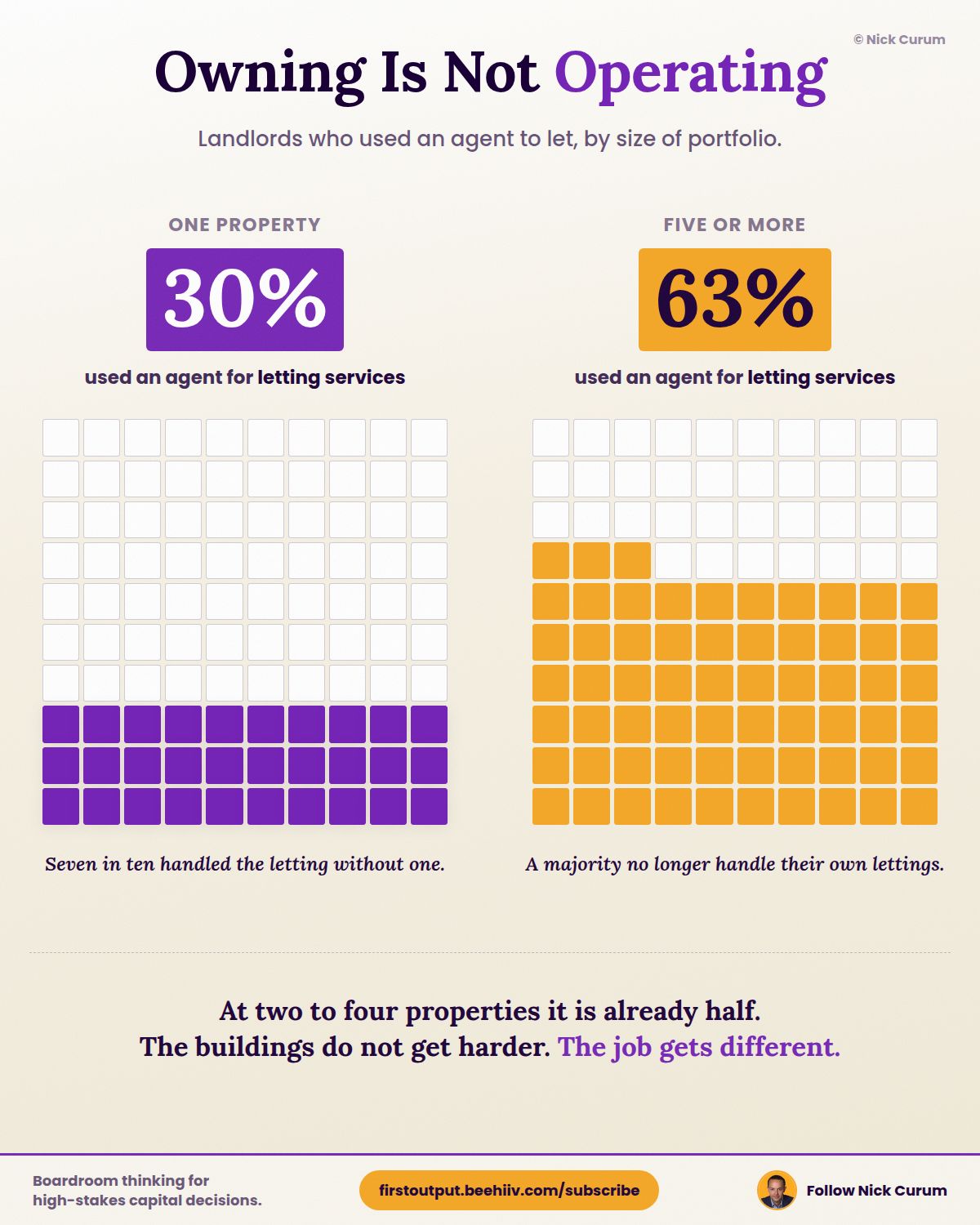
To illustrate the scale of agent involvement, Curum references findings from the English Private Landlord Survey 2024. He notes that reliance on agents increases with portfolio size:
“One property: 30% use an agent to let. Two to four: 50%. Five or more: 63%.”
Curum points out that this statistic only covers the letting aspect and does not account for the management side, which involves a second handover. He further suggests that the survey might even understate agent usage, as it only captured landlords who registered deposits themselves, while agents handled a significant majority of registrations.
The Peril of Undefined Standards
The core of Curum’s argument lies in the danger of operating without a clearly defined standard from the outset. When a handover is not formally managed, the default practices of the agent can inadvertently become the established standard. “Whatever the agent does by default has become what good looks like,” Curum observes. This passive acceptance of standards can be detrimental, especially as portfolios grow and ingrained habits are harder to change.
Establishing a Proactive Standard
Curum proposes a proactive solution: creating a one-page document that outlines key operational standards before appointing any agent or even purchasing property. He suggests this document should detail:
- What gets fixed without owner approval
- The cost threshold requiring owner approval
- The maximum allowable void period
- Key performance indicators (KPIs) such as rent, arrears, voids, works, and cash flow
He emphasizes the value of creating this document early in an investment journey. “You can write that page before you own anything. It is worth more at zero properties than at five, because at five you are writing it around habits that already exist,” Curum states.
The Choice Between Standard and Invoice
Ultimately, Curum frames the outcome of this approach as a choice between a decided standard and a passive invoice. “A handover you decided has a standard. A handover that drifted has an invoice,” he concludes. This resonates with his broader theme of applying “boardroom discipline” to property portfolio building, advocating for intentionality and clear governance over reactive management.
Curum urges aspiring property investors to prioritize this foundational step. “If you’re planning to buy and haven’t written that page, do it first. It’s an hour now instead of a habit you didn’t choose later,” he advises.
📝 About This Content
This article is based on insights shared by Nick Curum on LinkedIn.
📅 Originally posted on September 15, 2026 | View original post on LinkedIn →