
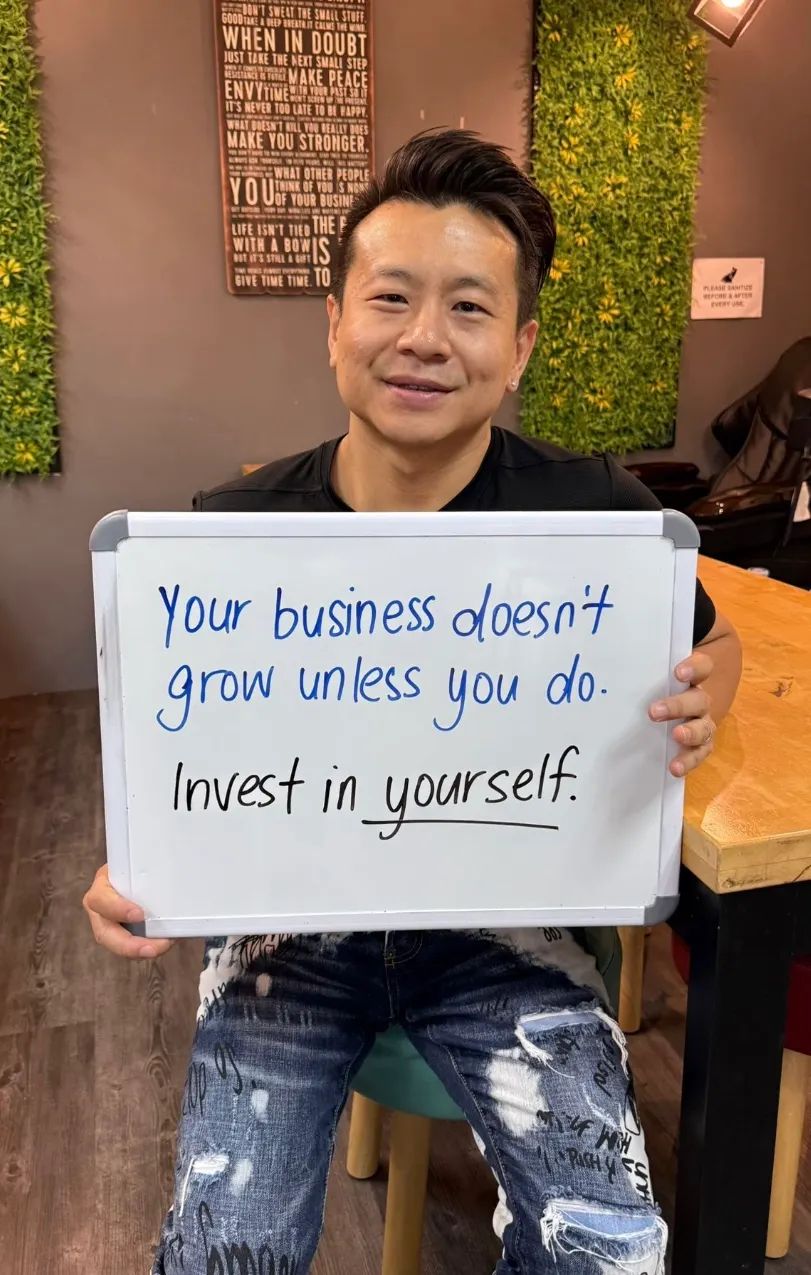
In a recent LinkedIn post, Alvin Huang discusses a common yet often overlooked challenge faced by business leaders: becoming the primary bottleneck to their own company’s growth. Huang shares a personal realization that instead of external factors like bad hires or broken processes, his own limitations were hindering progress.
Huang highlights the tendency for leaders to invest heavily in tools and systems while neglecting self-investment. He writes:
“You’ll spend thousands on tools and systems… But won’t spend a cent on yourself.”
This realization, according to Huang, can be a difficult truth to accept, especially for those working long hours and believing they are doing everything right. He points out that leaders often look outward for solutions, blaming circumstances rather than examining their own skill sets and blind spots.
The Hard Truth: The Leader as the Bottleneck
Huang details his own experience of hitting a wall a few years ago, spending months convinced that external factors were the cause of his business’s stagnation. He emphasizes how easy it is to focus on tangible, outward-facing improvements like tactics, systems, and hiring, as these activities feel inherently productive.
However, as Huang argues, the more challenging admission is that personal growth is often the most critical, yet neglected, area. He states:
“It’s easy to pour energy into tactics, systems, hiring. That stuff feels productive. But it’s a lot harder to admit that sometimes, the real constraint is your skills and blind spots.”
This introspection led Huang to actively invest in himself, a decision that, he explains, significantly shifted his business trajectory.
Key Areas for Leader Self-Investment
Huang outlines four specific areas where he chose to invest, each yielding substantial improvements:
1. Hiring a Coach
Huang emphasizes the value of an external perspective. By hiring a coach, he gained clarity and stopped getting stuck on the same problems for extended periods. He found this investment to be worth every cent, enabling clearer decision-making.
2. Learning to Delegate Effectively
Recognizing a need to let go of control, Huang took a course specifically on delegation. This action freed up over 10 hours per week and empowered his team to step up in ways he hadn’t previously allowed.
3. Prioritizing Health
Huang admits to having deprioritized his health for years. By focusing on sleep, exercise, and proper nutrition, he became easier to work with, which he notes shifted the company culture more effectively than any policy change.
4. Improving Communication Skills
Working on specific communication skills, particularly giving feedback and navigating difficult conversations, led to significant improvements. According to Huang, even small changes in these areas helped issues surface faster and prevented problems from festering.
The Business Grows When the Leader Does
Huang concludes by acknowledging that prioritizing self-investment is difficult when leaders are already stretched thin. However, he argues that this difficulty is often an indicator of the area’s importance. He asserts that a business’s growth is directly tied to the leader’s personal growth, and stagnation occurs when the leader stalls.
He challenges the notion of expecting different results while repeating the same actions, stating:
“You can’t keep doing the same things and wonder why nothing’s changing. Something has to give.”
Huang’s insights offer a compelling perspective for business leaders, urging them to look inward and recognize that investing in their own development is not a luxury, but a fundamental requirement for sustainable business success.
📝 About This Content
This article is based on insights shared by Alvin Huang on LinkedIn.
📅 Originally posted on February 6, 2026 | View original post on LinkedIn →