
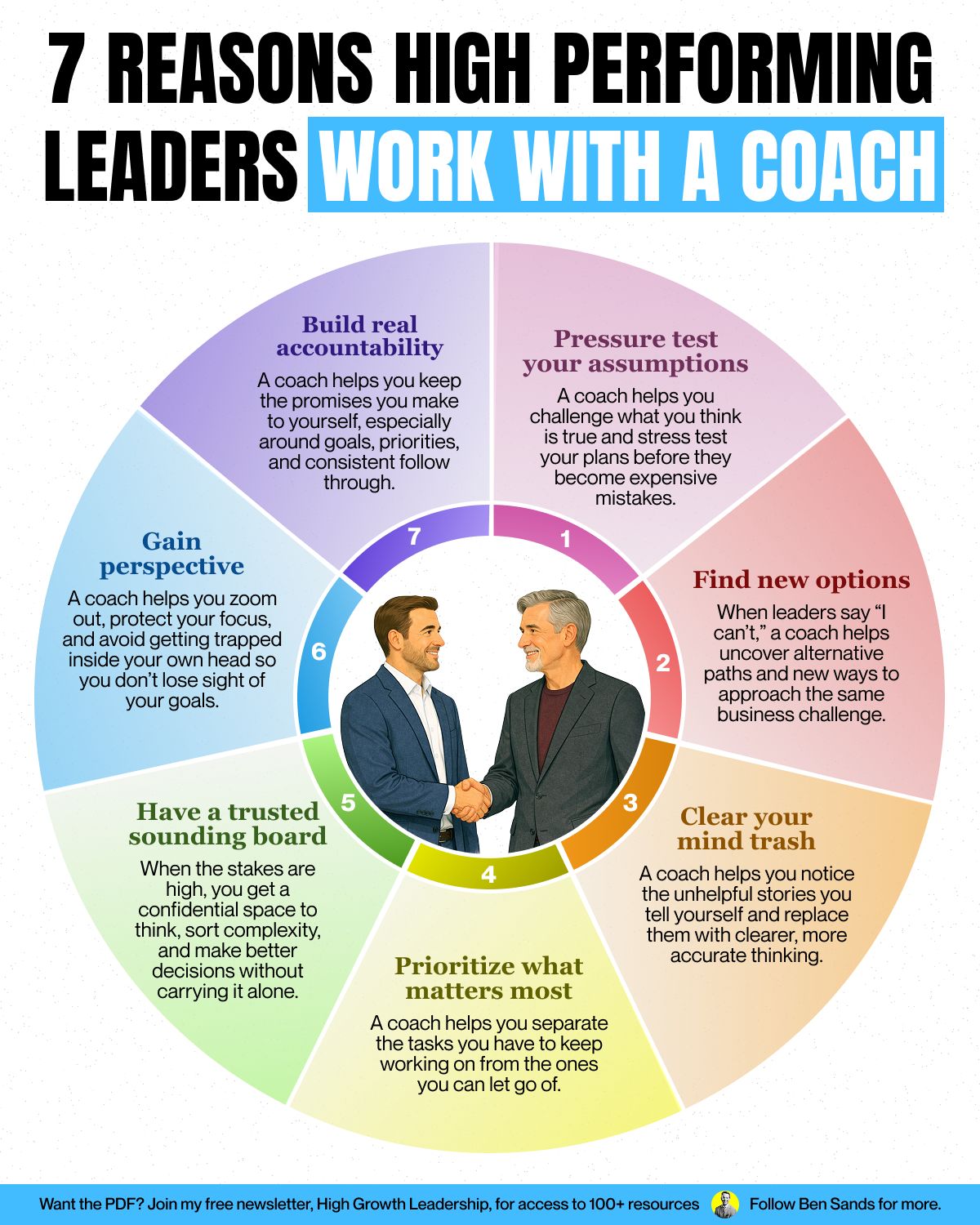
In a recent LinkedIn post, Ben Sands addresses the often-unseen burden carried by business leaders, arguing that the expectation to single-handedly support an entire team can lead to a significant personal and professional strain. Sands highlights that while leaders are tasked with driving outcomes and setting direction, they frequently lack a dedicated support system for themselves.
“You’re supposed to carry the whole team. But there’s no one to share the load with,” Sands writes, framing this lack of support not as a personal failing, but as a “structural gap.” He points out that many high-achievers in leadership roles have historically relied on coaches to navigate these challenges.
“You might think you need to go it alone, but in reality, there are plenty of great leaders who’ve had coaches. Steve Jobs, Jeff Bezos, and Eric Schmidt all had the incredible coach Bill Campbell.”
The Coach as a Strategic Partner
Sands emphasizes that engaging a coach is a sign of strength, not weakness. He suggests that coaches provide essential space for leaders to gain clarity on what is effective and what requires adjustment within their strategies and personal approach. This partnership, according to Sands, is crucial for maintaining high performance.
Key Benefits of Executive Coaching
The post outlines several critical advantages that leaders gain from working with a coach:
- Pressure Testing Assumptions: A coach challenges a leader’s established beliefs and rigorously tests their plans.
- Discovering New Options: Coaches facilitate the identification of alternative solutions to complex problems.
- Mental Clarity: They help leaders to identify and reframe unhelpful self-narratives, fostering clearer thinking.
- Prioritization: Coaches assist in distinguishing high-impact tasks from less critical activities.
- Confidential Sounding Board: They offer a secure, private space for leaders to process high-stakes decisions.
- Gaining Perspective: A coach helps leaders to step back and see the broader context of their challenges.
- Building Accountability: They support leaders in fulfilling their commitments to themselves.
“At senior levels, progress doesn’t come from trying harder. It comes from being able to think more clearly about your goals and what obstacles could get in the way,” Sands argues.
Navigating Complexity with Expert Guidance
Sands posits that true progress for senior leaders stems from enhanced cognitive clarity regarding their objectives and potential impediments, rather than sheer effort. He advocates for coaching as a means to achieve this clarity, enabling leaders to consistently deliver at a high level.
“Working with a coach gives you the space to work through your challenges, and achieve high-level results consistently.”
He concludes by inviting leaders who are seeking a neutral, experienced partner to help identify roadblocks or unlock momentum to connect with him directly via direct message or by booking a call through a provided link. Sands frames this engagement as an opportunity to gain strategic insights that can lead to significant breakthroughs.
📝 About This Content
This article is based on insights shared by Ben Sands on LinkedIn.
📅 Originally posted on February 8, 2026 | View original post on LinkedIn →