
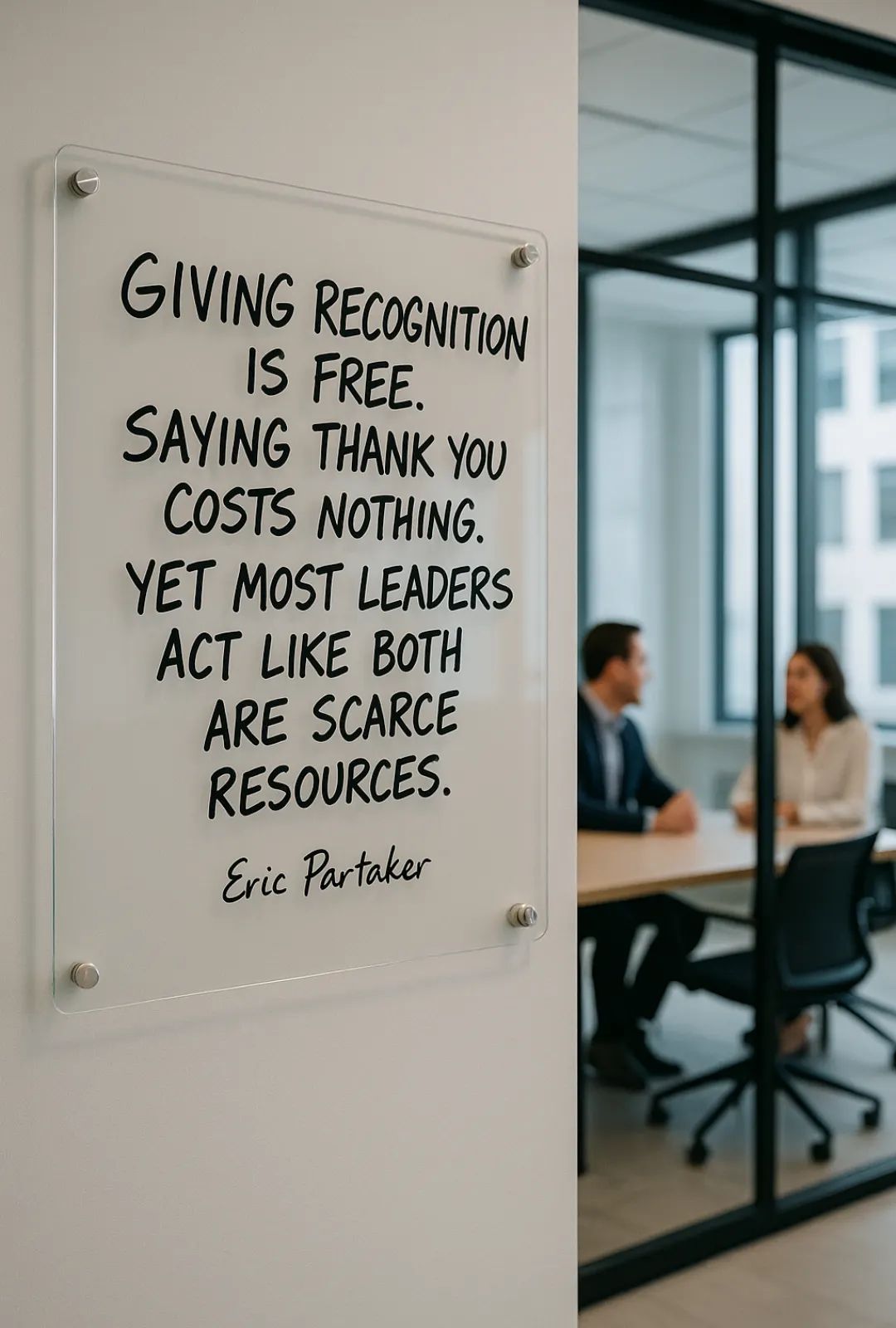
In a recent LinkedIn post, Eric Partaker delves into a critical aspect of leadership often overlooked amidst strategic initiatives: employee recognition. He argues that before launching new projects or investing in expensive tools, CEOs should first assess whether their teams feel genuinely valued. Partaker shares a stark observation from his experience:
“I’ve seen companies spend millions on tools and training. While their best people quietly updated their resumes. Because they felt invisible.”
This observation sets the stage for Partaker’s central thesis: recognition is not a mere perk but an essential element for team survival and performance.
Recognition as Essential Oxygen
Partaker emphasizes that a lack of appreciation can be detrimental, likening it to a lack of oxygen for a team. He asserts that even the most talented individuals will falter and eventually leave if their contributions go unnoticed. He states:
“Without it, even the most talented people suffocate. I learned this the hard way. People don’t leave jobs. They leave feeling unseen.”
This highlights a common misconception where leaders focus on external motivators or structural changes, neglecting the fundamental human need for acknowledgment. The silence that follows an employee going above and beyond, according to Partaker, sends a powerful negative message.
Practical Strategies for Valuing Employees
To address this, Eric Partaker outlines five actionable strategies for leaders to make their people feel valued:
1. Specific “Thank Yous”
Partaker advises moving beyond generic expressions of gratitude. A specific acknowledgment, such as praising detailed research on a client presentation, resonates more deeply and validates the employee’s effort and impact.
2. Celebrating Small Wins
The focus shouldn’t solely be on major project completions. Partaker suggests acknowledging daily efforts and smaller achievements, noting that consistent, small doses of appreciation can significantly boost morale.
3. Seeking and Implementing Input
Involving employees in decision-making and acting on their suggestions is a powerful way to signal their importance. Partaker points out that seeing their ideas implemented demonstrates that their perspectives are genuinely valued.
4. Public Recognition
Shouting out an employee’s contributions in team meetings or company-wide communications can amplify their sense of worth and set a positive example for others. This public affirmation reinforces desired behaviors and acknowledges individual contributions within the collective.
5. Making Time for Employees
Perhaps the most profound form of recognition, according to Partaker, is dedicating undivided attention. This can mean canceling a meeting or putting away distractions to engage with an employee, signaling that they are a priority.
The True Cost of Neglect
Partaker concludes his post by stressing the immense value of appreciation and the significant cost of its absence. He argues:
“Appreciation costs nothing. But its absence costs everything. Your team’s best work tomorrow depends on how valued they feel today.”
He urges leaders to act immediately, suggesting that the most effective retention strategy is not necessarily financial, but rather the consistent effort to make employees feel seen and acknowledged. This approach, he posits, is far more impactful than waiting for exit interviews to uncover these fundamental issues.
📝 About This Content
This article is based on insights shared by Eric Partaker on LinkedIn.
📅 Originally posted on December 15, 2025 | View original post on LinkedIn →