
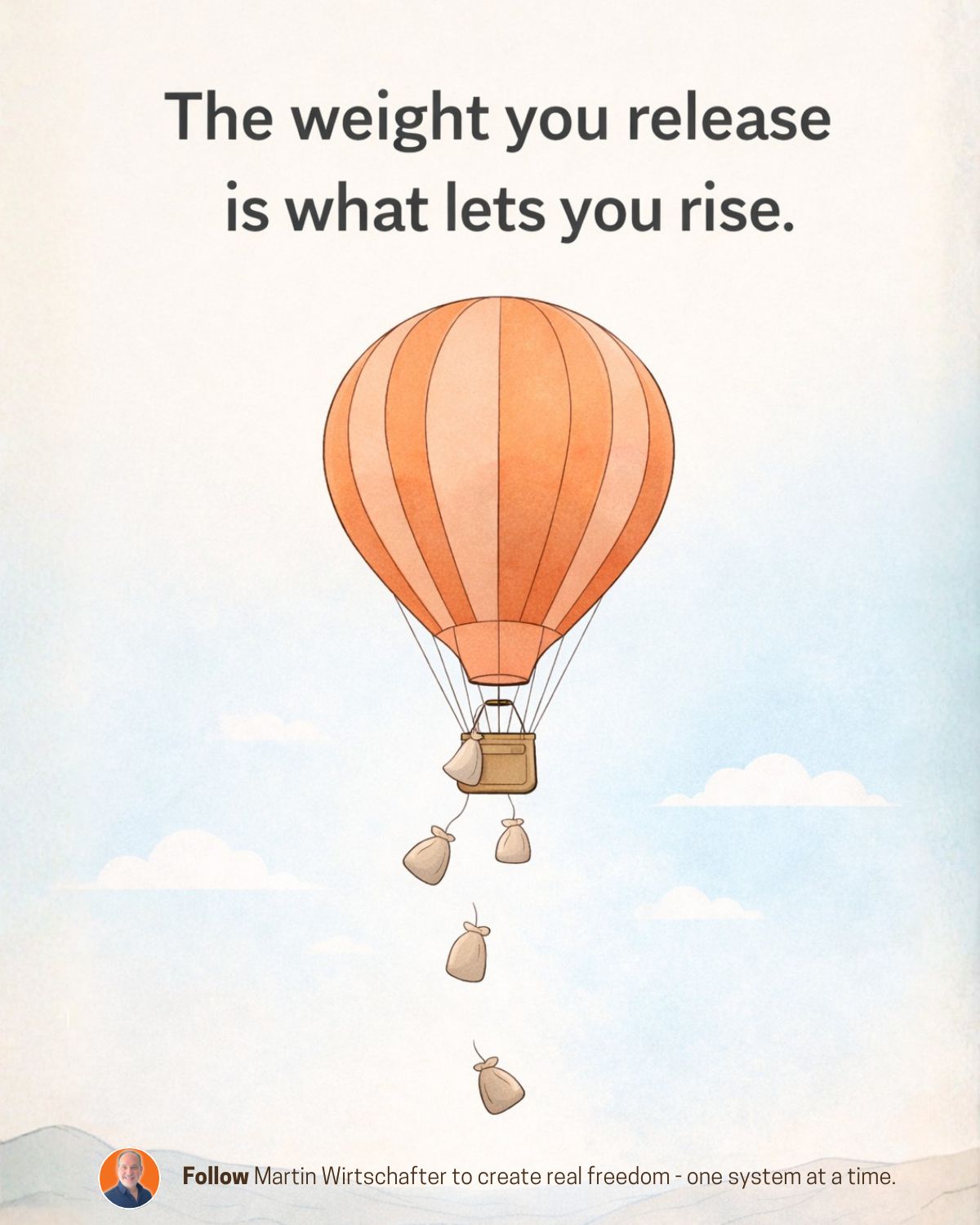
In a recent LinkedIn post, Martin Wirtschafter discusses a profound personal realization about the nature of strength, challenging the common perception that invulnerability equates to power. Wirtschafter shares his journey from believing that “the strongest people I know are the ones who finally said ‘I can’t do this alone.'” He explains how he long equated personal strength with an inability to show weakness or ask for assistance, a mindset he describes as wearing “it like armor.”
The Armor Becomes a Cage
Wirtschafter elaborates on the detrimental effects of this self-imposed isolation. He highlights how the pressure to always be the one holding things together, to never crack, can lead to a significant personal cost. This includes missed family events and an unwillingness to delegate or seek support, even when overwhelmed. As Wirtschafter points out:
“For years, I wore it like armor. ‘I’m the one who holds it together.’ People said it admiringly. I believed them.”
He argues that this relentless self-reliance, while often admired externally, ultimately becomes a self-imposed limitation. According to Wirtschafter, this constant effort to maintain an image of unflinching strength can lead to a gradual detachment from others and a reluctance to voice one’s own needs.
Redefining True Strength
The core of Wirtschafter’s message is a redefinition of what constitutes genuine strength. He contends that true resilience is not found in the absence of struggle, but in the courage to acknowledge limitations and seek collaboration. He writes:
“Real strength isn’t holding everything together alone. It’s knowing when to let others carry some of the weight. It’s admitting you’re human before you burn out trying to prove you’re not.”
Wirtschafter emphasizes that the turning point in his own understanding of strength came not from an increased capacity to handle everything, but from the willingness to admit vulnerability. He explains:
“The moment I started saying ‘I need help’ was the moment I actually became strong. Not when I could handle everything. When I stopped pretending I had to.”
This perspective challenges the traditional business narrative that often glorifies the lone, unwavering leader. Wirtschafter’s insights suggest that fostering a culture where asking for help is seen not as a weakness but as a strategic advantage is crucial for sustainable success and personal well-being.
The Cost of Isolation
Wirtschafter details the personal consequences of this prolonged self-sufficiency. He observes that the ‘armor’ of perceived strength can transform into a ‘cage,’ leading to:
- Reduced ability to connect with others.
- Hesitation in asking for necessary support.
- The mistaken belief that needing anything signifies weakness.
- Ultimately, profound isolation rather than genuine strength.
By sharing his candid reflections, Martin Wirtschafter encourages a broader conversation about mental fortitude and the importance of interdependence in both professional and personal spheres. He concludes by posing a reflective question to his audience, prompting them to consider what burdens they might be carrying unnecessarily alone.
📝 About This Content
This article is based on insights shared by Martin Wirtschafter on LinkedIn.
📅 Originally posted on February 5, 2026 | View original post on LinkedIn →