
In a recent LinkedIn post, Ehsan Ali discusses a common career frustration: high performers often receive more responsibilities without commensurate recognition or advancement, a phenomenon he terms “performance punishment.” Ali highlights how dependable employees can become the organizational safety net, handling critical issues and last-minute demands, which, while important, may not align with the work that typically leads to promotions.
Ali opens by stating the core issue directly:
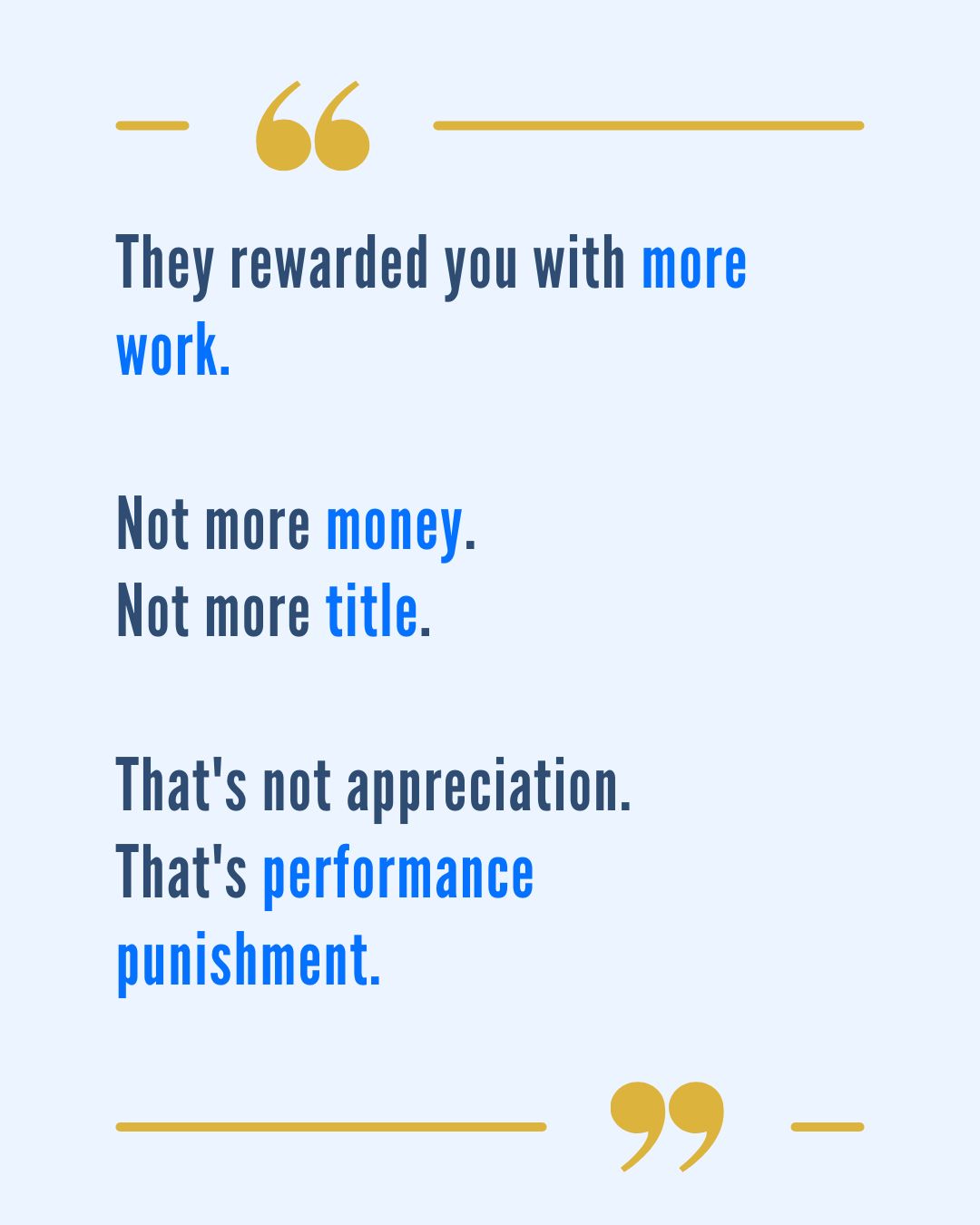
“They rewarded you with more work. Not more money. Not more title. More work. That’s not appreciation. That’s PERFORMANCE PUNISHMENT.”
The post details a powerful anecdote shared by a Senior Engineering Manager at Ali’s “Hidden Gold” roundtable, who observed that despite being the most reliable person on three different teams, they had never been the most promoted. This sentiment resonated deeply with attendees, illustrating a widespread experience among high achievers.
The High Performer’s Dilemma: Safety Net vs. Strategic Impact
According to Ehsan Ali, high performers often fall into the trap of becoming the company’s go-to problem solvers. This includes tackling unexpected system failures, resolving cross-team conflicts, and managing urgent executive requests. Ali points out that this work, while valuable and necessary for keeping operations smooth, can become an “invisible pile” of tasks like steering committees and executive reporting.
Ali argues that this type of work, though essential, is often not the kind that leads to promotions. He elaborates on the nature of promotable work:
“Because promotions rarely go to the person holding the system together. They go to the person leading the work leadership cannot afford to get wrong. Revenue risk. Delivery velocity. Platform modernisation. Capability gaps.”
These are the initiatives that appear in board packs and are discussed in high-level strategic meetings – the work that signals a candidate is ready for leadership and decision-making roles.
Reframing Work for Visibility and Advancement
Ehsan Ali emphasizes that the distinction between being seen as dependable and being seen as a future leader lies not just in the work performed, but crucially, in how that work is communicated. He contrasts two approaches to discussing achievements.
The first, “Here’s what I did,” signals dependability. The second, Ali suggests, is far more effective for career advancement:
“Here’s the business problem I saw. Here’s the initiative I led. Here’s the outcome it created.”
This latter framing, Ali explains, shifts the perception from a reliable doer to a strategic leader capable of shaping decisions. It highlights problem-solving, initiative, and tangible business results, which are the signals senior leaders look for when considering promotions.
The Path Forward: Repositioning Your Contributions
For those who find themselves in the “safety net” role for too long, Ali offers a path forward: learning to reposition the work they are already doing. This involves translating their contributions into the language of business impact and strategic leadership. By reframing their accomplishments, high performers can ensure that the right people see their value in a way that aligns with promotion criteria.
Ali concludes by mentioning his “Hidden Gold” roundtable, where he works with senior IT leaders to practice this repositioning, using real profiles and scenarios to demonstrate how to effectively communicate their value and move towards career advancement.
📝 About This Content
This article is based on insights shared by Ehsan Ali on LinkedIn.
📅 Originally posted on March 16, 2026 | View original post on LinkedIn →