
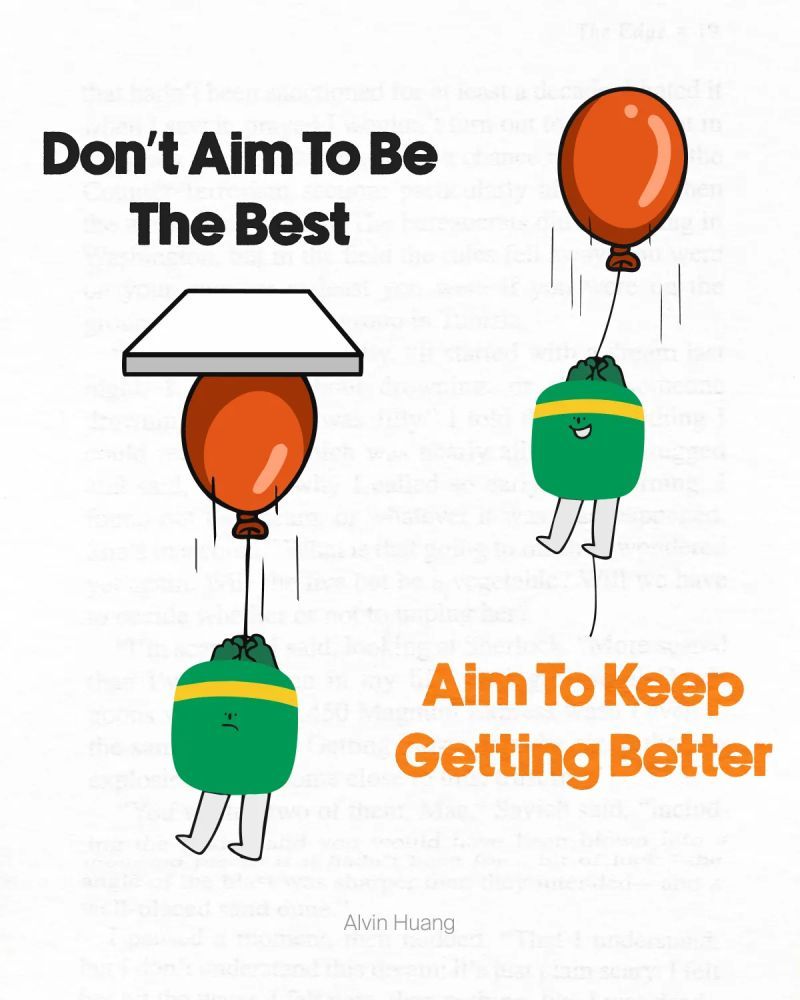
In a recent LinkedIn post, Mark O’Donnell discusses the critical difference between aiming to be “the best” and striving to “get better,” arguing that the former leads to stagnation while the latter fosters perpetual growth.
O’Donnell uses a compelling visual analogy to illustrate his point: “Think about it like two balloons. One rises until it hits the ceiling and stops. The other keeps going because there’s no ceiling in sight.” This metaphor, he suggests, applies directly to the career trajectories of many consultants and coaches.
“A lot of consultants and coaches get stuck here. They build the skill, then coast on whatever got them there. But the habits that worked at one stage start to break down at the next.”
The Ceiling of “Best” vs. The Horizon of “Better”
Mark O’Donnell highlights a common pitfall in professional development: reaching a perceived peak of expertise and then ceasing to evolve. As O’Donnell points out, the very strengths that propelled an individual to a certain level can become limitations if they are not continuously refined and adapted. This concept underscores the importance of ongoing learning and adaptation in any field, particularly in client-facing professions where market dynamics and client needs are constantly shifting.
According to O’Donnell, this stagnation occurs because individuals often rely on past successes without recognizing that “your strengths gradually become limitations if you stop evolving.” He emphasizes that the skills and strategies effective at one career stage may not be sufficient for the next, leading to a plateau if not addressed.
Cultivating Continuous Curiosity
To combat this stagnation, O’Donnell advocates for a mindset of continuous curiosity. He outlines several key practices for staying ahead:
- Asking better questions
- Studying individuals who are further along in their journey
- Proactively identifying personal development gaps
- Embracing the phrase, “I don’t know this yet”
O’Donnell acknowledges that this process of learning and growth can be uncomfortable. He writes:
“Learning is uncomfortable. It challenges your identity, and forces you to let go of what used to work. But that discomfort is a sign you’re still rising.”
This discomfort, in O’Donnell’s view, is a positive indicator of progress, signifying that an individual is pushing beyond their current boundaries rather than settling into complacency.
Environments for Elevated Growth
Mark O’Donnell further explores the idea that while some professionals naturally cultivate a growth mindset, others benefit from structured environments. He notes that a supportive community or a system designed for continuous improvement can be invaluable.
“Some consultants figure this out on their own. Others find an environment that pushes them, a community of peers operating at a high level, a proven system that keeps elevating how they work.”
He specifically mentions becoming an EOS Implementer as an example of such a structured path for growth, describing it as “a structure for continuous growth.” O’Donnell provides resources for those interested in exploring this specific path further, including a link to learn more about the process and a free quiz to assess their current practice standing.
In essence, Mark O’Donnell’s post serves as a powerful reminder for business professionals, particularly consultants and coaches, about the necessity of embracing ongoing learning and adaptation. By shifting focus from achieving a static state of “best” to a dynamic pursuit of “getting better,” individuals can ensure sustained relevance and success in their careers.
📝 About This Content
This article is based on insights shared by Mark O'Donnell on LinkedIn.
📅 Originally posted on February 1, 2026 | View original post on LinkedIn →