
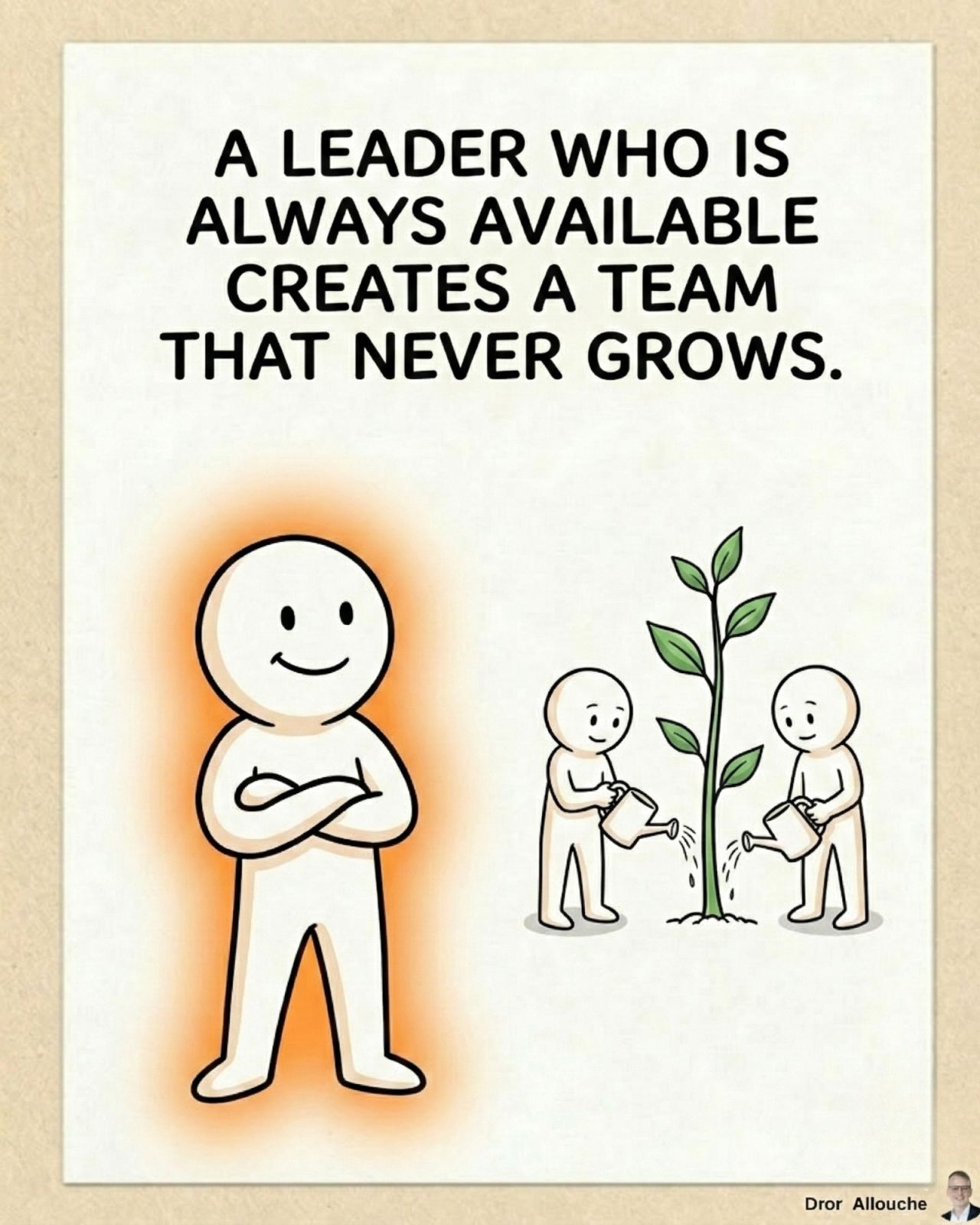
In a recent LinkedIn post, Dror Allouche explores the detrimental effects of an ‘always available’ leadership style on both executives and their organizations. Allouche argues that the perception of 24/7 availability as a sign of strong leadership is a misconception that can lead to diminished decision-making and the creation of toxic work environments.
The post highlights that the higher one climbs in an organization, the more critical setting boundaries becomes. “The higher you climb, the more your lack of boundaries destroys not just you, but your entire organization,” Allouche states.
“Your ‘always available’ leadership style is destroying your company.”
Allouche contends that this constant availability, while perhaps well-intentioned, paradoxically weakens a leader’s effectiveness. It can lead to burnout, reduced cognitive function, and sets a precedent for an unhealthy work culture within the team.
The Erosion of Decision-Making and Culture
Allouche emphasizes that the belief that being constantly accessible equates to better leadership is fundamentally flawed. Instead, it can lead to poorer judgment and foster a culture where employees feel pressured to be perpetually online.
“Think your 24/7 availability makes you a better leader? It actually diminishes your decision-making ability. And creates a toxic ‘always-on’ culture in your team,” the post reads.
To combat this, Allouche proposes a four-pronged approach to re-establish healthy boundaries and promote sustainable performance.
Strategies for Reclaiming Boundaries
The leadership expert outlines actionable steps for executives to implement boundary-setting practices effectively.
1. Delay Immediate Responses
Allouche suggests a shift from instant replies to a more considered approach. Instead of committing to immediate action, leaders can opt for phrases like, “I’ll review this tomorrow morning when I’m fresh,” or “Let’s schedule this for my next decision-making block.” This allows for focused work and prevents constant interruptions.
2. Filter Urgency
A key strategy is to question the necessity of immediate personal involvement. Allouche advises leaders to ask clarifying questions such as, “Walk me through why this needs my personal attention,” or “Who else on the team could handle this effectively?” This empowers team members and ensures the leader’s time is reserved for high-impact tasks.
“Instead of saying yes immediately… Ask: ‘Walk me through why this needs my personal attention.'”
3. Set Calendar Non-Negotiables
The post advocates for proactively blocking time for focused work and personal well-being. Allouche recommends scheduling non-negotiable deep work sessions, particularly in the morning, and setting clear end-of-day cutoffs. “Block 90-minute deep work sessions before 11 AM. Set your phone to ‘Do Not Disturb’ during these blocks. Schedule a hard stop at 6 PM twice a week,” the post advises.
4. Model Boundaries Openly
Crucially, Allouche stresses the importance of leaders demonstrating their commitment to boundaries. This involves communicating these boundaries to the team. For instance, Allouche suggests stating, “Team, I’m blocking 7:00 to 8:30 AM for strategic work. Unless it’s truly urgent, I will respond after.”
“Your team doesn’t need a burned-out superhero. They need a clear-thinking leader who demonstrates sustainable high performance.”
In conclusion, Dror Allouche’s insights underscore that effective leadership is not about constant availability but about strategic energy management and setting clear, sustainable boundaries. The message is clear: prioritizing personal well-being and mindful work habits ultimately benefits the entire organization.
📝 About This Content
This article is based on insights shared by Dror Allouche on LinkedIn.
📅 Originally posted on April 6, 2026 | View original post on LinkedIn →