
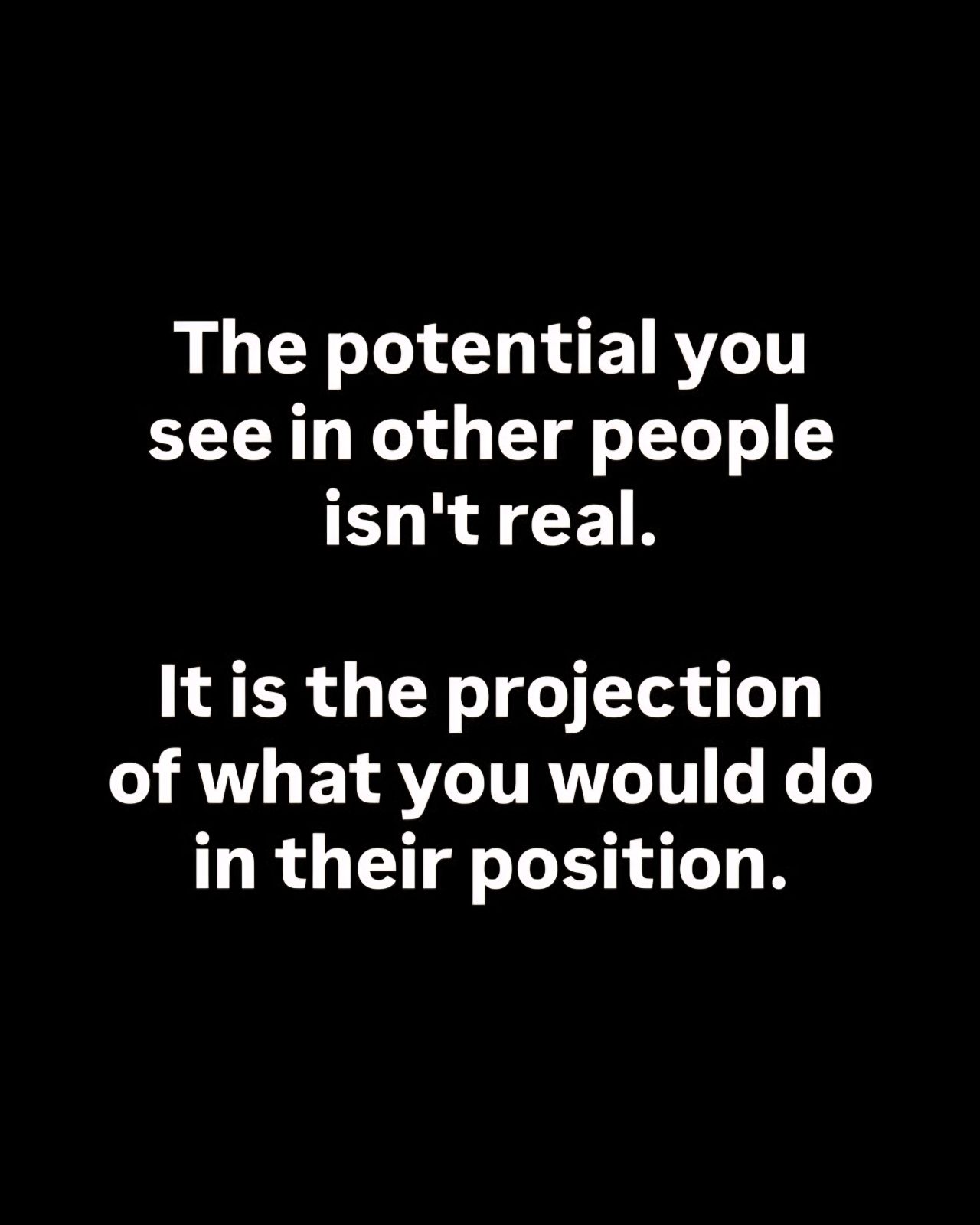
In a recent LinkedIn post, Sallee Poinsette-Nash delves into the common human tendency to project our own desires and capabilities onto others, often mistaking this projection for genuine potential. Poinsette-Nash argues that this can lead to significant misunderstandings and misplaced expectations in both personal and professional relationships.
She begins by questioning the very nature of how we perceive potential in others, suggesting that what we see might not be an objective assessment of the individual, but rather a reflection of ourselves. Poinsette-Nash writes:
You’re not seeing who they are.
You’re seeing what you would do in their position.
(Or what you wish they’d do)
Separating Projection from Perception
Poinsette-Nash elaborates on this distinction, emphasizing that our aspirations for someone can become conflated with their actual identity and capabilities. This, she warns, is a frequent source of relational friction.
According to Poinsette-Nash, while it’s true that individuals can sometimes possess untapped talents that others may initially overlook, there’s a crucial difference between recognizing genuine promise and projecting one’s own hopes onto someone. She states:
But inspiration and projection can look similar from the outside.
The risk isn’t from seeing potential in others.
It’s believing it’s real.
This insight highlights the importance of discernment when evaluating others. Poinsette-Nash suggests that our own internal landscape—our experiences, ambitions, and even our wishful thinking—can significantly color our perception of another person’s abilities and future trajectory.
The Importance of Observed Behavior
Moving Beyond Hope to Reality
To navigate this challenge, Poinsette-Nash advocates for a grounded approach, urging readers to focus on tangible evidence rather than aspirational beliefs. She advises a shift in focus from what someone *could* become to what they *consistently demonstrate* through their actions.
As Poinsette-Nash puts it:
Watch what people repeatedly do, don’t just hope for what they could become.
Because they were never that version.
You just wanted them to be.
This perspective underscores the value of observing patterns of behavior over time. Poinsette-Nash’s analysis suggests that relying on observed actions provides a more reliable basis for understanding an individual than relying on the potential we envision for them, which may be more a product of our own desires than their inherent capabilities.
Ultimately, Poinsette-Nash’s message serves as a powerful reminder for leaders and individuals alike to cultivate self-awareness in their assessments of others, ensuring that their perceptions are rooted in reality rather than wishful thinking.
📝 About This Content
This article is based on insights shared by Sallee Poinsette-Nash on LinkedIn.
📅 Originally posted on April 6, 2026 | View original post on LinkedIn →