
In the fast-paced world of business, it’s easy to let the pressures of back-to-back calls and demanding projects spill over into crucial meetings. The author of this insightful post, writing under The Emotional Intelligence Network, shares a personal transformation that highlights a surprisingly simple yet profoundly effective strategy for managing emotional reactions and fostering healthier professional relationships.
The author recounts a period where unresolved stress from previous interactions would often trigger disproportionate responses in subsequent meetings. This unpredictability created an environment of tension for their team, not due to malice, but due to the uncertainty of which emotional state they would encounter. This realization led to a pivotal understanding: the emotions themselves weren’t the core issue, but rather the unmanaged reactions to them.
The 10-Second Solution: Awareness and Intention
The breakthrough came with the implementation of a ‘ridiculously simple’ technique: a 10-second pause before important interactions. This brief moment is dedicated to self-reflection, asking two key questions:
- “What am I feeling right now?”
- “Is this the energy I want to bring into the room?”
This practice, devoid of complex techniques like breathwork or journaling, relies purely on cultivating awareness and setting an intention. The author emphasizes that this is not about suppressing emotions, but about consciously choosing how to respond to them.
The Impact of Conscious Response
The adoption of this simple pause yielded significant positive changes:
- Reduced Conflict: Fewer instances of ‘blowups’ or overly emotional outbursts occurred.
- Accelerated Trust: The team began to trust the author more readily, fostering a safer environment.
- Authentic Conversations: Interactions shifted from polite performances to genuine discussions, allowing for the tackling of real problems.
By pausing and choosing a response, the author found that people became more open, honest, and collaborative, leading to more effective problem-solving.
Emotions as Information, Not Directives
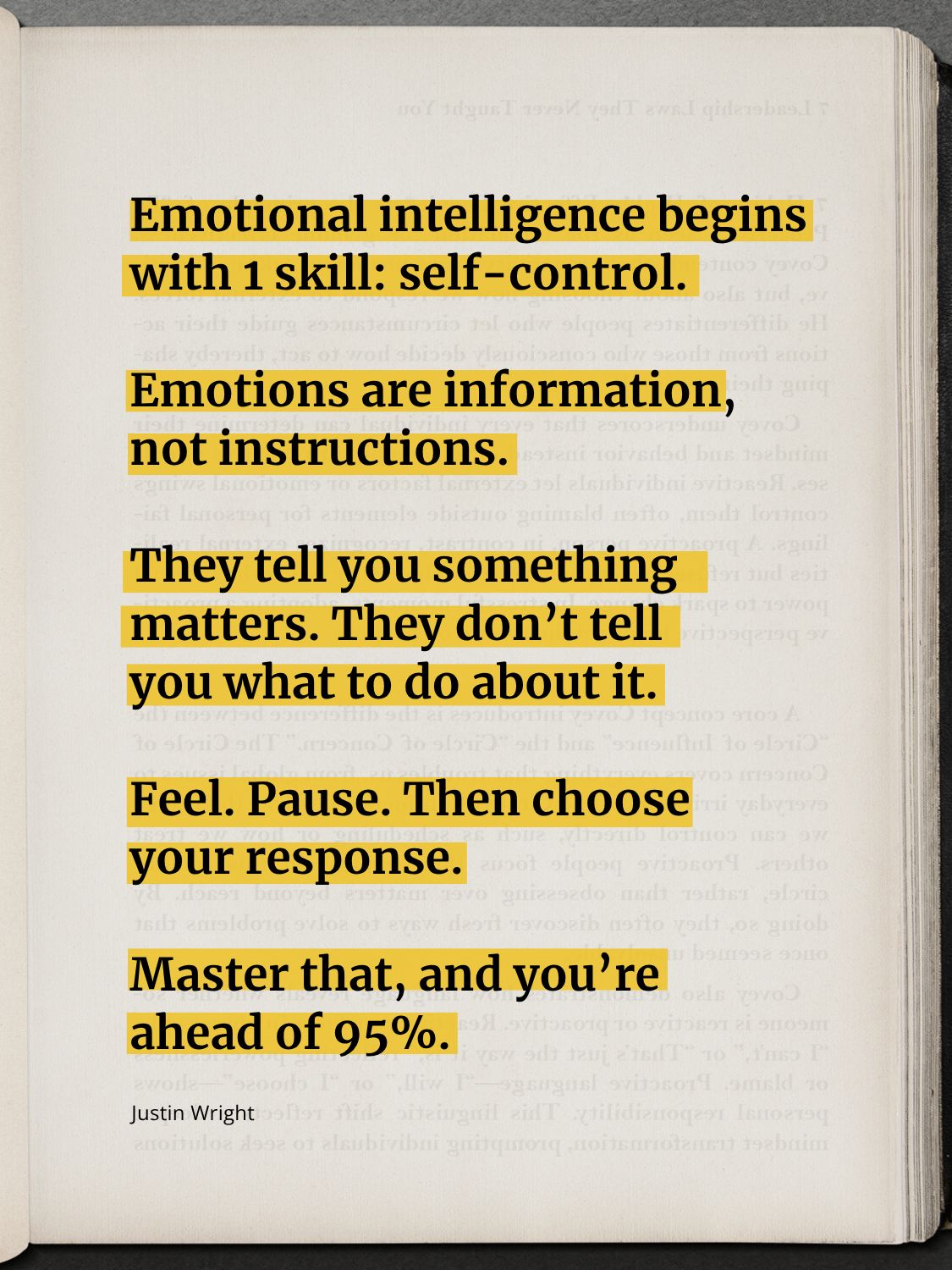
A core insight shared is the understanding that ‘Emotions are information, not instructions.’ While emotions signal what is important or matters to us, they do not dictate the course of action. The author advocates for a process of feeling an emotion, pausing to reflect, and then intentionally choosing a response. Mastering this cycle, they suggest, can place an individual significantly ahead in professional effectiveness and relationship management.
The author concludes by acknowledging that this is an ongoing practice, but the consistent application of those 10 seconds has proven invaluable in preserving and strengthening professional relationships. This approach underscores the profound impact of emotional intelligence in navigating the complexities of the modern workplace.
This article is inspired by a post from The Emotional Intelligence Network.
📝 About This Content
This article is based on insights shared by The Emotional Intelligence Network on LinkedIn.
📅 Originally posted on October 29, 2025 | View original post on LinkedIn →