
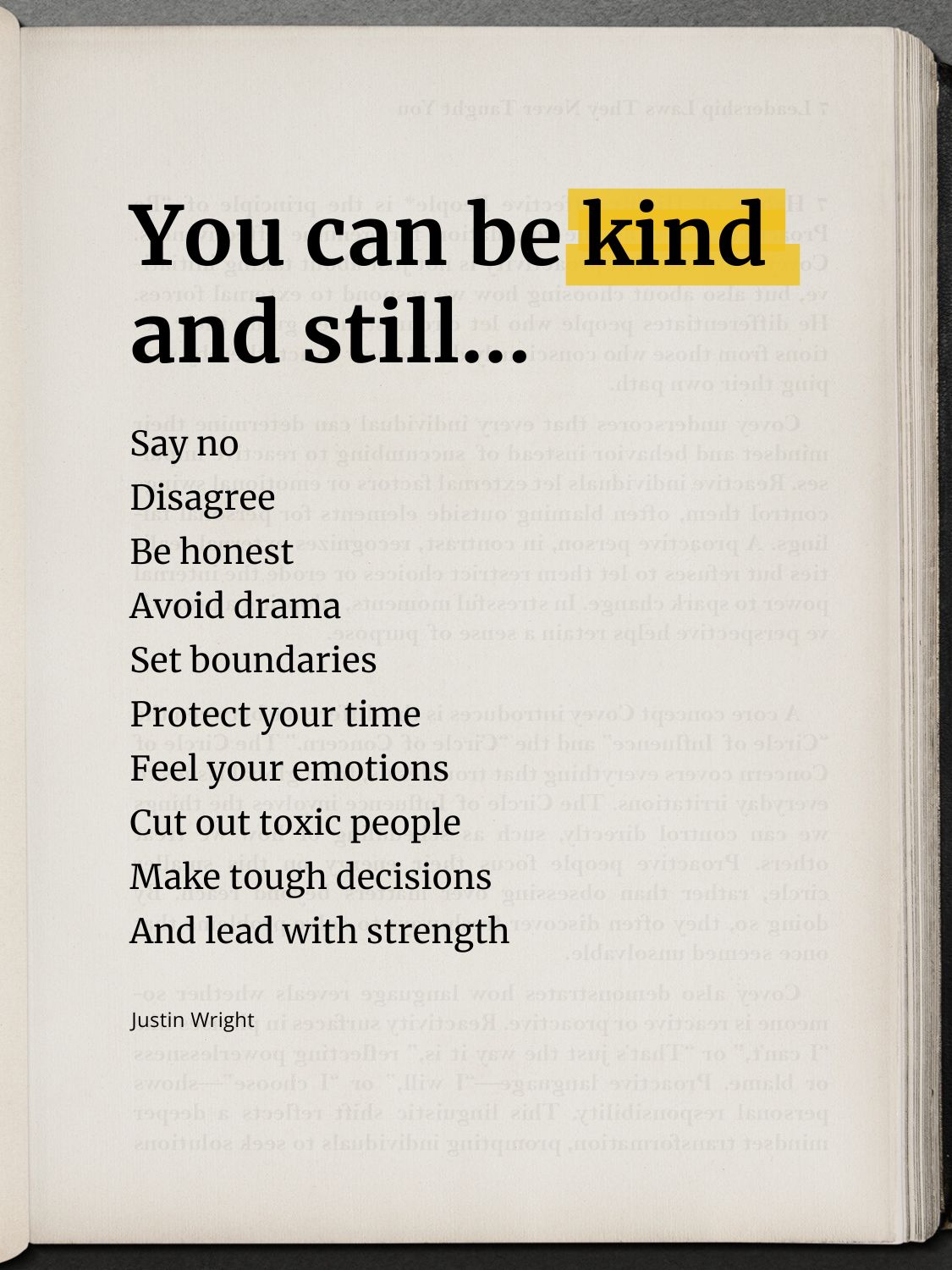
In a recent LinkedIn post, Justin Wright challenges conventional notions of kindness, arguing that true compassion requires strength and clear boundaries, rather than constant people-pleasing. Wright uses his personal reflection to advocate for a more authentic and boundaried approach to interpersonal interactions.
He begins by recounting a past misconception: “I used to think being kind meant saying yes to everything. Never disappointing anyone. Putting everyone else’s needs before my own.” This initial premise sets the stage for his redefinition of what it truly means to be kind in both personal and professional contexts.
“Real kindness requires backbone. It means caring enough to have hard conversations. It means protecting your energy so you can show up fully for what matters.”
Wright emphasizes that genuine kindness is not about avoiding difficult situations but about navigating them with integrity and self-respect. He suggests that this stronger form of kindness allows individuals to be more effective and impactful.
The Evolution of Kindness: From People-Pleasing to Purposeful Action
The core of Wright’s message revolves around the idea that true kindness is an active choice, not a passive state of always agreeing or accommodating. He asserts that individuals can, and should, embody strength alongside compassion. This involves a willingness to set limits and stand firm on principles, even when it might lead to temporary discomfort or disagreement.
According to Wright, this evolved understanding of kindness enables several key actions that are often perceived as contradictory to being ‘nice’:
- Setting firm boundaries
- Disagreeing with superiors
- Prioritizing mental health
- Exiting toxic relationships
- Making unpopular decisions
Wright argues that these actions are not selfish but are essential components of self-preservation and authentic living. He states:
“The kindest thing you can do for yourself? Stop shrinking to make others comfortable. Stop apologizing for protecting your peace. Stop feeling guilty for choosing your growth.”
This perspective encourages a shift from a mindset of obligation to one of intention, where actions are driven by a desire for genuine connection and personal well-being, rather than a fear of disapproval.
Kindness as a Source of Strength
Wright further elaborates on how this boundaried approach amplifies the impact of one’s kindness. When individuals operate from a place of strength and intention, rather than depletion and obligation, their actions carry more weight and authenticity. He highlights this transformation:
“When you act from a place of strength, not depletion. When you lead with intention, not obligation. When you choose respect over being liked. That’s when your kindness becomes powerful. That’s when it creates real impact.”
In essence, Wright suggests that the world needs fewer individuals who are constantly trying to appease others and more who are willing to be their authentic selves. This authenticity, he posits, is the foundation for genuine connection and respect. He concludes with a powerful call to action:
“Be kind. Be strong. Be unapologetic about it. The right people will respect you for it. And the wrong people? They’ll show themselves out.”
Wright’s insights offer a valuable framework for professionals seeking to balance empathy with assertiveness, ultimately fostering healthier relationships and more sustainable personal and professional growth.
📝 About This Content
This article is based on insights shared by Justin Wright on LinkedIn.
📅 Originally posted on April 3, 2026 | View original post on LinkedIn →