
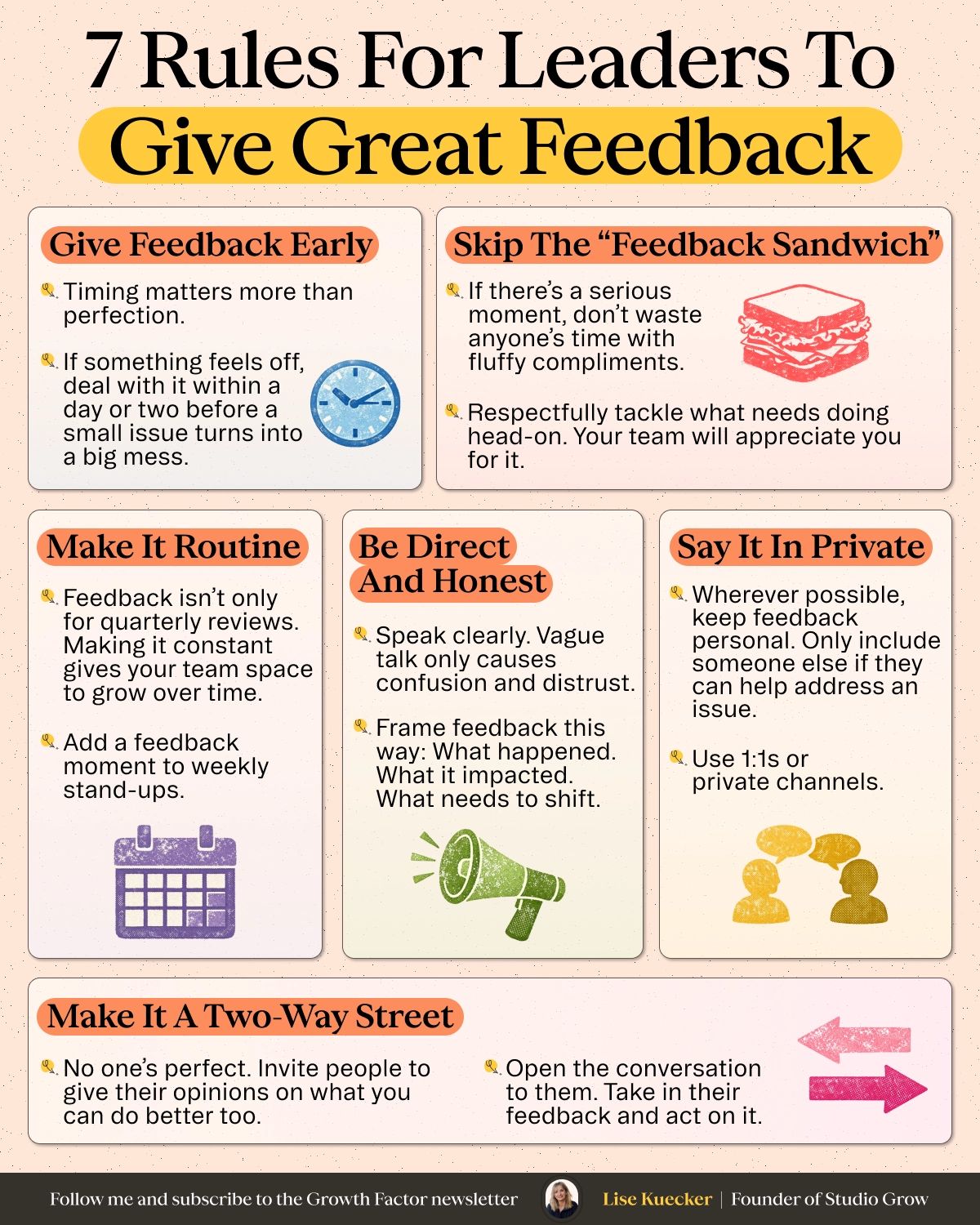
In a recent LinkedIn post, Lise Kuecker explores the critical role of constructive feedback in team development, arguing that avoiding difficult conversations can be more detrimental than delivering feedback itself. Kuecker, drawing on over two decades of experience, emphasizes that while giving feedback can initially feel daunting for leaders, the practice becomes easier with consistent application.
The core of Kuecker’s message is that high-performing team members are eager to grow, and it is a leader’s responsibility to help them identify and address areas for improvement. The potential hesitation for leaders, as Kuecker points out, often stems from a fear of overstepping or delivering the wrong message. However, this apprehension can lead to a complete absence of feedback, hindering team progress.
“Giving feedback won’t break your team. Avoiding the hard conversation will.”
Cultivating a Feedback-Rich Environment
Lise Kuecker outlines seven key principles for effective feedback delivery, designed to foster a culture of continuous improvement. These rules aim to make feedback a natural and productive part of team dynamics rather than an awkward or infrequent event.
Key Principles for Effective Feedback
Kuecker’s guidelines offer a structured approach to feedback:
- Give Feedback Early: Addressing issues promptly prevents them from escalating. Kuecker advises, “If something feels off, address it fast.”
- Say it in Private: Feedback should be a personal interaction, reserved for one-on-one settings or private channels to maintain respect and avoid public discomfort.
- Spot the Good Stuff, Too: Positive reinforcement is equally important. Kuecker stresses that strengths and wins should be acknowledged and used as a basis for further development.
- Make it Routine: Feedback should not be confined to formal reviews but integrated into regular team interactions, such as weekly stand-ups.
- Skip the “Feedback Sandwich”: For serious issues, Kuecker advocates for directness, stating, “If there’s a serious moment, don’t waste time. Respectfully tackle what needs doing head-on.”
- Be Direct and Honest: Vague feedback leads to confusion. Kuecker suggests a clear framework: “What happened. What it impacts. What needs to shift.”
- Make it a Two-Way Street: Fostering an environment where leaders also solicit and act upon feedback from their team is crucial for mutual growth.
The Impact of Clarity and Growth
According to Kuecker, establishing a culture that embraces honest feedback enables teams to enhance their strengths and mitigate weaknesses effectively. This clarity ensures team members understand expectations and areas for development, which accelerates their progress.
“Building a culture around honest feedback helps your team enhance their strengths and improve on their weaknesses.”
Ultimately, Kuecker argues that this approach is instrumental in developing future leaders, not merely competent employees. By providing consistent, clear, and constructive feedback, leaders empower their teams to reach their full potential.
“With that clarity, they’ll rise fast. That’s how you build future leaders, not just good employees.”
Kuecker concludes by prompting readers to consider which of these feedback principles they find most impactful, inviting further discussion on the topic.
📝 About This Content
This article is based on insights shared by Lise Kuecker on LinkedIn.
📅 Originally posted on February 28, 2026 | View original post on LinkedIn →