
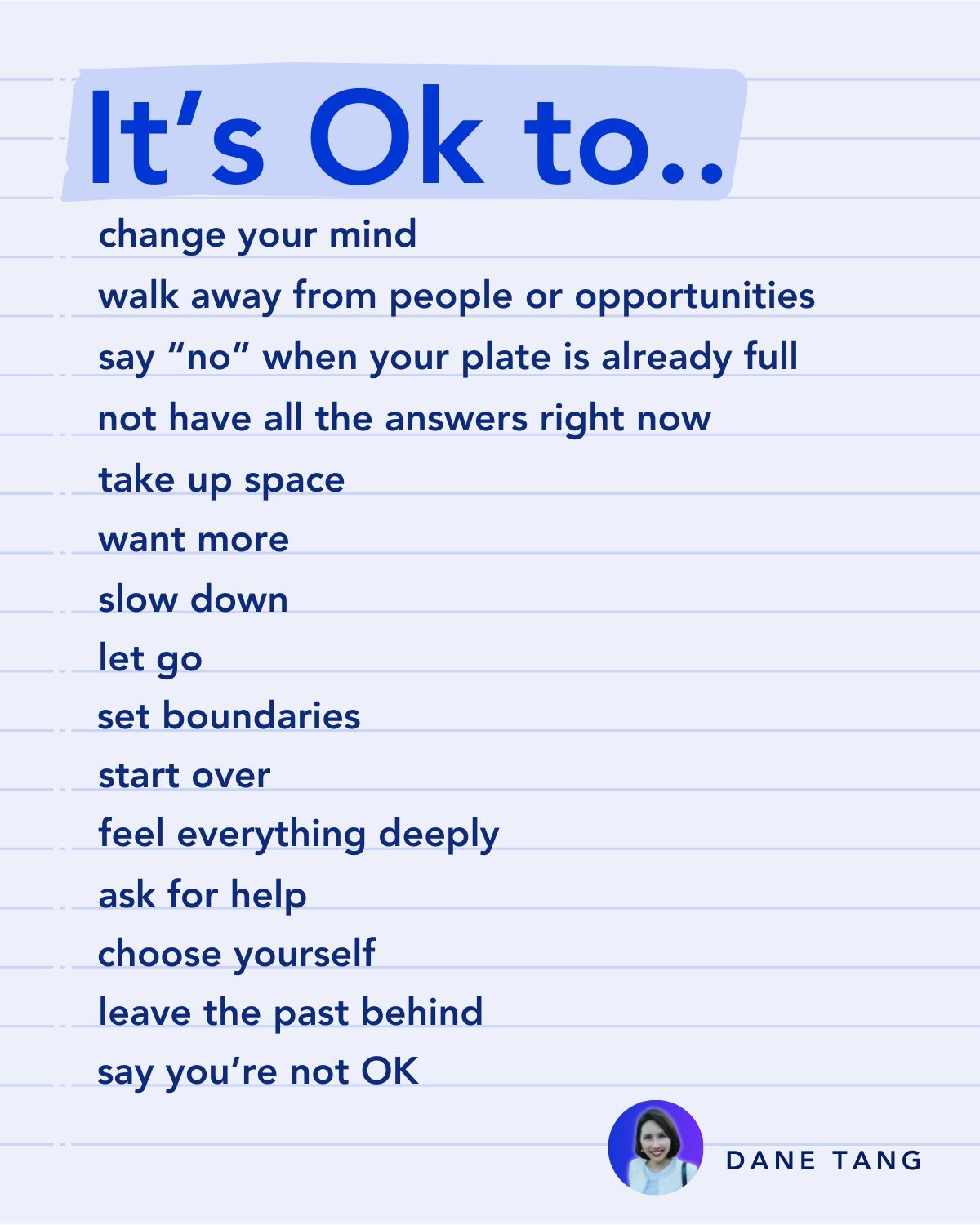
In a recent LinkedIn post, Dane Tang delves into the critical importance of self-compassion and the courage to prioritize one’s own well-being in the face of numerous external and internal expectations. Tang’s message, shared with his followers, emphasizes that individuals do not owe explanations or sacrifices of their peace and dreams to others, advocating for a conscious shift towards self-prioritization, especially as the new year begins.
Embracing Self-Compassion in a Demanding World
Tang opens his post by acknowledging the often overwhelming nature of life’s demands. He writes, “Life can feel like a never-ending list of expectations.. From work From family From yourself.” This sentiment resonates with many who navigate the complexities of modern life, juggling professional ambitions, family responsibilities, and personal aspirations. The core of Tang’s message is a call to action, urging readers to shed the guilt associated with self-care and self-advocacy.
“You don’t owe anyone your explanation, your peace, or your dreams.”
This powerful statement forms the bedrock of Tang’s argument. He suggests that societal pressures and personal habits often lead individuals to overextend themselves, feeling obligated to meet demands that may not align with their own needs or goals. By releasing this perceived obligation, Tang posits that individuals can reclaim their personal agency and focus on what truly matters for their own growth and happiness.
Key Principles for Choosing Yourself
To illustrate his point, Tang provides a comprehensive list of actions and mindsets that fall under the umbrella of choosing oneself. These actionable insights offer a practical roadmap for readers seeking to implement more self-compassion into their daily lives. As Dane Tang notes, it is “OK to:”
- Change your mind
- Walk away from people or opportunities that no longer serve you
- Say “no” when your plate is already full
- Not have all the answers right now
- Take up space
- Want more for yourself
- Slow down
- Let go of what’s weighing you down
- Set boundaries that protect your energy
- Start over when needed
- Feel everything deeply
- Ask for help
- Choose yourself unapologetically
- Leave the past behind
- Say, “I’m not OK” and take the time to heal
Each of these points, according to Tang, represents a valid and necessary act of self-preservation and self-actualization. The ability to set boundaries, for instance, is highlighted as crucial for protecting one’s energy, a finite resource often depleted by constant demands. Tang also emphasizes the importance of acknowledging one’s feelings and seeking support when needed, countering the notion that strength means never showing vulnerability.
“Set boundaries that protect your energy”
Tang’s encouragement to “start over when needed” and “leave the past behind” speaks to the cyclical nature of personal growth and the need for resilience. He advocates for a mindset that allows for mistakes and comebacks, rather than striving for an unattainable perfection. This perspective fosters a healthier relationship with oneself, one that is more forgiving and supportive.
A Call for a Personal Reset
The overarching theme of Tang’s post is a call for a fundamental reset in how individuals approach their own lives and well-being. He concludes by urging his audience to, “Let’s reset how we show up, for ourselves first.” This imperative suggests that true fulfillment and effectiveness in all areas of life begin with a strong, compassionate foundation built from within.
“Let’s reset how we show up, for ourselves first.”
By sharing these insights, Dane Tang aims to empower individuals to embrace self-compassion not as a luxury, but as a necessity for navigating life’s challenges and pursuing a more authentic and fulfilling existence. His post serves as a timely reminder, particularly at the start of a new year, to reflect on personal priorities and to cultivate a healthier, more self-aware approach to living.
📝 About This Content
This article is based on insights shared by Dane Tang on LinkedIn.
📅 Originally posted on January 8, 2026 | View original post on LinkedIn →