
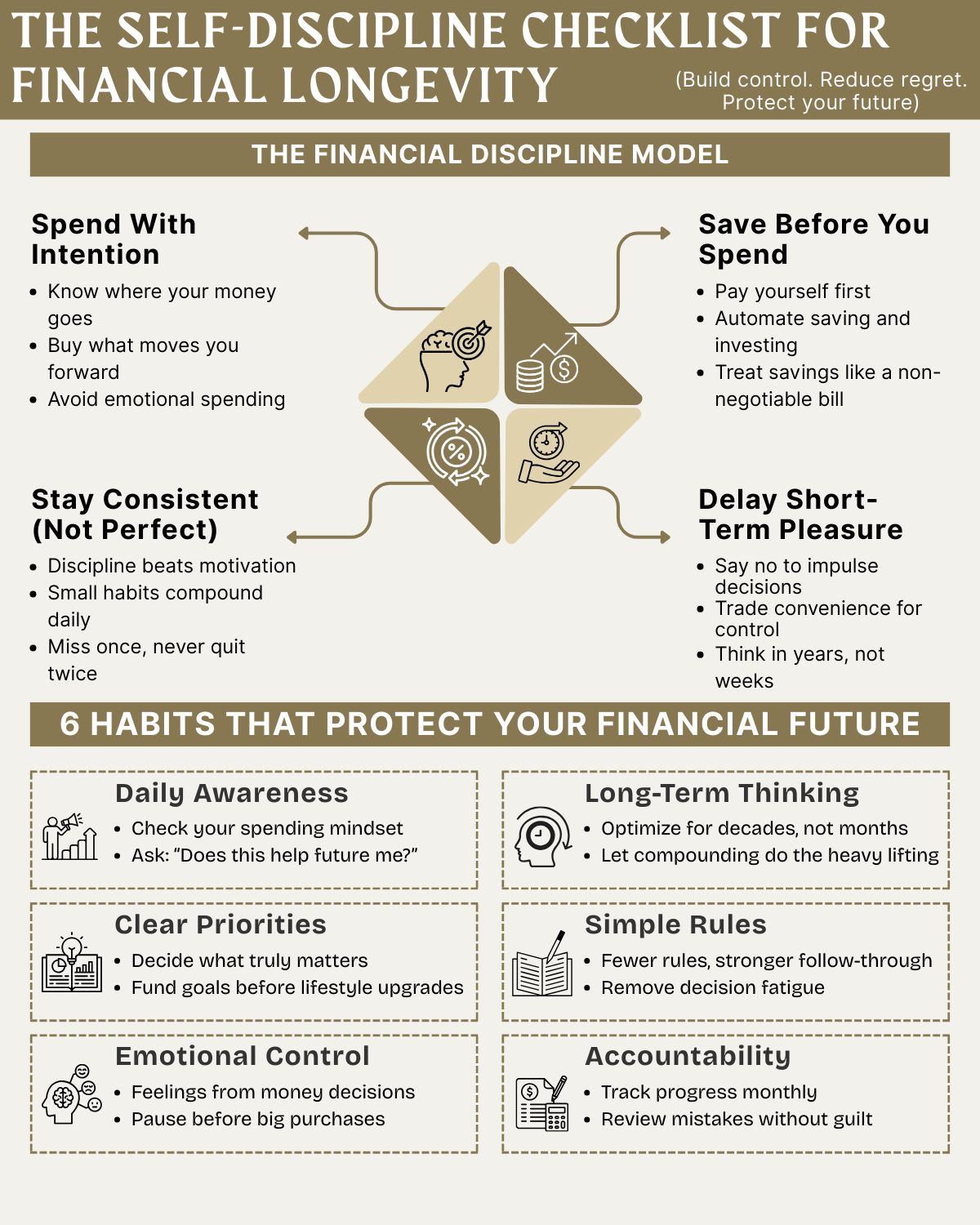
In a recent LinkedIn post, Michael Merlin explores the subtle yet powerful mechanisms behind building long-term financial security, arguing that consistent, small choices are far more impactful than infrequent grand gestures. Merlin posits that true wealth is not typically lost through a single misstep but rather eroded by a series of minor, repeated lapses in discipline.
Merlin highlights a fundamental truth often overlooked in the pursuit of financial success: the quiet nature of wealth accumulation. As he puts it:
“Because wealth is quiet. And regret compounds fast.”
This observation sets the stage for his core argument: that financial longevity is built not on chasing elusive big wins, but on mastering daily control and consistency. He contrasts the common pursuit of large, dramatic financial events with the reality of steady, disciplined progress.
The Shift from Reactive Spending to Intentionality
A key theme in Merlin’s post is the necessary transition from reactive spending habits to intentional financial decision-making. He outlines this as the first step in cultivating financial longevity, emphasizing the importance of awareness and purpose in every monetary transaction.
Merlin suggests that money is intrinsically linked to awareness. He advises readers to:
“Know where it goes. Buy what moves you forward. Keep emotions out of purchases.”
This principle underscores the need to understand one’s financial flow and to align spending with personal values and future goals, rather than succumbing to impulse or emotional buying.
Prioritizing Savings and Long-Term Vision
Another critical aspect Merlin addresses is the shift from a ‘leftover’ savings mentality to treating savings as a primary allocation. He advocates for automating savings and investments, framing them as essential, non-negotiable expenses akin to a fixed bill.
Furthermore, Merlin stresses the importance of shifting focus from immediate gratification to long-term planning. He argues that:
“Short-term pleasure trades against long-term freedom. Delay impulses. Choose control. Think in years.”
This perspective challenges the common inclination towards instant satisfaction, urging a more strategic approach to financial choices that prioritizes future well-being over present desires.
Consistency Over Motivation and the Power of Compounding
Merlin dedicates a significant portion of his post to the principle that consistency is a more reliable driver of success than fleeting motivation. He points out that small, consistent habits, much like compound interest, yield substantial results over time.
He emphasizes that true discipline means continuing forward even after minor setbacks. This idea is encapsulated in his point:
“Discipline outlasts motivation. Small habits compound. Miss once, continue forward.”
This philosophy encourages resilience and a focus on the long game, recognizing that perfection is an unrealistic and often demotivating standard. Instead, the focus should be on sustained effort and learning from any deviations.
Cultivating Daily Awareness and Clear Priorities
The post also delves into the necessity of moving away from financial autopilot towards conscious, daily awareness. Merlin encourages individuals to regularly assess their spending mindset and to continuously ask whether their choices serve their future selves.
He further advises prioritizing long-term goals over immediate lifestyle upgrades, asserting that clear priorities are essential for sustainable wealth building. By funding future aspirations before indulging in immediate wants, individuals can ensure their financial trajectory remains aligned with their ultimate objectives.
In his concluding remarks, Merlin reinforces that financial success is rarely the product of dramatic, isolated events. Instead, he argues, it is the quiet, consistent application of disciplined choices that builds lasting wealth. He summarizes this potent idea by stating, “Self-discipline remains the most reliable retirement plan there is.” This perspective offers a practical and empowering framework for anyone seeking to enhance their financial future through consistent, mindful action.
📝 About This Content
This article is based on insights shared by Michael Merlin on LinkedIn.
📅 Originally posted on February 14, 2026 | View original post on LinkedIn →