
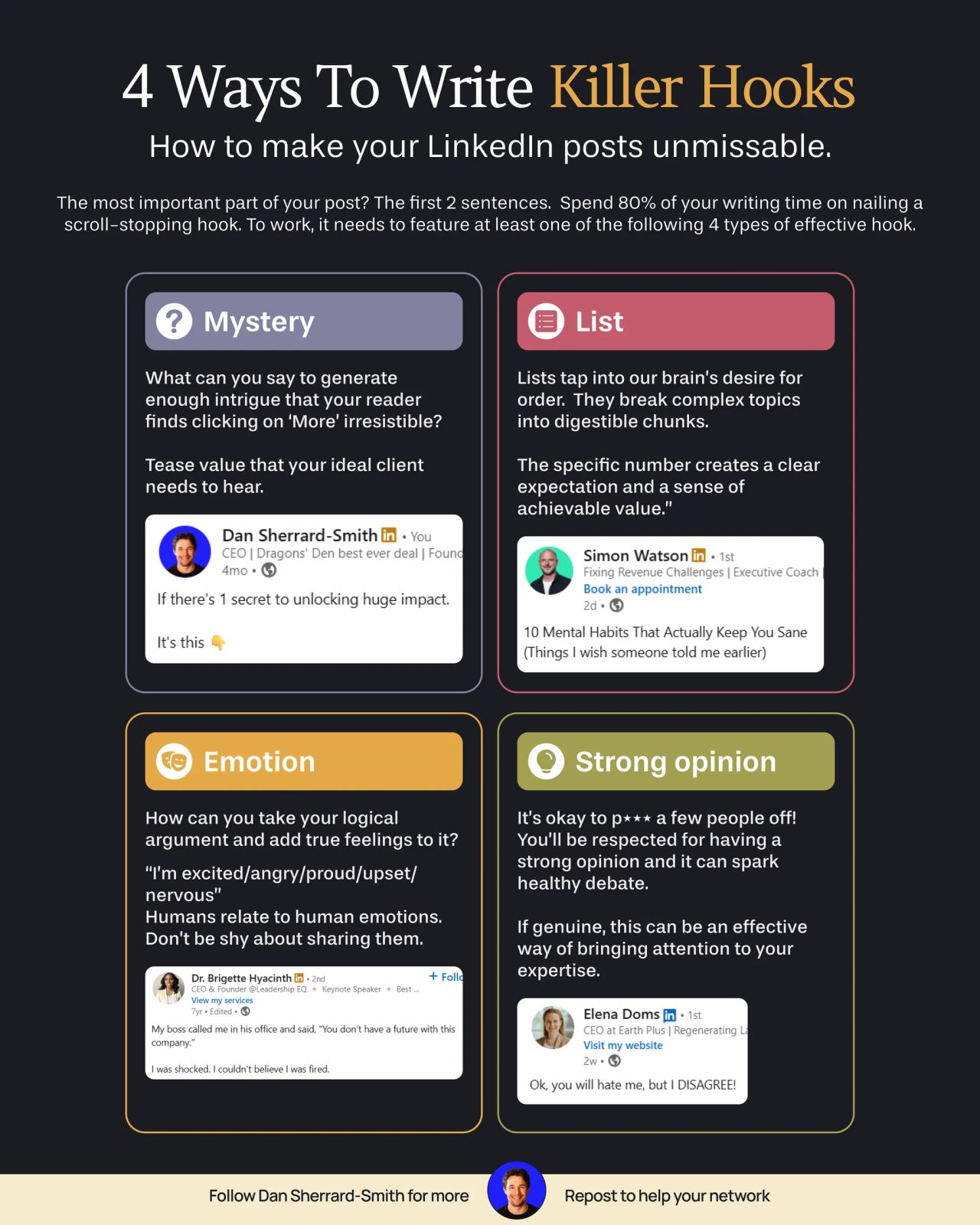
In a recent LinkedIn post, Dan Sherrard-Smith discusses a pivotal strategy that led to a significant increase in his follower count. Sherrard-Smith reveals that in just six months, he gained 25,000 followers by implementing a single, impactful change to his content creation process: dedicating 80% of his writing time to crafting the first two lines of his posts.
According to Sherrard-Smith, the effectiveness of the initial lines is paramount in capturing audience attention on the platform. He emphasizes:
“If your first 2 lines don’t grab attention? The rest of your post doesn’t matter. Nobody engages. Nobody clicks ‘More’. Nobody reads your brilliant insights.”
The Neglected Art of the Hook
Sherrard-Smith contrasts his approach with a common pitfall he observes among many content creators, particularly founders. He argues that many individuals prioritize writing the main body of their post first, treating the opening lines as an afterthought. This strategy, he contends, is no longer effective in the current LinkedIn environment.
“Most founders write their post first. Then slap a hook on top as an afterthought. That no longer works on LinkedIn,” Sherrard-Smith states. He posits that this method fails to stop the scroll and engage potential readers, rendering even the most valuable content invisible.
Four Types of Scroll-Stopping Hooks
To combat this issue, Sherrard-Smith identifies four distinct types of hooks that are proven to capture attention and encourage engagement. These categories are designed to tap into fundamental psychological triggers:
1. Lists
Hooks that present information in a list format immediately signal structure and promise digestible content. Readers understand they will receive a clear, enumerated set of points, which can be highly appealing.
2. Mystery
Creating a sense of curiosity or intrigue can be a powerful hook. Posing a question or hinting at a surprising revelation encourages users to click “More” to uncover the answer.
3. Emotion
Appealing to the reader’s emotions—whether through empathy, excitement, or even frustration—can forge an immediate connection. Emotionally resonant hooks are often highly shareable.
4. Strong Opinion
Presenting a bold or contrarian viewpoint can immediately grab attention and spark debate. A strong opinion invites engagement, whether through agreement or disagreement.
Sherrard-Smith suggests that each of these hook types triggers a different psychological need, making them effective tools for cutting through the noise on a crowded platform. By focusing on these compelling openings, creators can significantly increase the visibility and impact of their content.
He concludes his post by inviting engagement, asking his network, “Which hook type do you use most often?” This interactive approach not only reinforces his message but also encourages further discussion and community building around content strategy.
📝 About This Content
This article is based on insights shared by Dan Sherrard-Smith on LinkedIn.
📅 Originally posted on November 28, 2025 | View original post on LinkedIn →