
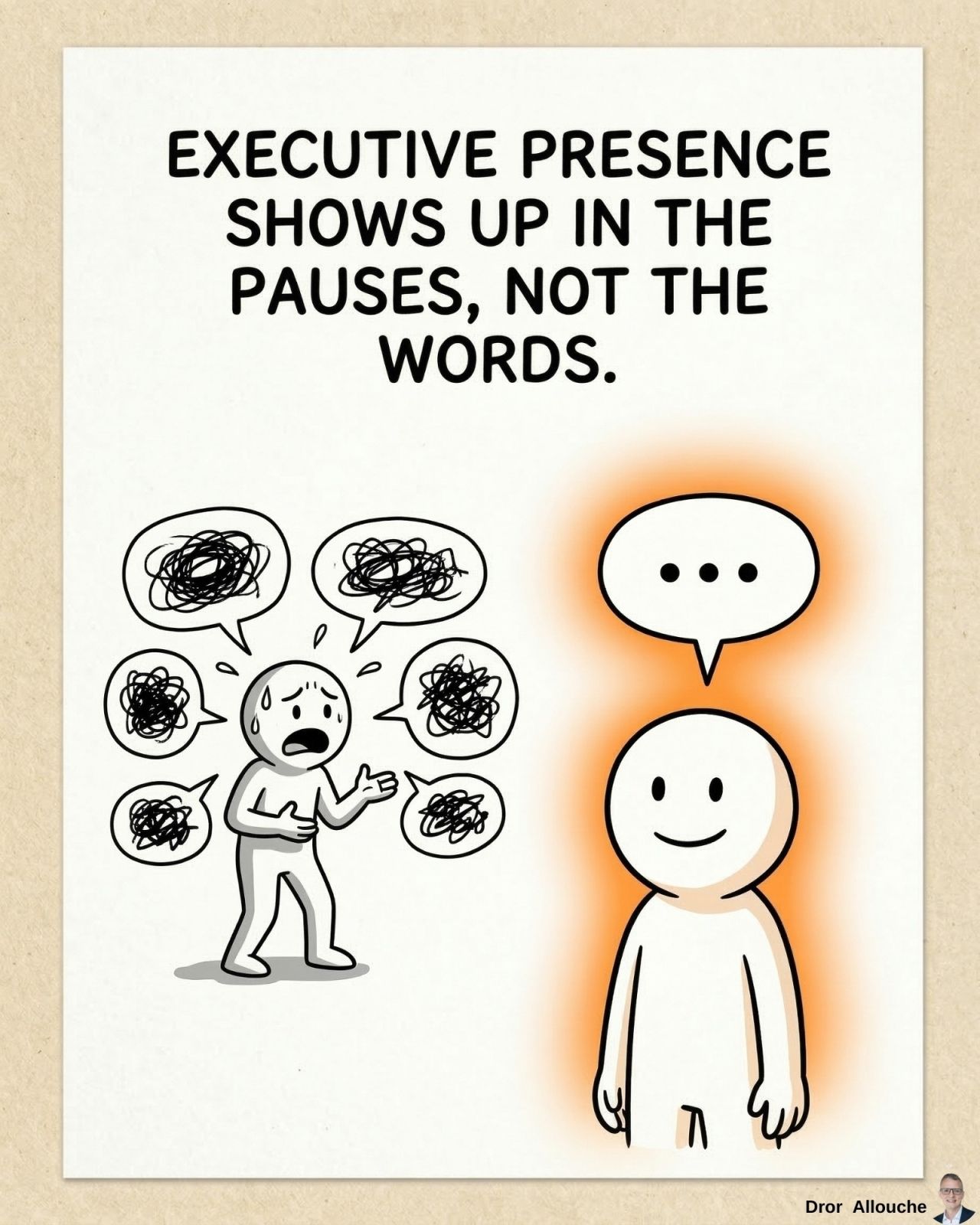
In a recent LinkedIn post, Dror Allouche explores the often-overlooked power of silence in professional communication, arguing that mastering pauses can be a more potent tool for leadership than constant talking. Allouche challenges the conventional wisdom that filling every moment with words is a sign of engagement, asserting instead that strategic silence can significantly enhance perceived authority and influence.
The former VP of Product and GM at Gett highlights a common pitfall for emerging leaders: the fear of silence. “Junior leaders fear silence. Inspiring executives use it as a weapon,” Allouche states, setting the stage for his analysis of how seasoned leaders leverage pauses effectively.
The Strategic Advantage of Silence
Allouche breaks down several practical techniques for incorporating strategic silence into communication. He emphasizes that rather than being a sign of unpreparedness, pauses can signal thoughtfulness and confidence. “Instant answers sound rehearsed. Pauses sound strategic,” he explains, offering a direct contrast to the perceived weakness of immediate, unconsidered responses.
Answering Questions Thoughtfully
One of Allouche’s key recommendations is to allow a brief pause after a question is posed before offering an answer. This 2-3 second delay, he argues, gives the impression of careful consideration rather than a rushed or rehearsed reply. This technique, according to Allouche, helps to “signal you’re thinking, not scrambling.”
Eliminating Filler Words and Filler Phrases
Beyond deliberate pauses, Allouche also addresses the detrimental effect of filler words. He provides examples of phrases to cut, such as “I think maybe we should probably consider…” advocating for more direct and confident statements like “We should do this.” Allouche’s core message here is that uncertainty kills credibility, and concise language builds it.
“Every uncertain word kills your credibility.”
Silence as a Tool for Deeper Understanding and Leadership
The insights shared by Allouche extend beyond mere speaking techniques to encompass broader leadership dynamics. He suggests that silence can be a powerful tool for uncovering genuine concerns and fostering collaborative environments.
Encouraging Open Dialogue
When faced with objections, Allouche advises against immediately defending one’s position. Instead, he recommends waiting a few seconds. “Someone objects to your idea? Don’t jump to defend it. Wait 3 seconds. They’ll keep talking and show their real concern,” he writes. This approach allows for a more thorough understanding of dissenting opinions and can lead to more robust solutions.
Empowering Others Through Silence
Furthermore, Allouche points out the role of silence in encouraging others to step up. When leaders pose a question, such as “What should we do here?”, and then remain silent, they compel others to contribute and take ownership. “Silence forces others to step up and lead,” he asserts. This not only develops the leadership potential of team members but also reinforces the leader’s composed authority.
“The leaders who get promoted aren’t the most talkative. They’re the ones who know when to speak and when to let silence work for them.”
In conclusion, Dror Allouche’s LinkedIn post offers a compelling argument for the strategic use of silence in professional settings. By embracing pauses, eliminating filler words, and allowing space for others to speak, leaders can cultivate greater executive presence, foster deeper understanding, and ultimately, enhance their influence and credibility.
📝 About This Content
This article is based on insights shared by Dror Allouche on LinkedIn.
📅 Originally posted on March 12, 2026 | View original post on LinkedIn →