
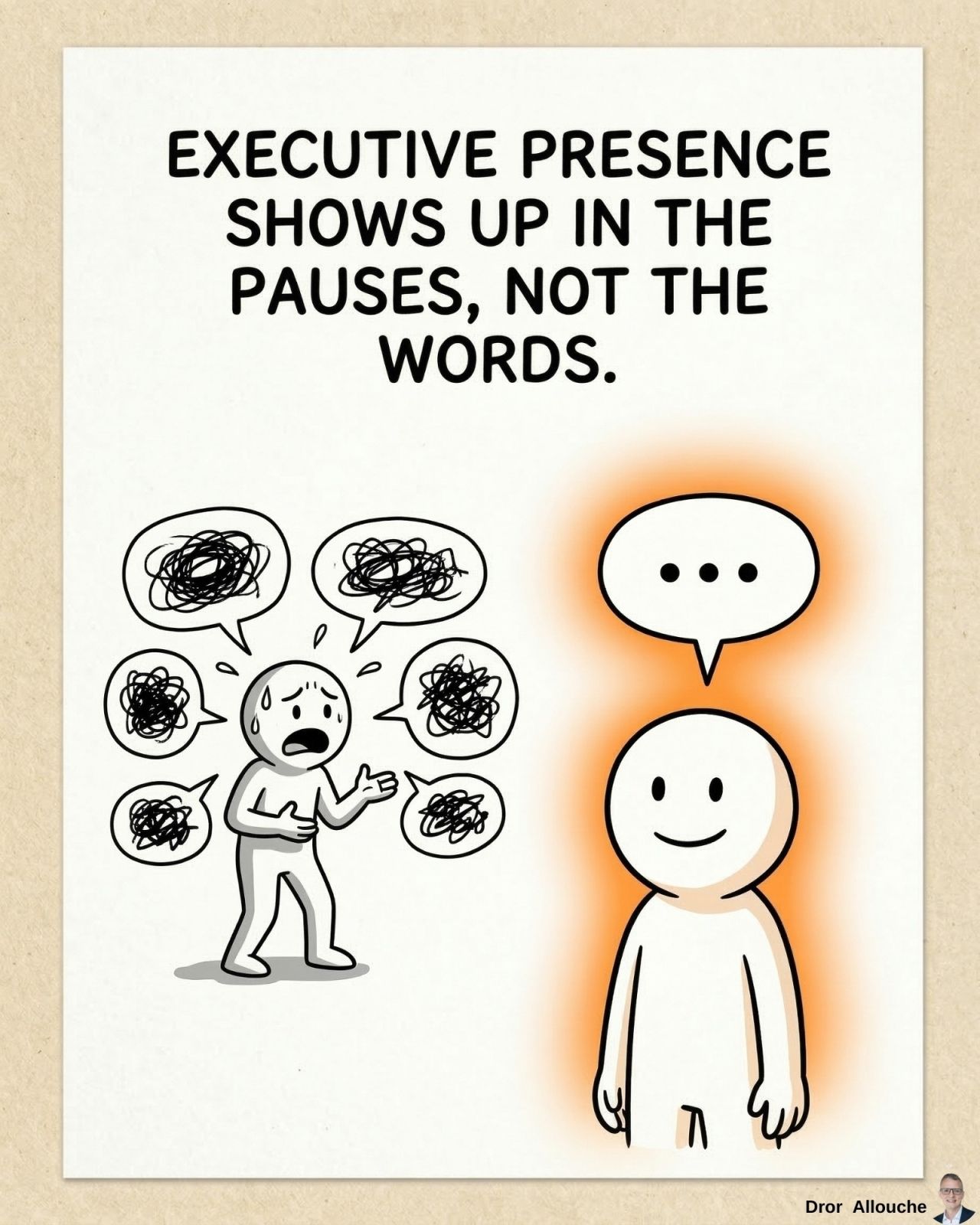
In a recent LinkedIn post, Dror Allouche explores the often-overlooked power of silence in professional communication, arguing that mastering pauses can be a more potent tool for influence than constant talking. Allouche, who identifies himself as a leadership coach, challenges the common perception that filling every moment with words is a sign of engagement, asserting instead that strategic silence can command attention and project authority.
The core of Allouche’s argument is that many leaders, particularly junior ones, fear silence, mistaking it for a lack of preparedness or confidence. He contrasts this with the communication style of inspiring executives.
“Inspiring executives use it as a weapon.”
This striking statement frames silence not as an absence of communication, but as an active and deliberate technique. Allouche suggests that this deliberate use of pauses can make an audience more receptive to what is being said.
Transforming Silence from Fear to Force
Dror Allouche outlines several practical strategies for leaders to incorporate strategic silence into their communication. He emphasizes that this is not about being quiet, but about being intentionally silent at key moments.
1. Letting Questions Land
A key piece of advice from Allouche is to allow a brief pause after a question is asked before formulating a response. He contends that immediate answers can sound rehearsed, whereas a short delay signals thoughtful consideration.
“Instant answers sound rehearsed. Pauses sound strategic.”
This approach, according to Allouche, enhances the perceived intelligence and deliberateness of the speaker, fostering greater trust and respect from the audience.
2. Eliminating Filler Words and Phrases
Allouche identifies the overuse of filler words like “um,” “maybe,” and “I think” as detrimental to credibility. He advocates for directness, replacing hesitant phrases with clear, concise statements.
“Every uncertain word kills your credibility,” Allouche warns. He provides an example of transforming a verbose, uncertain statement like “I think maybe we should probably consider…” into a direct assertion such as “We should do this.”
3. The Art of Stopping After Making a Point
Another tactic Allouche promotes is to state one’s position clearly and then cease speaking, resisting the urge to follow up with questions seeking validation, such as “Does that make sense?”
“Confidence doesn’t ask for permission.”
This principle, as highlighted by Allouche, suggests that true confidence is demonstrated by stating one’s case and allowing it to stand on its own merits, rather than seeking external validation through follow-up questions.
4. Silence as a Diagnostic Tool
Allouche also points out the utility of silence in understanding others’ true perspectives. When faced with an objection, he advises against an immediate defense. Instead, he suggests waiting a few seconds, during which the objector may elaborate further, revealing the root of their concern.
“The first person to speak after an objection loses power,” Allouche states, implying that allowing the other party to continue speaking after an objection can provide valuable insights and de-escalate potential conflict by addressing underlying issues.
5. Forcing Others to Lead Through Silence
Furthermore, Allouche suggests that by asking a question and then remaining silent, leaders can encourage participation and leadership from others.
“Silence forces others to step up and lead.”
This technique, in Allouche’s view, empowers team members and fosters a more collaborative environment, pushing individuals to contribute and take initiative.
6. Maintaining Composure in Tense Situations
Finally, Allouche touches upon executive presence, noting that in tense situations, a leader’s ability to remain calm and use silence can be more impactful than speaking. By taking a breath and waiting, a leader allows others to fill the void, demonstrating composure and control.
“Executive presence shows up in the pauses, not the words,” Allouche concludes, reinforcing the idea that effective leadership communication involves strategic restraint as much as articulate expression. He ultimately posits that those who advance in their careers are often not the most talkative, but those who understand the strategic deployment of silence.
📝 About This Content
This article is based on insights shared by Dror Allouche on LinkedIn.
📅 Originally posted on March 12, 2026 | View original post on LinkedIn →