
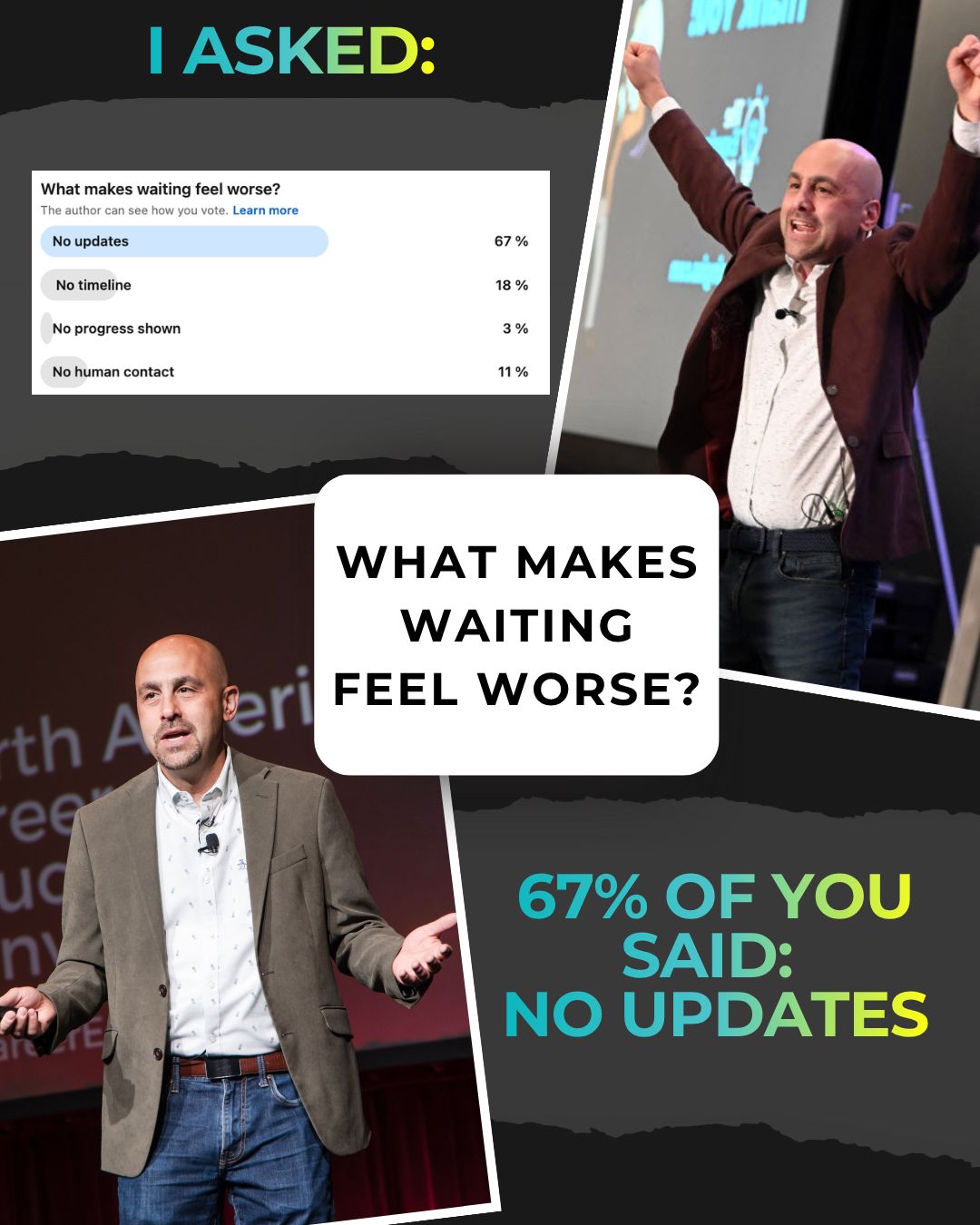
In a recent LinkedIn post, Dan Gingiss, CSP, a recognized expert in customer experience, highlights a critical, yet often overlooked, aspect of service: the impact of communication during waiting periods. Gingiss, CSP shares the results of a poll he conducted, which revealed a strong consensus among respondents about what makes waiting feel worse.
The Core of Customer Frustration: Uncertainty, Not Just Waiting
The poll, which asked participants what makes waiting feel worse, yielded a clear winner. According to Gingiss, CSP, a significant 67% of respondents pointed to a lack of updates as the primary source of their dissatisfaction. This finding leads Gingiss, CSP to a crucial conclusion:
“Customers don’t always hate waiting. They hate wondering.”
This distinction is vital for any business aiming to improve its customer experience. Gingiss, CSP elaborates on the nature of this wondering, explaining that it encompasses concerns about whether anyone is actively addressing their issue, how much longer it might take, and the fear of being forgotten.
Silence vs. Status Updates
The impact of communication, or the lack thereof, can fundamentally change the customer’s perception of a waiting period. Gingiss, CSP emphasizes this point:
“A wait with updates feels completely different than a wait in silence.”
He argues that this principle applies across a wide range of customer interactions, from dining at a restaurant and dealing with flight delays to managing repairs, insurance claims, or simply waiting for customer service assistance. The common denominator is the human need for information and reassurance.
Simple Solutions for Complex Problems
Fortunately, Gingiss, CSP suggests that the solutions to this common problem don’t require elaborate or costly overhauls. He points out that often, a few simple phrases can significantly mitigate customer frustration and foster trust.
The Impact of Basic Reassurance
According to Gingiss, CSP, even brief acknowledgments can make a substantial difference. He provides examples of effective communication:
“We’ve got it,” “Here’s where things stand,” or “Here’s what happens next” is enough to reduce frustration and build trust.
These types of updates serve to acknowledge the customer’s situation, provide a sense of progress, and set expectations, thereby transforming a potentially negative experience into a more manageable, and even positive, one. Gingiss, CSP challenges businesses to consider where they might be leaving their customers in silence, suggesting a proactive approach to communication can be a powerful tool for enhancing customer loyalty and satisfaction.
📝 About This Content
This article is based on insights shared by Dan Gingiss, CSP on LinkedIn.
📅 Originally posted on July 22, 2026 | View original post on LinkedIn →