
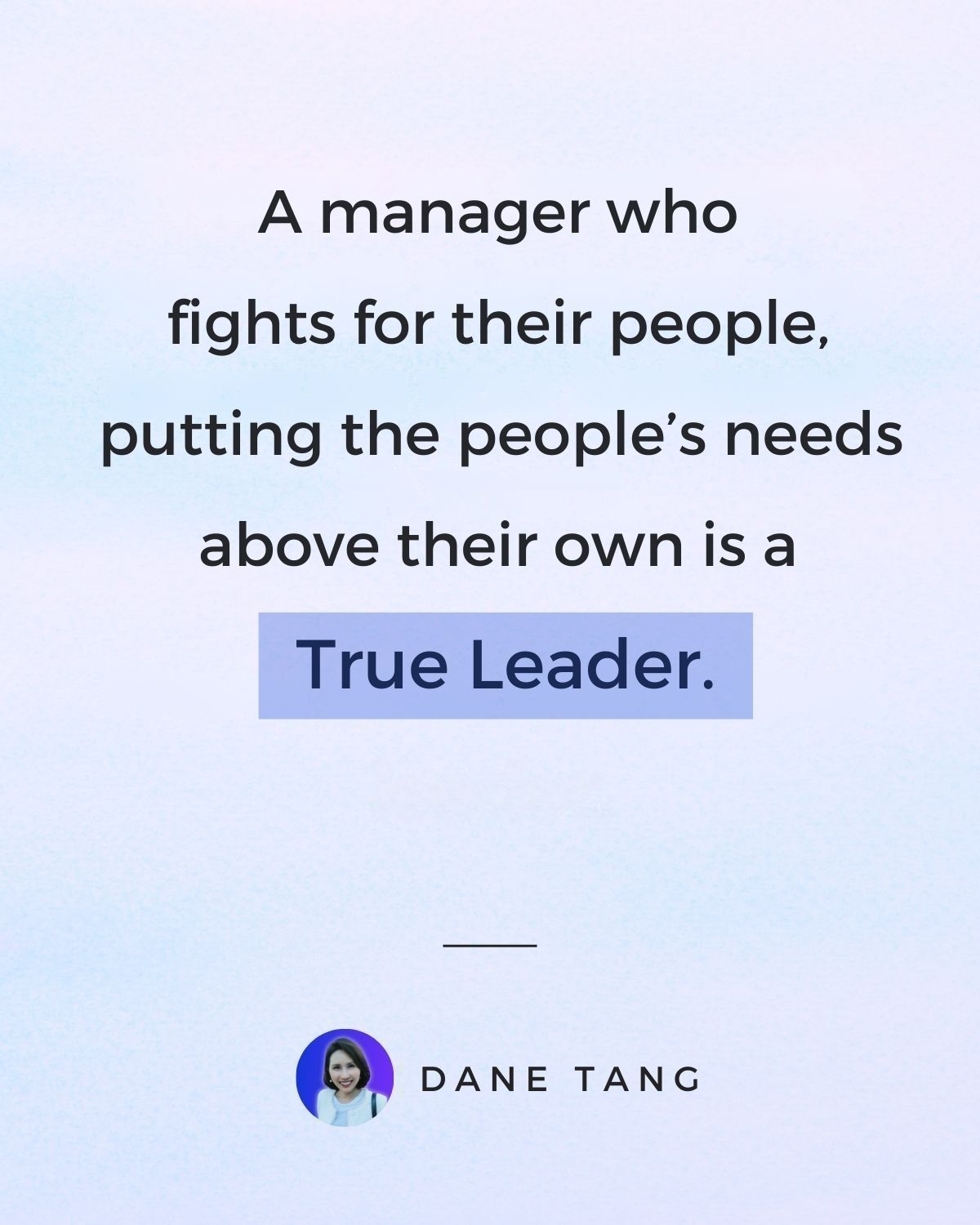
In a recent LinkedIn post, Dane Tang explores the essence of true leadership, emphasizing the critical role leaders play in protecting and advocating for their teams. Tang contrasts the common pursuit of personal advancement with the more impactful dedication to shielding employees from undue pressure and criticism.
Tang begins by defining the core of this leadership style: “True Leaders fight for their people and take the heat so their team doesn’t have to. They step up, even when it hurts.” He illustrates this with a personal anecdote, recalling a manager whose behind-the-scenes defense secured his lifelong loyalty, highlighting how such actions build profound trust.
The Contrast: Chasing Promotions vs. Protecting People
The post sharply distinguishes between leaders who prioritize their own career progression and those who focus on their team’s well-being. “Too many leaders chase promotions. Too few protect their people,” Tang states, framing this as a fundamental choice in leadership philosophy.
“True leaders don’t just lead, They fight for you.”
Tang further elaborates on the active responsibilities of a leader who champions their team:
- They take the fall.
- They clear the path.
- They speak your name in rooms you’re not in.
Actionable Steps for Protective Leadership
Tang doesn’t just describe this ideal leader; he offers a practical guide for those aspiring to embody these qualities. He outlines several key areas for development:
1. Leading with Heart, Not Ego
The foundation of this leadership approach, according to Tang, is prioritizing people over personal pride. This involves genuine connection, such as asking, “How are you, really?”
2. Embracing Difficulty and Sharing Success
Tang advises leaders to actively “take the hits” when challenges arise and “pass the praise” when successes are achieved. This means stepping in during difficult situations and stepping back to allow team members to receive recognition.
3. Advocating Silently and Celebrating Publicly
A crucial aspect of protective leadership is advocating for team members even when they are not present. Tang emphasizes the importance of defending them in private while cheering for them in public.
4. Active Listening and Valuing Voices
Effective leaders, as described by Tang, “listen like it’s your job” and make space for their team’s voices to be heard. This involves moving beyond a hierarchical dynamic to foster an environment where contributions are valued.
5. Human Connection Over Formal Authority
Tang advocates for checking in with team members as a human being, not just a boss. This means dropping the script, being real, and present in interactions.
6. Protecting Well-being
Leaders are encouraged to “protect their peace” by guarding their team’s time, energy, and joy. Tang suggests that sometimes the most effective leadership decision is a well-placed “no” to external demands that could overburden the team.
7. Recognizing the Whole Person
Beyond acknowledging professional achievements, Tang stresses the importance of celebrating the individual. This involves noticing the effort and expressing genuine recognition with phrases like, “I see you.”
Ultimately, Tang concludes that the most memorable leaders are those who create an environment where individuals feel safe to be their authentic selves. “The leaders we remember… are the ones who made us feel safe to be human,” he writes, urging others to aspire to this standard of leadership.
📝 About This Content
This article is based on insights shared by Dane Tang on LinkedIn.
📅 Originally posted on January 14, 2026 | View original post on LinkedIn →