
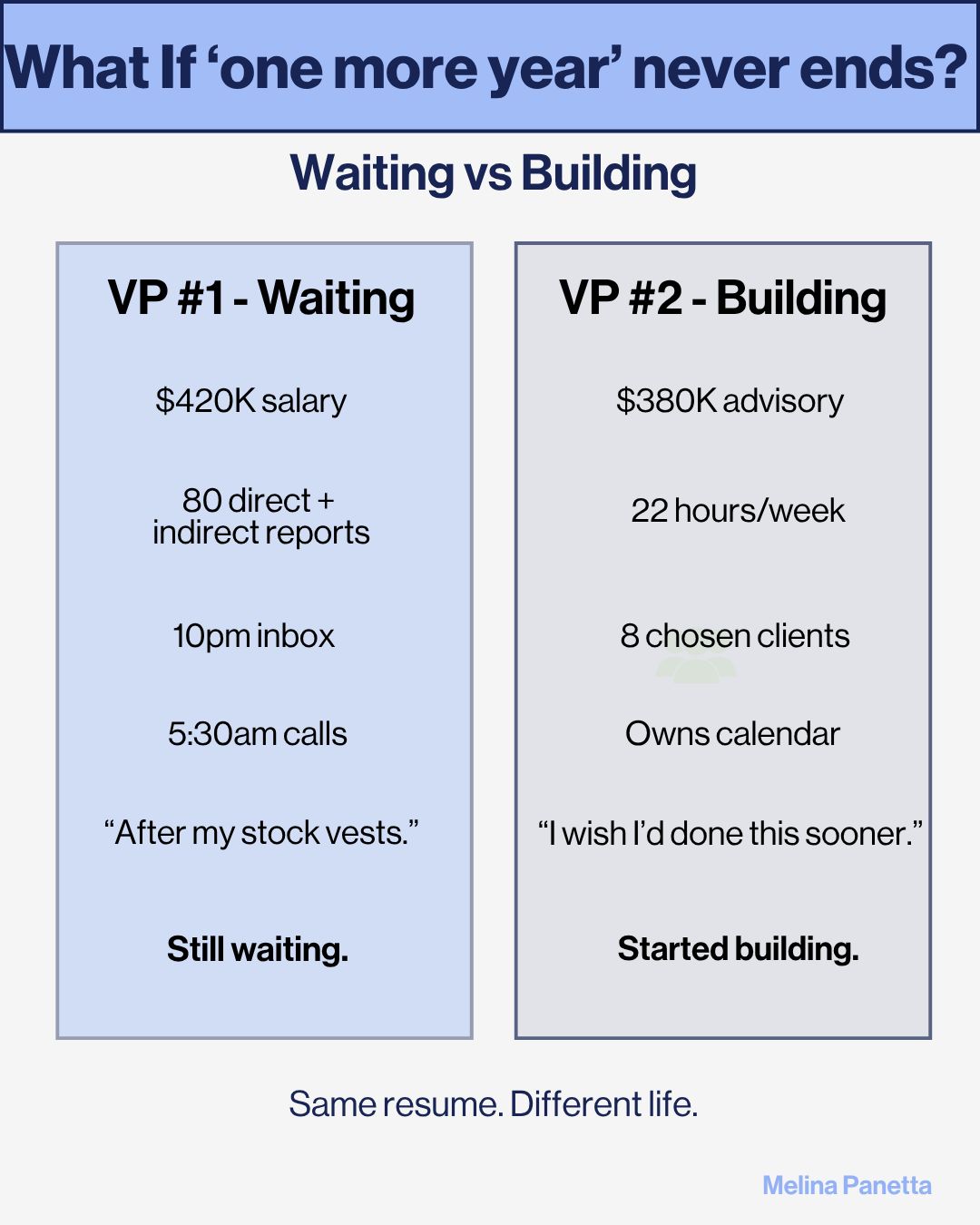
In a recent LinkedIn post, Melina Panetta explores the common corporate trap of delaying personal and professional pivots, using the contrasting lives of two Vice Presidents as a compelling example. Panetta highlights how rationalizations can lead to stagnation, even when external success appears evident.
The post contrasts two VPs who turned 50 in the same year, possessing similar resumes and salaries, yet leading vastly different lives. One, Panetta describes, is still climbing the corporate ladder, having achieved a Senior VP promotion and a substantial salary, with a significantly expanded team. From an external perspective, this VP appears to be “winning.” However, Panetta delves into the less visible realities of this path.
“10pm email clean-up so he doesn’t fall behind. 5:30am global calls from different hotel rooms. Bonus tied to goals he didn’t set. A calendar that runs him. Slack open on vacation.”
This VP, according to Panetta, constantly defers fulfillment, using phrases like “After this bonus,” “After the next vest,” or “After my son graduates.” Panetta argues that while these justifications sound responsible, they mask a deeper issue of delayed agency.
The Allure of the ‘Rational’ Delay
The second VP, in stark contrast, chose a different path. Panetta details how this individual spent 12 months testing advisory services while still employed, securing three clients before resigning. This strategic move allowed for a transition where a significant income was already committed.
“Left when $180K was already committed. 18 months later: $380K in advisory. 22 hours a week. Eight clients.”
This VP’s reflection, “I wish I’d done this five years ago,” underscores Panetta’s central thesis: the delay, while often perceived as rational, is a trap. Panetta emphasizes that the difference between these two paths isn’t necessarily a lack of courage, but rather the proactive decision to “start building before you have to.”
Challenging Conventional Wisdom on Career Progression
Panetta challenges the notion that waiting for external validation or financial milestones like vesting schedules constitutes a solid plan. Instead, the post advocates for a more proactive approach to career development, particularly for those considering a “Second Act.”
Building a ‘Second Act’ on Your Own Terms
According to Melina Panetta, the key lies in building supplementary income streams or alternative career paths while still benefiting from the security of current employment. “Build while the job funds it,” Panetta advises. This strategy, in Panetta’s view, is the only way to ensure a transition that is made “on your terms.” The message is clear: delaying action, even with seemingly rational justifications, can lead to missed opportunities and a life dictated by external circumstances rather than personal choice.
Panetta’s insights encourage readers to re-evaluate their own career trajectories and consider the power of parallel building to achieve greater autonomy and fulfillment.
📝 About This Content
This article is based on insights shared by Melina Panetta on LinkedIn.
📅 Originally posted on March 27, 2026 | View original post on LinkedIn →