
In a recent LinkedIn post, Liz Bradford tackles a common paradox faced by many, particularly busy executives: the gap between knowing what to do for fitness and actually doing it. Bradford argues that the issue isn’t a lack of knowledge or access to information, but rather a deeper problem of commitment masked by a pursuit of optimization.
Bradford opens by highlighting the irony of saved workout videos versus actual completed exercises, suggesting that high-tech fitness trackers often become mere metrics of avoidance rather than catalysts for action. She posits that the executives she works with don’t necessarily have an ‘exercise problem,’ but rather a ‘commitment problem wearing an optimization costume.’
“Your phone has 47 saved workout videos. Your body has completed 2 of them. Your Oura ring, WHOOP, and Apple Watch are now just very expensive ways to track how well you’re avoiding exercise.”
The Illusion of Optimization
Bradford points to the phenomenon of extensive research into fitness routines as a form of procrastination. She observes that individuals can spend more time comparing programs or learning about optimal training zones than engaging in the activities themselves. This, in her view, becomes a comfortable state, preferable to the discomfort of not performing.
As Bradford notes, the pain of ‘knowing what to do and not doing it is more painful than pretending you’re still in the research phase.’ This highlights a psychological barrier where the act of researching or planning feels like progress, even when it displaces actual execution.
Bradford’s Prescription for Consistency
To cut through the cycle of research and avoidance, Bradford offers a straightforward, actionable strategy:
- Select any workout program – the specific choice is less critical than the act of choosing.
- Commit to doing it three times a week for 28 days.
- Focus tracking on the days of attendance, not on biometric data.
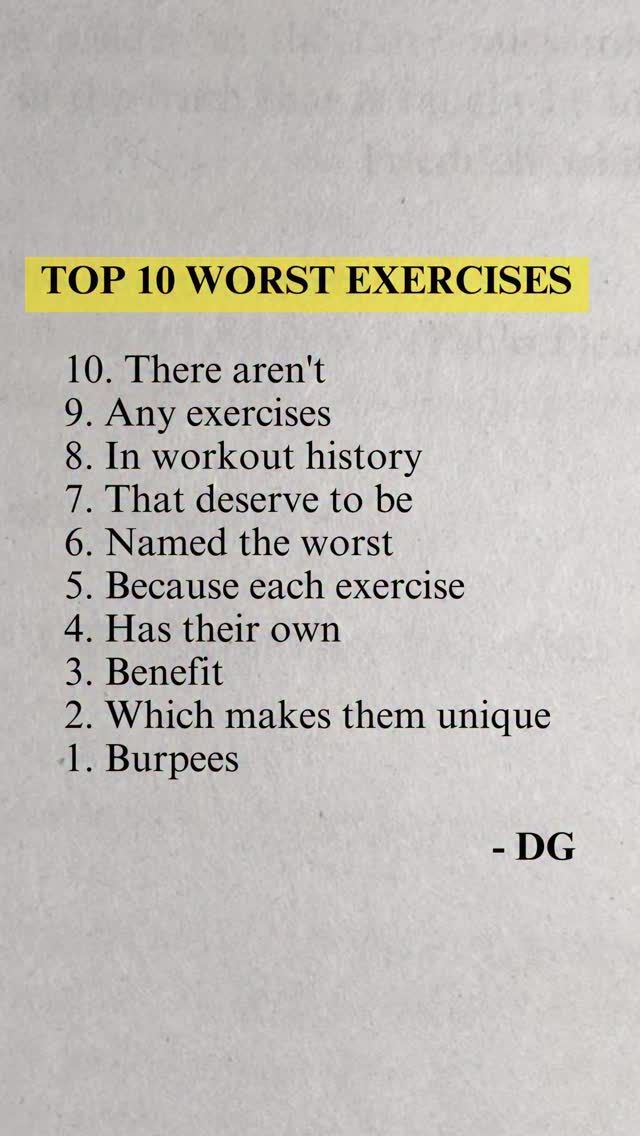
- When the urge to research a ‘better’ method arises, substitute it with a physical action, like a burpee.
This approach prioritizes adherence over perfection. Bradford emphasizes that the most effective exercise is not necessarily the one with the most robust scientific backing, but the one that gets done, especially on days when motivation is low.
“The best exercise isn’t the one with the cleanest evidence base. It’s the one you’ll actually do on a Tuesday when you’re tired and it’s raining.”
Consistency Over Intensity and Theory
Bradford’s core message is the supremacy of consistency. She argues:
“Consistency beats intensity. Both beat theory. All three beat scrolling fitness TikTok at midnight.”
This hierarchy underscores her belief that regular, albeit perhaps less intense, activity is far more beneficial than sporadic, high-intensity efforts or purely theoretical knowledge. The mention of burpees, while acknowledged as unpleasant, serves as a metaphor for embracing discomfort in the short term for long-term gain.
Ultimately, Bradford encourages readers to confront their own patterns of avoidance. She suggests a practical step for those with numerous saved workouts but few completed ones:
“If you’ve got more saved workouts than completed ones, you’re not alone. But maybe delete 45 of them and just do the remaining two.”
This advice, delivered with a blend of directness and understanding, aims to simplify the path to fitness by removing the overwhelming number of choices and focusing on actionable commitment.
📝 About This Content
This article is based on insights shared by Liz Bradford on LinkedIn.
📅 Originally posted on April 26, 2026 | View original post on LinkedIn →