
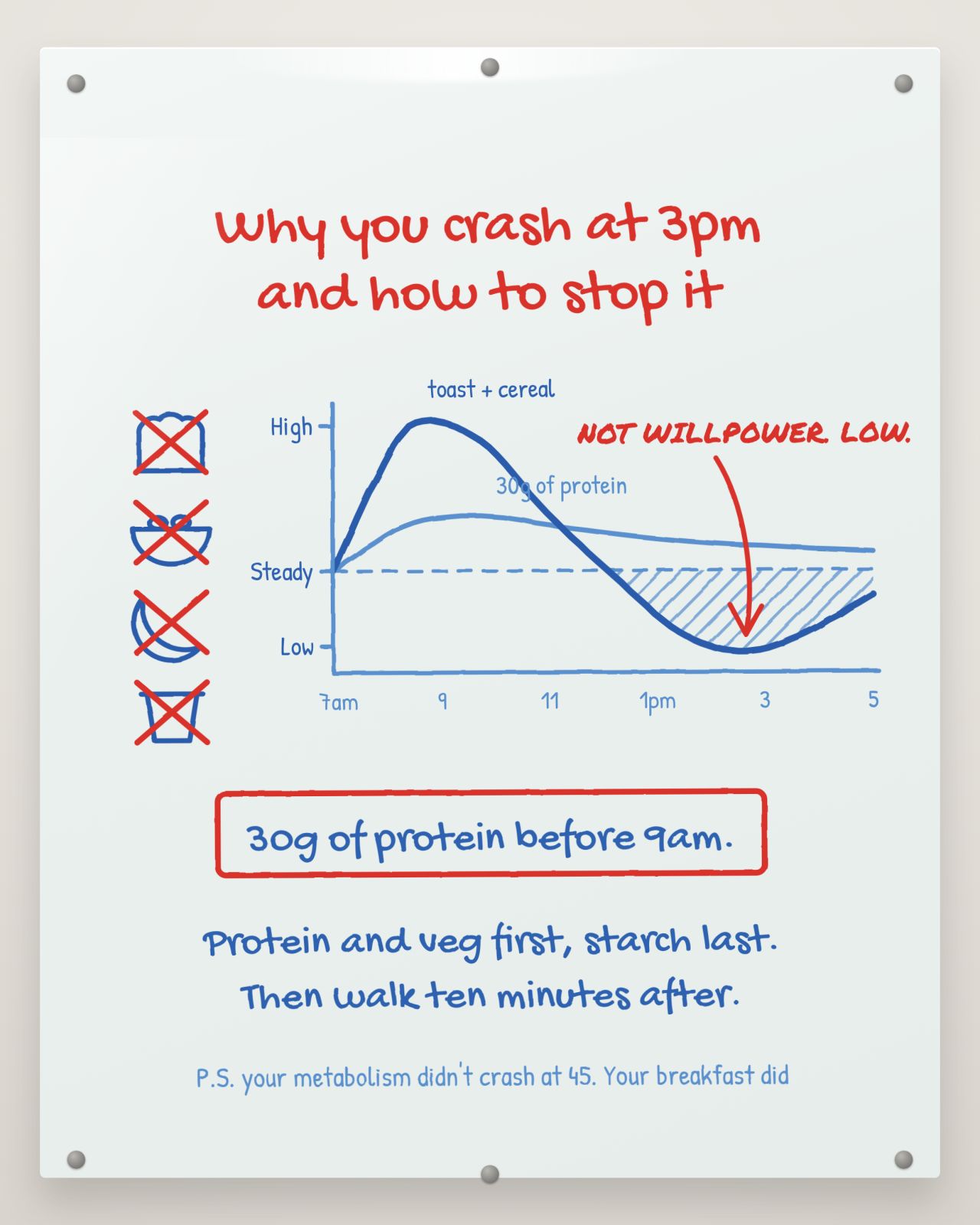
In a recent LinkedIn post, Liz Bradford tackles the common mid-afternoon energy slump, reframing it not as a matter of willpower but as a direct consequence of breakfast choices and physiological responses. Bradford challenges the conventional wisdom that links this fatigue to a lack of discipline.
Bradford highlights the recurring pattern many experience: a sharp start to the day, followed by a noticeable decline in focus by early afternoon, leading to intense cravings for sweets and subsequent self-reproach. She argues that the root cause lies much earlier, specifically in the composition of the morning meal.
“The 3pm crash isn’t a discipline problem. It’s a blood sugar problem, and your breakfast started it.”
According to Bradford, typical breakfast items like toast, cereal, or fruit-heavy yogurts, while seemingly innocuous, are often carbohydrate-dense and lack the protein and fat needed to slow down glucose absorption. This leads to a rapid spike in blood sugar, followed by an overcorrection from the body that results in the energy dip experienced hours later.
Challenging the Metabolism Myth
A significant point Bradford addresses is the role of metabolism. Many individuals blame a slowing metabolism for their declining energy levels as they age. However, Bradford points to scientific findings that suggest otherwise.
“A 2021 study in Science found resting metabolism holds remarkably steady from roughly 20 to 60. It didn’t crash on your birthday.”
Instead, Bradford suggests that the changes experienced are more likely due to a decrease in muscle mass, which plays a crucial role in glucose uptake. As muscle mass diminishes with age, the body’s capacity to manage glucose effectively decreases, leaving less room for error and making individuals more susceptible to blood sugar fluctuations.
Practical Strategies for Sustained Energy
Rather than focusing on willpower, Bradford advocates for practical adjustments to daily eating habits and activity. She proposes three key changes:
Prioritizing Protein at Breakfast
Bradford emphasizes the importance of consuming a substantial amount of protein early in the day. She recommends aiming for around thirty grams of protein before 9 am, suggesting options like eggs, Greek yogurt, or a protein shake, depending on morning convenience.
“Thirty grams of protein before 9am. Eggs, Greek yoghurt, leftover chicken, a shake if the morning is brutal. Whatever you’ll actually eat.”
This protein intake helps to stabilize blood sugar levels and promote satiety, mitigating the sharp spikes and subsequent crashes often associated with carb-heavy breakfasts.
Strategic Meal Composition
Bradford also advises on the order of food consumption. She suggests prioritizing protein and vegetables at the beginning of a meal, with starches consumed last. This simple alteration in meal structure can significantly impact the body’s glycemic response.
Incorporating Post-Meal Movement
Finally, Bradford highlights the benefits of light physical activity after meals. A ten-minute walk, particularly after the largest meal of the day, can help the body utilize glucose more effectively without relying solely on insulin. As Bradford notes, this movement aids in pulling glucose from the blood.
In conclusion, Liz Bradford’s insights on LinkedIn offer a compelling alternative perspective on the 3 pm energy crash, shifting the focus from perceived personal failings to actionable dietary and lifestyle adjustments. She reassures readers that the issue is not a lack of willpower but rather a mismatch between their current eating habits and their body’s evolving metabolic needs.
📝 About This Content
This article is based on insights shared by Liz Bradford on LinkedIn.
📅 Originally posted on September 12, 2026 | View original post on LinkedIn →