
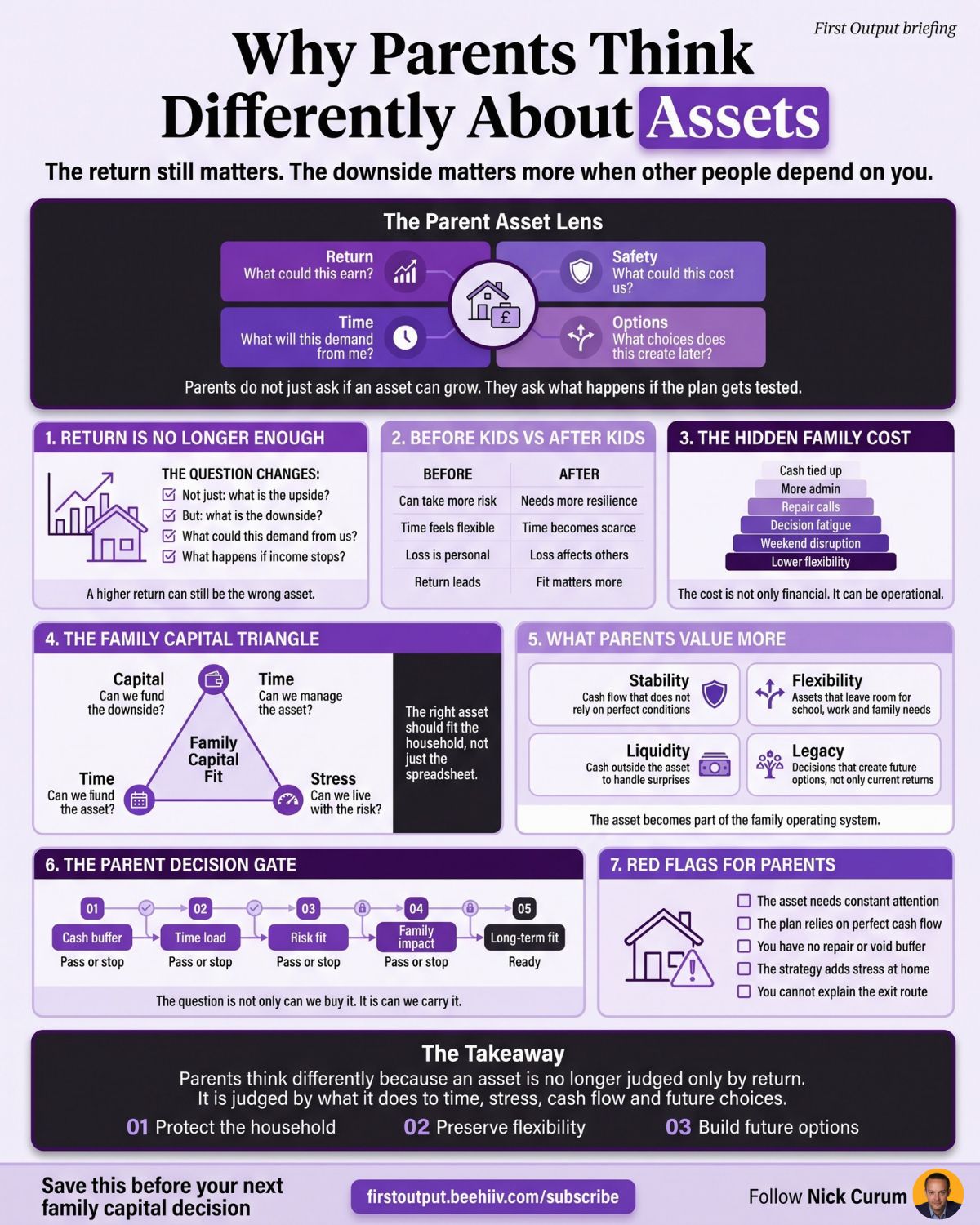
In a recent LinkedIn post, Nick Curum explores how the perceived risk and suitability of financial assets can dramatically change as an individual’s life circumstances evolve, even if the underlying numbers remain the same. Curum highlights that the true test of an asset isn’t just its potential return, but its resilience when others depend on the income it generates.
Curum begins by contrasting the evaluation of an asset before and after personal financial dependencies are introduced. He states:
“The test for a good asset changes the day someone else depends on your income. Before that point, one question does most of the work: what could this return? After it, a second question takes over: what happens if the plan gets tested?”
The Evolving Definition of Risk Tolerance
As Nick Curum points out, the spreadsheet detailing an asset’s performance might remain unchanged, but the investor’s risk tolerance is fundamentally altered by new responsibilities. The same deposit, the same yield, and the same spreadsheet can represent a vastly different level of risk when the consequences of failure no longer affect just one person.
Curum uses the example of landlords to illustrate this point, noting:
“I see this clearly in landlords who built a single-let strategy in their twenties, then run the same model at forty with a mortgage and dependants attached to the outcome. The numbers haven’t moved. The consequences have.”
When Assets Stop Fitting Your Life
This evolution in risk perception means that an asset perfectly suited for an individual at one stage of life might become unsuitable at a later stage. Curum emphasizes that financial models alone cannot capture this crucial shift.
The Limitations of Spreadsheets
According to Curum, the quantitative data presented in spreadsheets often fails to account for the qualitative impact of life changes on financial decisions. The spreadsheet will not spontaneously flag that an asset’s suitability has diminished due to increased personal or familial financial obligations.
To navigate this, Curum suggests a proactive approach to capital decisions, posing a critical question:
“Worth asking before your next capital decision: if this income stopped for six months, whose plan breaks first?”
By prompting this deeper reflection, Nick Curum encourages individuals to move beyond static financial analysis and consider the dynamic interplay between their assets and their evolving life responsibilities, ensuring that their financial strategies remain robust and aligned with their personal circumstances.
📝 About This Content
This article is based on insights shared by Nick Curum on LinkedIn.
📅 Originally posted on July 20, 2026 | View original post on LinkedIn →