
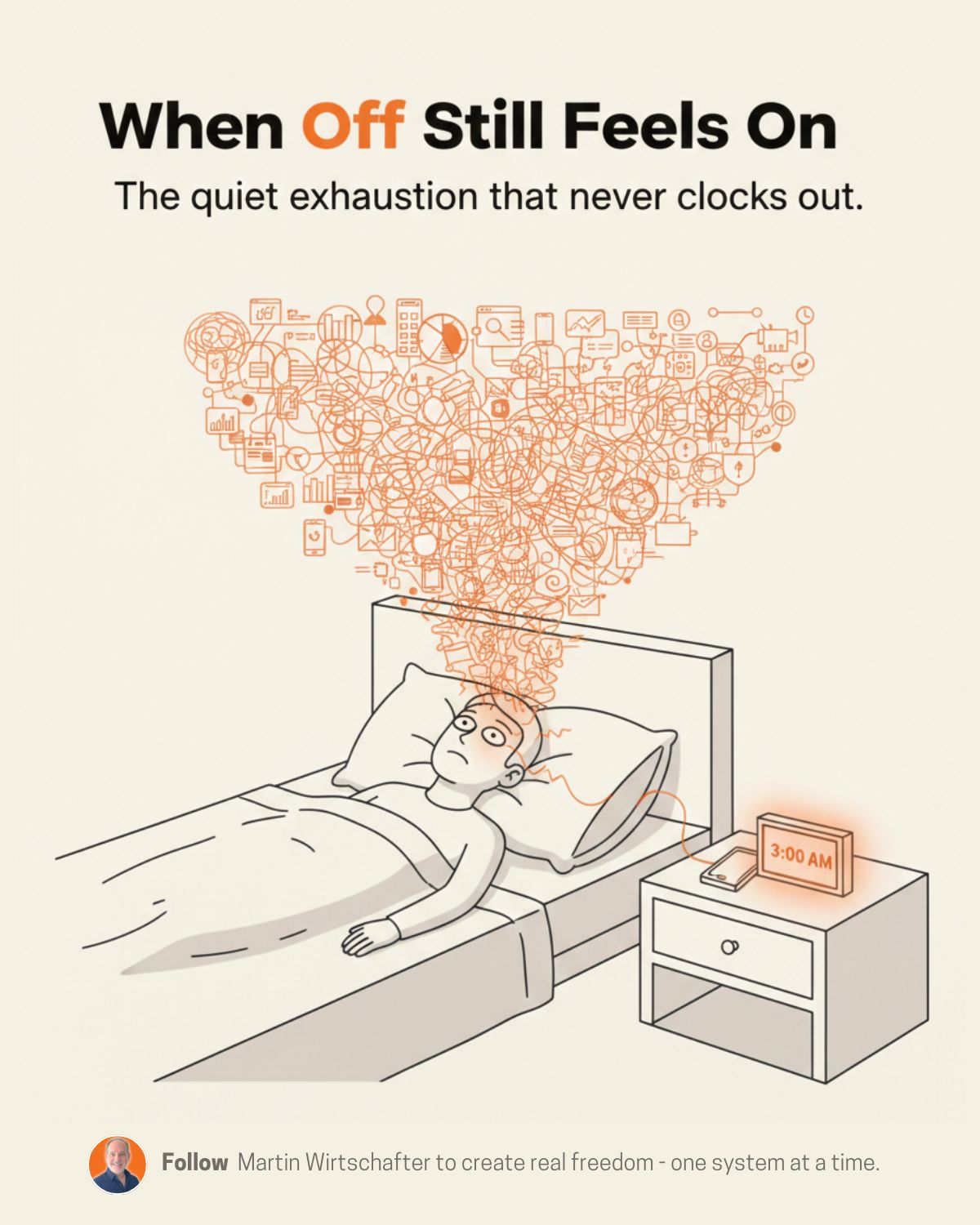
In a recent LinkedIn post, Martin Wirtschafter delves into the pervasive issue of hyper-vigilance in business leaders, describing it not as a sign of dedication but as a detrimental dependency. Wirtschafter challenges the conventional notion that constant mental engagement is a prerequisite for success, instead framing it as a ‘Silent Burden’ that erodes well-being.
He begins by illustrating how the mind, even when ostensibly at rest, remains perpetually active. “Your mind never clocks out. It just switches tabs,” Wirtschafter writes, painting a picture of a leader whose thoughts are constantly scanning for potential problems, replaying past decisions, and anticipating future crises.
The Illusion of Vigilance
Wirtschafter recounts his personal experience with this relentless mental activity, describing a state of waking up already behind, with a racing heart and a mind preoccupied before the day has even begun. This, he argues, leads to a cycle where half the day is spent reacting to perceived emergencies and the other half recovering from them. He questions the traditional acceptance of such intense pressure as the ‘price of running a business,’ citing common symptoms like 3 AM wake-ups, persistent jaw clenching, and an inability to disconnect from the phone, even on weekends.
According to Wirtschafter, this state is often mislabeled as drive, discipline, or leadership. He posits that it is, in reality, a form of dependency. “A business that couldn’t breathe without me. And a nervous system that matched it,” he states, highlighting the co-dependent relationship that can form between a leader and their enterprise.
“Even when I wasn’t working, I was working.”
This constant state of being ‘on’ creates a nervous system that forgets how to switch off. Wirtschafter explains that the fear of losing control makes rest feel like a failure, perpetuating a cycle of tension that becomes normalized. He contends that every notification feels like a threat and every moment of silence feels even worse, demonstrating the profound impact this vigilance has on an individual’s psychological state.
Beyond Burnout: The Dependency Loop
Wirtschafter introduces the concept of the ‘Dependency Loop,’ asserting that its primary toll is not on time, but on the nervous system. This loop convinces individuals that perpetual tension is the norm and that being constantly engaged is their identity. He emphasizes that the symptoms often mistaken for burnout – such as chronic exhaustion that sleep cannot alleviate – are, in fact, indicators of being trapped within a system that relies on the leader’s constant oversight to function.
“It convinces you that constant tension is normal. That being ‘on’ is who you are. Until your body forgets how to be off.”
He stresses that this ‘Silent Burden’ is not an inevitable consequence of leadership. Wirtschafter’s post serves as a call to recognize these patterns and understand that a business’s operational integrity should not be solely dependent on the leader’s unceasing vigilance. The implication is that true leadership involves building resilient systems, not solely relying on personal endurance.
Wirtschafter concludes by offering a path forward, suggesting that acknowledging these symptoms is the first step toward breaking free from this detrimental cycle. The message is clear: leaders can reclaim their well-being by understanding and addressing the ‘Silent Burden’ that their own minds, trained for constant vigilance, impose upon them.
📝 About This Content
This article is based on insights shared by Martin Wirtschafter on LinkedIn.
📅 Originally posted on January 27, 2026 | View original post on LinkedIn →