
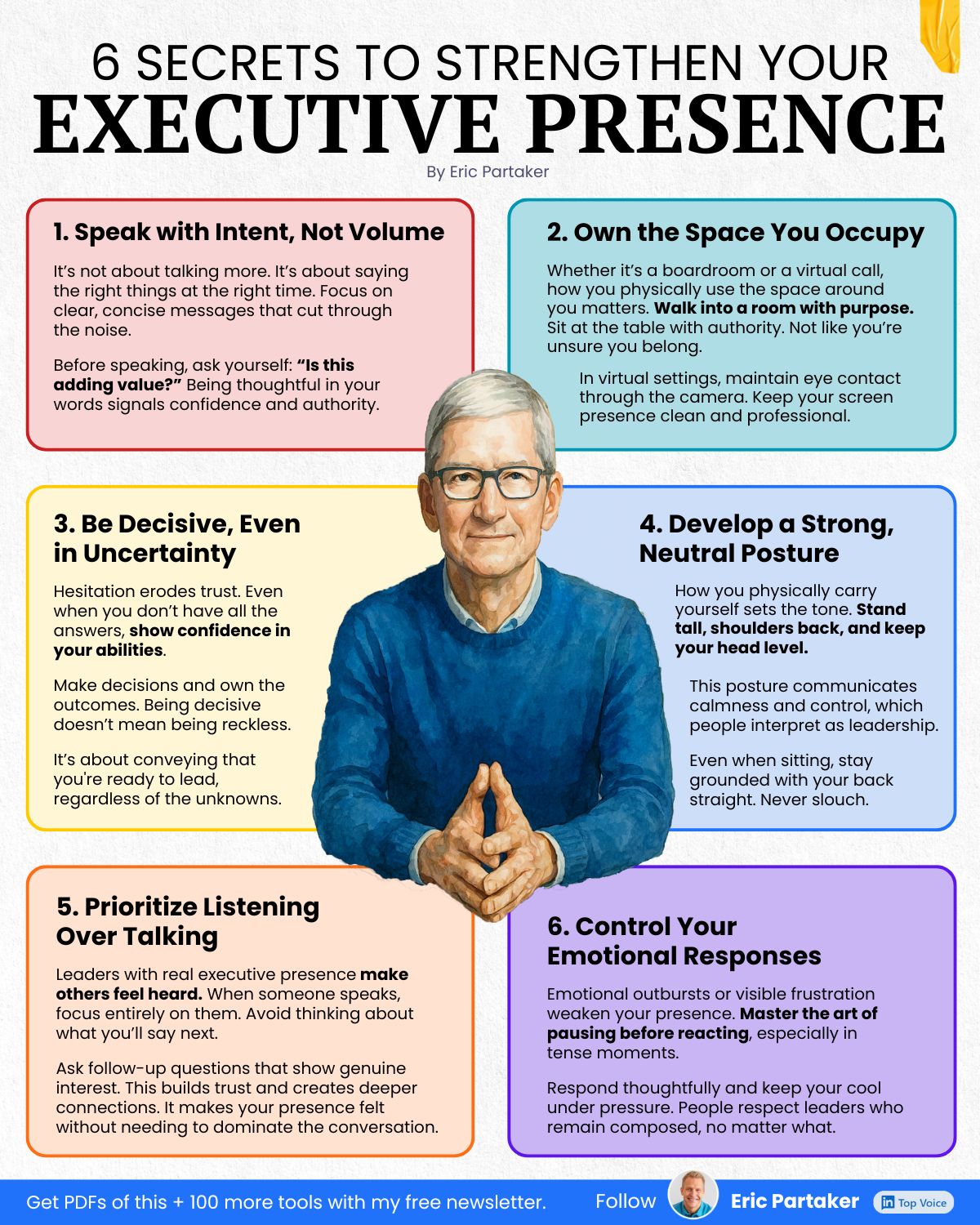
In a recent LinkedIn post, Eric Partaker discusses the critical, often unspoken, element of executive presence and how it functions as a “silent superpower” for leaders across various professional contexts. Partaker emphasizes that how a leader appears and carries themselves can significantly impact trust, influence, and decision-making, even before a single word is spoken.
Partaker highlights that executive presence is paramount for anyone in roles such as leading a team, seeking investment, or presenting to stakeholders. He posits that this presence is not about dominance but about inspiring confidence and trust.
“Your presence speaks before you do. But the real question is: What’s it saying?”
The insights shared by Partaker offer actionable advice for professionals aiming to enhance their leadership aura. He breaks down the concept into several key components, providing practical tips for immediate application.
Speaking with Impact
One of the core tenets Partaker addresses is the art of communication, specifically how to make words carry more weight. He advises leaders to be concise and impactful in their messaging.
Less is More in Communication
According to Eric Partaker, effective leaders do not waste words. They focus on delivering their message with precision, ensuring that every utterance adds value. This approach involves thoughtful consideration before speaking.
“People with presence don’t ramble. They land their message. Ask: ‘Is this adding value?’ Make your words do the heavy lifting.”
Partaker argues that this deliberate communication style helps in conveying authority and clarity, making leaders more trustworthy and their messages more memorable.
Non-Verbal Communication and Confidence
Beyond spoken words, Partaker places significant emphasis on non-verbal cues and how they contribute to an individual’s executive presence. He suggests that physical bearing and demeanor play a crucial role in how others perceive a leader’s confidence and competence.
The Power of Posture and Movement
As Eric Partaker notes, how one walks, sits, and even maintains eye contact (especially in virtual settings) communicates volumes. He advocates for a purposeful stride and a posture that conveys self-assurance.
“Walk in with purpose. Sit like you earned the seat. On Zoom? Eye contact. Clean background. Confident posture.”
Partaker further elaborates on posture, stating, “Slouching says: ‘I’m unsure.’ Straight back. Shoulders open. Chin up. Even seated, your body speaks volumes.” This advice underscores the importance of physical presentation in projecting leadership qualities.
Decision-Making and Emotional Regulation
The post also touches upon the leader’s ability to make decisions, particularly under pressure, and to manage their emotional responses. Partaker believes decisiveness is a hallmark of strong leadership.
Decisiveness in Uncertainty
Eric Partaker points out that uncertainty can erode trust, and leaders are expected to provide direction. He encourages making decisions, even when faced with incomplete information, and owning the subsequent outcomes.
Controlling Reactions Under Pressure
Furthermore, Partaker advises leaders on how to handle stressful situations. He suggests that pausing, breathing, and responding calmly are key to maintaining confidence and demonstrating resilience.
“Pressure doesn’t break leaders. It reveals them. Pause. Breathe. Then respond. Calm earns confidence.”
In conclusion, Eric Partaker’s LinkedIn post provides a comprehensive guide to cultivating executive presence, framing it as an essential leadership attribute that builds trust and inspires confidence through deliberate communication and confident non-verbal cues.
📝 About This Content
This article is based on insights shared by Eric Partaker on LinkedIn.
📅 Originally posted on March 3, 2026 | View original post on LinkedIn →